 Guide On Map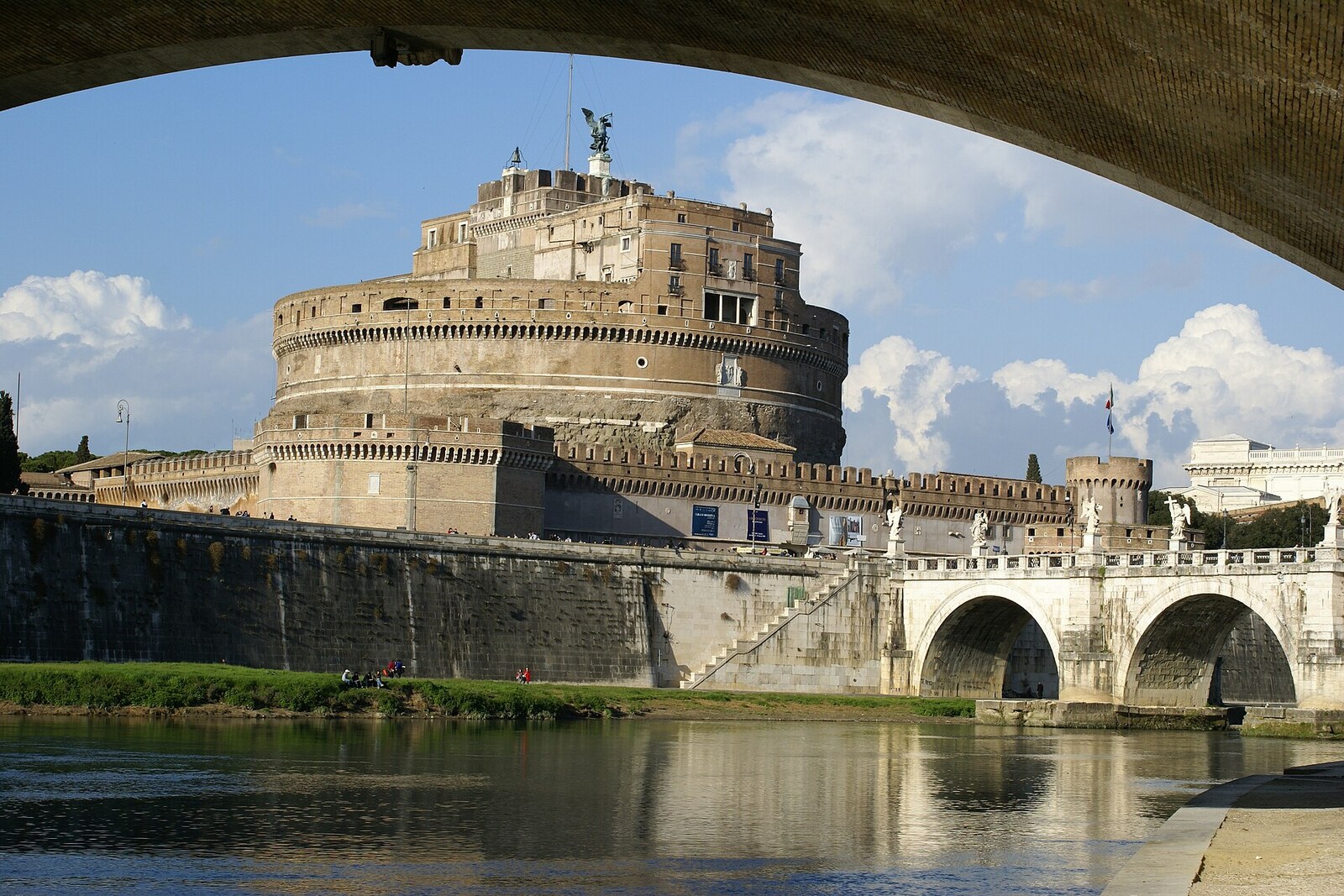
Look around first
What to notice
- The circular body of the ancient mausoleum
- Papal bastions
- Bastione San Marco
- The bronze archangel with a sword
The story of the place
The circular body above the Tiber was intended as a burial place for Emperor Hadrian and his successors. The ancient cylinder is still visible beneath the papal bastions, and above the burial chamber are halls, storerooms, cisterns, and living quarters. On the roof, a bronze archangel is sheathing his sword; according to legend, this gesture gave the fortress its present name.
On May sixth, fifteen twenty-seven, Pope Clement VII entered this fortress as a fugitive. He was not only the head of the Church, but also the ruler of the Papal States. A year earlier, Clement had joined an alliance with France and several Italian states: he wanted to prevent Emperor Charles V from subjugating Italy. The allies failed, and the army serving the emperor advanced on Rome. The soldiers had gone months without pay and had almost stopped obeying their commanders.
In the morning, they broke into the city. While the Swiss Guards held back the attackers at the Vatican, Clement reached the enclosed Passetto di Borgo corridor. The corridor ran above the streets and led directly to Bastione San Marco at Castel Sant'Angelo. By evening, almost all of Rome was in the soldiers' hands. They looted churches and houses, killed residents, and took people captive for ransom. The defenders continued to hold only a few buildings and this fortress.
Clement fled here precisely because of the design of Castel Sant'Angelo. In the second century, Emperor Hadrian ordered a mausoleum built on the bank of the Tiber for himself and his successors. The tomb was completed after his death, in one thirty-nine. Later it was incorporated into the city's fortifications, and the popes surrounded the ancient cylinder with bastions, placing storerooms, cisterns, and living quarters inside. Pope Alexander VI especially strengthened its defenses several decades before the attack. That is why Clement had water, provisions, cannons, and rooms behind the walls where his court could stay.
The supplies lasted for several weeks of siege. Then Clement agreed to a harsh capitulation: to save his life and gain his freedom, he promised the attackers four hundred thousand ducats and the cession of several fortresses. There was no such sum in the treasury. Gold and silver objects from the papal stores, most likely including church vessels and ornaments, were melted down, and temporary coins were minted from the metal.
Even after the capitulation, Clement remained a prisoner in his own fortified residence. Only in December did he manage to escape and reach Orvieto. Returning to Rome the following year, the pope could no longer continue his former struggle. In fifteen thirty, he met Charles V in Bologna and personally crowned him emperor.
The corridor by which Clement escaped is still connected to Bastione San Marco. The papal halls above the ancient burial chamber have survived, and the entire complex is now occupied by a national museum.
The bronze figure at the top accounts for the rest of the name. According to legend, in five ninety, Pope Gregory the Great led a procession through Rome, praying for an end to the plague. Above what was then Hadrian's mausoleum, he supposedly saw Saint Michael the Archangel sheathing his sword. Soon the epidemic ended, and the legend gave the fortified tomb the name Castel Sant'Angelo.
The present statue could not have witnessed that procession. It was cast in bronze on the orders of Pope Benedict XIV for the jubilee year of seventeen fifty and installed three years later. The archangel on the roof is still sheathing his sword—the very gesture from which the legend derived the words “Sant'Angelo.”
Useful on site
Museum open Tue–Sun 09:00-19:30, last entry 18:30; Monday closed.
Checked: June 25, 2026. Check the official source before visiting.The fortress can be understood from outside as well. If you go inside, treat it as a separate part of the day: the passageways, terraces, and exhibition require time.