 Guide On Map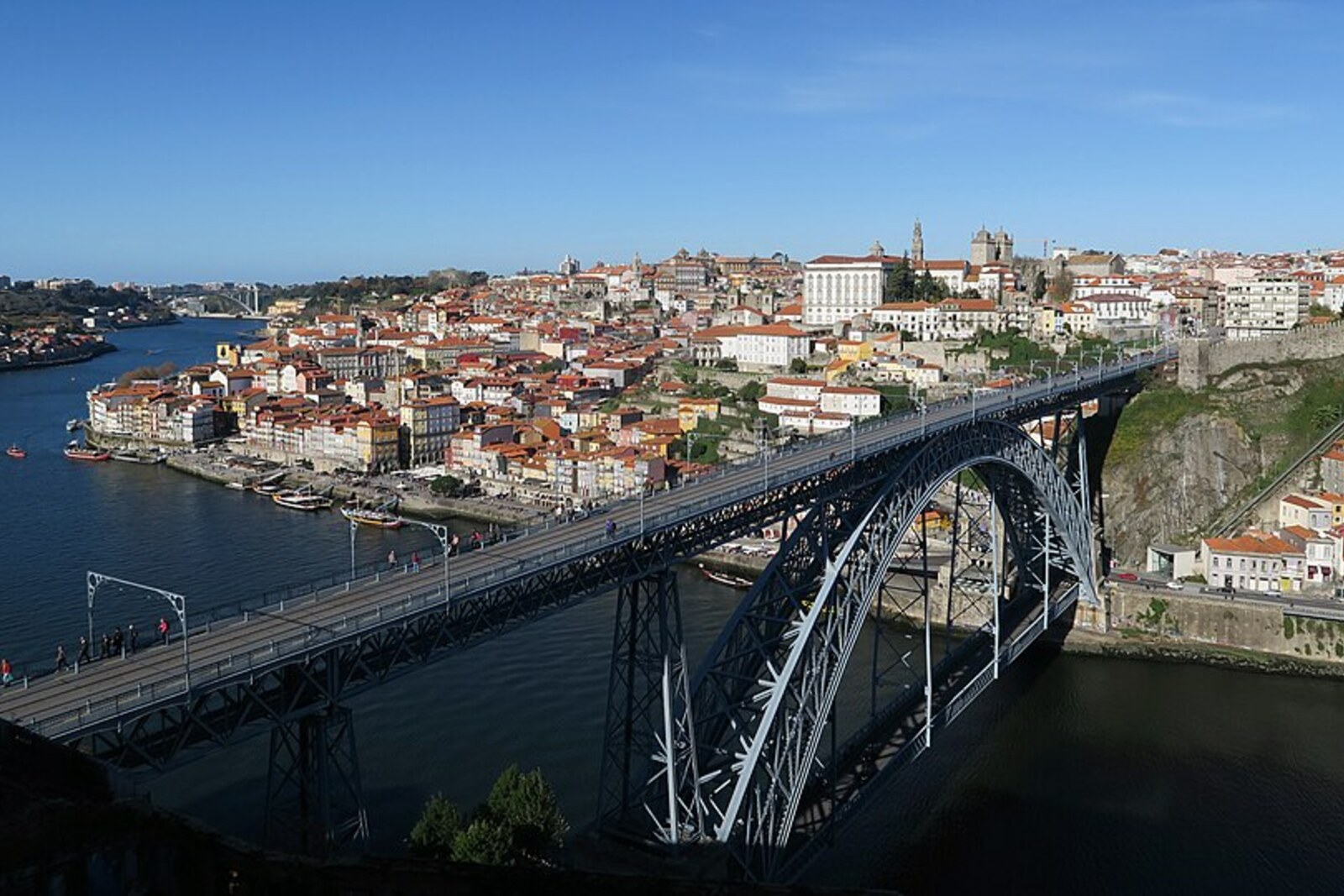
Look around first
What to notice
- Circular church
- Circular cloister
- Monastery wall
- Slope above the Douro
The story of the place
At dawn on October thirteenth, eighteen thirty-two, five batteries of Miguel I of Portugal opened fire on Serra do Pilar Monastery. Miguel, Pedro's younger brother, declared himself king and intended to rule without the restrictions of the Constitutional Charter of 1826. The bombardment lasted thirty-three hours. Inside the fortifications, the defense was commanded by José António da Silva Torres, a fifty-year-old career officer entrusted with holding the only position of Pedro's supporters on the southern bank of the Douro.
Three months earlier, monks still lived here. In fifteen thirty-seven, João III of Portugal moved a community of Augustinian canons—priests who lived by a monastic rule—to the hill. A circular church and a circular cloister were built for them. The name “Pilar” became established later, when an image of Our Lady of the Pillar, that is, Our Lady of the Pillar, was placed in the church.
When Pedro's army approached Porto, the monks left the monastery. Pedro I of Brazil and IV of Portugal, the former king of Portugal and former emperor of Brazil, returned to Europe to give the Portuguese throne to his daughter Maria II of Portugal and restore the charter. His soldiers occupied Porto, but Miguel's troops surrounded the city. Pedro did not have enough men, so the other heights of Gaia had to be abandoned. Serra do Pilar stood alone among enemy positions.
Dom Luís I Bridge below did not yet exist. Pedro's main forces were across the river, and reinforcements and supplies were brought here under fire. From this height, however, Torres's guns could fire on the batteries on Gaia's slopes. If Miguel's men captured the monastery, they would gain an artillery platform directly above Porto's waterfronts.
After the thirty-three-hour bombardment, about seven thousand of Miguel's soldiers climbed up to the fortifications. They advanced in three columns: through Eiró, along the monastery wall, and by the road from Vila Nova de Gaia. Torres had fewer than a thousand defenders—army units, student volunteers, and Gaia residents. Six times the attackers reached the trenches. For three hours, Torres's men repelled the assaults, including in hand-to-hand fighting. Both sides lost dead and wounded; by evening, Miguel's troops withdrew.
They tried more than once to take Serra do Pilar. The garrison held the hill for almost a year, until the Siege of Porto was lifted in August eighteen thirty-three. The following year, Miguel's army lost the war, Maria II of Portugal kept the crown, and Miguel went into exile.
The defenders acquired the nickname “Poles of Serra”: they were compared to participants in the recent Polish uprising. The queen gave Torres the title of Viscount of Serra do Pilar. The monks never returned—after the victory, the victors abolished the male religious orders, transferred the complex to the state, and declared it a first-class fortress in eighteen thirty-five. The circular church and cloister were later restored, and part of the former monastery is still occupied by the Serra do Pilar Artillery Regiment.
Useful on site
The outdoor viewing platform is accessible as an open urban space; access inside the monastery depends on the current arrangements.
Checked: June 25, 2026. Check the official source before visiting.The main sights are accessible from outside: the panorama does not depend on visiting the monastery. Do not enter closed or military areas of the complex.