 Guide On Map
Frogner Park: Vigeland Park and His Studio
From the Main Gate along the sculpture axis to the Vigeland Museum
Guide On Map on your phone
Open the walk like a regular app
It takes about 10 seconds to install. No app store needed.
The whole path
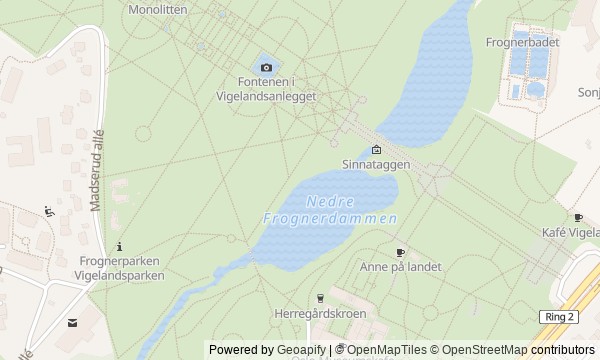
Route map
About the walk
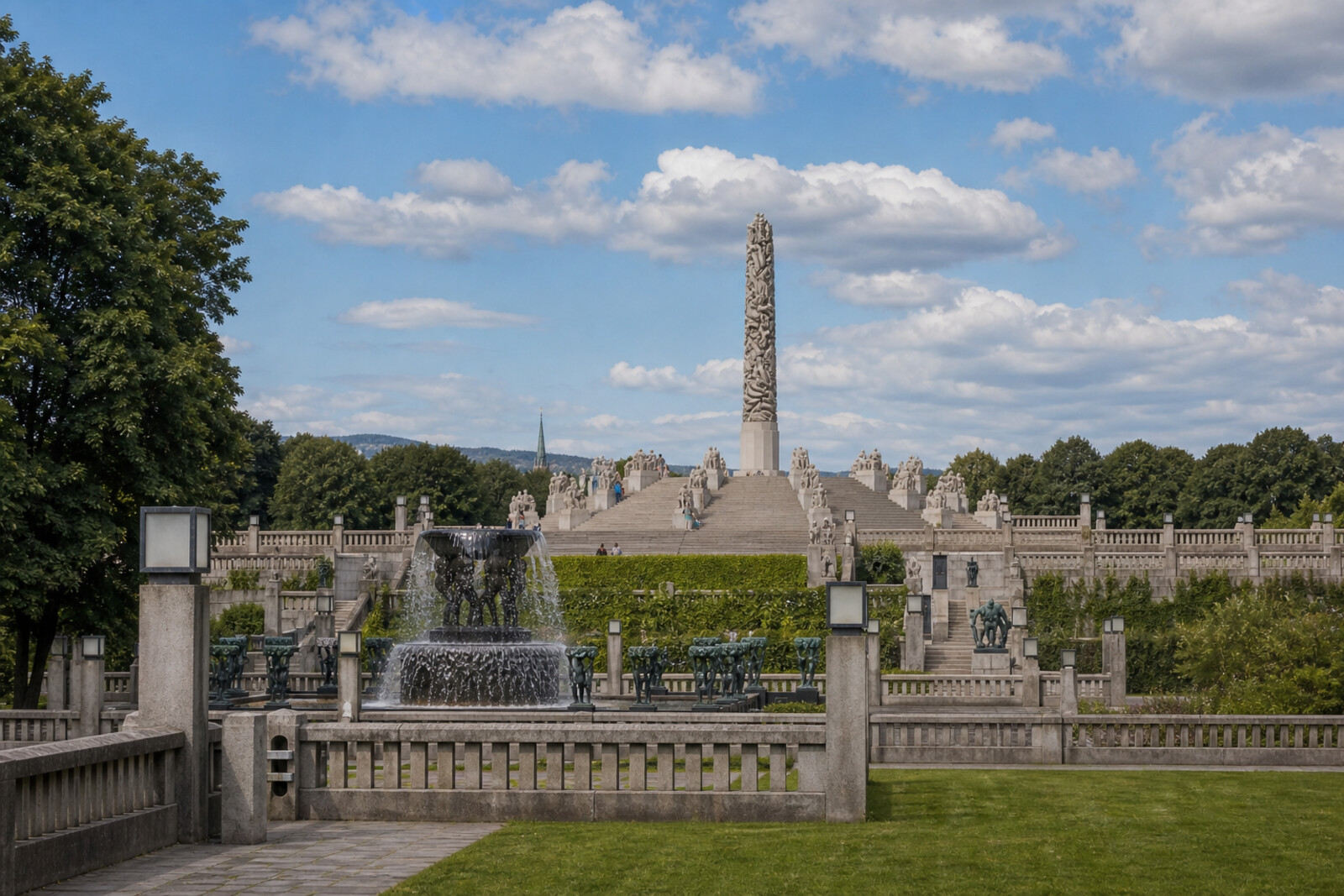
You will enter Frogner Park through its wrought-iron gates and follow a straight line between ponds, the rose garden, the fountain, and the granite plateau. Beyond The Monolith, the road will end at a bronze ring, then turn toward the former studio—now a museum.
This will not be an overview of Oslo or a catalog of famous figures. You will trace how one vast park vision was assembled over decades: people argued over the land, changed the order of work, moved a solid block of granite, and translated clay into plaster, bronze, and iron. Why will a heavy gate leaf yield to one finger? What will keep its author from seeing water in the finished basin, and his own Monolith without scaffolding?
The story will rest on practical and human details, without ready-made interpretations for every pose. By the end, you will see Frogner not as a row of sculptures, but as the work of blacksmiths, stonecutters, mold makers, and the city that brought a sculptor's vision into being as a park.
Why this order
The Main Gate comes first because its ironwork reveals the control over every detail, while the straight line beyond its leaves leads at once to the bridge—the first part of the ensemble that had to be completed before the rest. Beyond the bridge, the rose garden marks the boundary between two plans for Frogner Park; from here, the straight path to the fountain already appears as the result of an argument. The fountain comes before The Monolith because the growing fountain scheme required a continuation on the hill, and the climb from basin to column lets you feel the shift in scale. From the plateau, the road ends at The Wheel of Life, set at the far western end of the same line. After it, the museum is not an add-on: the route turns from finished bronze and granite toward plaster originals and the former studio, where the park first existed as models.
Those who want to understand a famous park, not just photograph its figures Those interested in studios, materials, and the fate of a large artistic vision Those who enjoy coherent routes through one place
Those looking for an overview of Oslo's main neighborhoods Those who want ready-made interpretations of every sculpture Those who prefer short captions to a detailed story
Before you go
Most of the route is outdoors, so choose clothing and shoes for the weather, and leave yourself able to linger over details. Do not polish the bronze with your hands, even at the famous Angry Boy. Decide in advance whether you want to end the walk inside the museum: it is a separate part of the visit, so check the current admission conditions and save some attention for it. The final stretch no longer follows the sculpture axis, so keep a map to the museum building at hand.
When to go
A clear day will let you see the sundial at work, while soft light brings out the relief of bronze and granite. When the roses are in bloom, the garden adds scent and color to the route, though the sequence of ideas remains intact outside that season.
Backup plan
In rain, do not try to examine every open-air group in detail: keep to the main line from the gate through the bridge, fountain, The Monolith, and The Wheel of Life. You can move more quickly through the rose garden, focusing on the bronze trees. Use the museum as a continuation of the route only if you have checked in advance that you can enter; do not count on it as guaranteed shelter. If the interior is unavailable, end the walk at the facade with the story of the studio and Gustav Vigeland's agreement with the city.
Route conditions
Elevation. Ascent — 20 m; descent — 20 m
OpenStreetMap extract of June 18, 2026: database data, not a check on the ground. Data © OpenStreetMap contributors, ODbL licence
Walk plan
Open in maps ↗- 1
Main Gate
Here you will see that even the entrance to the ensemble required a separate workshop and many years of handwork. - 2
Vigeland Bridge
This stop will show why the old crossing became the first completed part of the larger ensemble. - 3
The Rose Garden and the Tree of Life Path
Here, two plans for the same park will collide: a free-form landscape and a strict linear composition. - 4
Vigeland Fountain
This stop connects the original city commission with the ensemble that grew around it. - 5
The Monolith and the Plateau
Here, the physical scale of the work behind the solid granite column becomes clear. - 6
The Wheel of Life
This point completes the park route with a work installed in its place after its creator was gone. - 7
Vigeland Museum
The finale will return the completed sculptures to their plaster originals and the place where they were made.
Route features
Everything you need stays in the browser
Progress, saves and your trip plan are stored on this device.
Add Guide On Map to your home screen so the walk opens outside the browser.
How we handle sources, maps and corrections: our editorial standards