 Guide On Map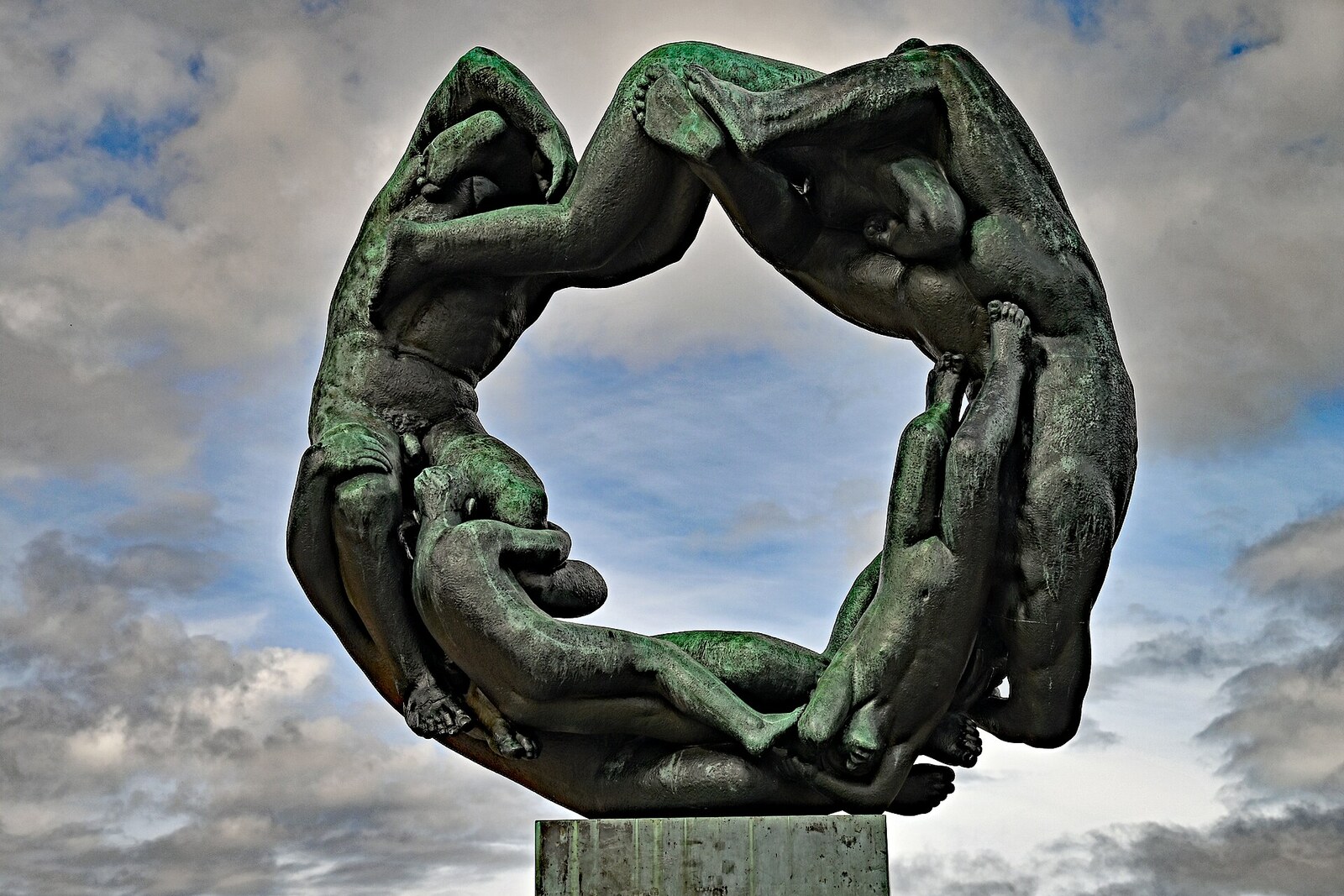
Look around first
What to notice
- Rose beds
- Straight path
- Bronze trees
- Fountain basin
The story of the place
Roses appeared on the plan here before the bronze Tree of Life. After the Jubilee Exhibition of nineteen fourteen, the city was dismantling temporary pavilions and deciding what to do with the land that had been freed up. Oslo was then called Kristiania. Roads, ponds, and a bridge remained from the exhibition, while beyond them lay fields and an uneven slope.
Marius Røhne was responsible for this area—the first city gardener and head of the newly established parks department. He advocated turning the former exhibition grounds into a public park, with places for play and sports, benches, and paths along which people could spread out across the whole area. West of the ponds, Røhne wanted to preserve the natural terrain. His plan of nineteen seventeen already included a rose garden by the bridge.
For Røhne, this was a test of his entire profession. He trained as a landscape architect, interned in Denmark and Germany, and now controlled city funds, land, and plantings. His decisions would determine whether the new parks department would shape public spaces or merely landscape other people's projects.
In nineteen nineteen, Gustav Vigeland's fountain commission laid claim to the same land. The sculptor was looking for a permanent site for his growing ensemble and wanted the western part of the park. Where Røhne preserved the open terrain, Gustav Vigeland drew straight lines, placed sculptures, and subordinated the paths to a single direction.
The dispute went on for years and quickly ceased to be a polite professional discussion. Gustav Vigeland portrayed Røhne in wrought iron as Faun on the Gallows. This work is now kept at the Vigeland Museum. The sculptor turned the person obstructing his vision into a caricature in the very material he used to decorate the future park.
In nineteen twenty-four, Oslo City Council assigned the land west of the ponds to the Vigeland Fountain and The Monolith, and in nineteen thirty-one it approved Gustav Vigeland's expanded plan. Røhne lost the struggle for this part of Frogner, but kept his position and led Oslo's parks until nineteen forty-eight. Gustav Vigeland gained a long, straight composition, but died in nineteen forty-three before it could be fully assembled.
Tree of Life is not the name of a separate avenue or of a single sculpture. This is how the museum suggests understanding the twenty bronze trees around the fountain ahead. Gustav Vigeland arranged human figures from infancy through old age and death: at the beginning, newborns stand among the branches; at the end, the outlines of a skeleton almost merge with the trunk. These groups were installed in nineteen forty-six, three years after the sculptor's death.
Røhne's plan survives here in the rose garden by the bridge—seven hundred fifty square meters of flowerbeds, part of Norway's largest collection of fourteen thousand roses in about one hundred fifty varieties. In Gustav Vigeland's plan, a straight path leads from living bushes to twenty bronze trees.
Useful on site
Always open, free access.
Checked: June 25, 2026. Check the official source before visiting.Do not limit yourself to the flowerbeds: walk around several trees and change your viewpoint to distinguish the hidden figures.