 Guide On Map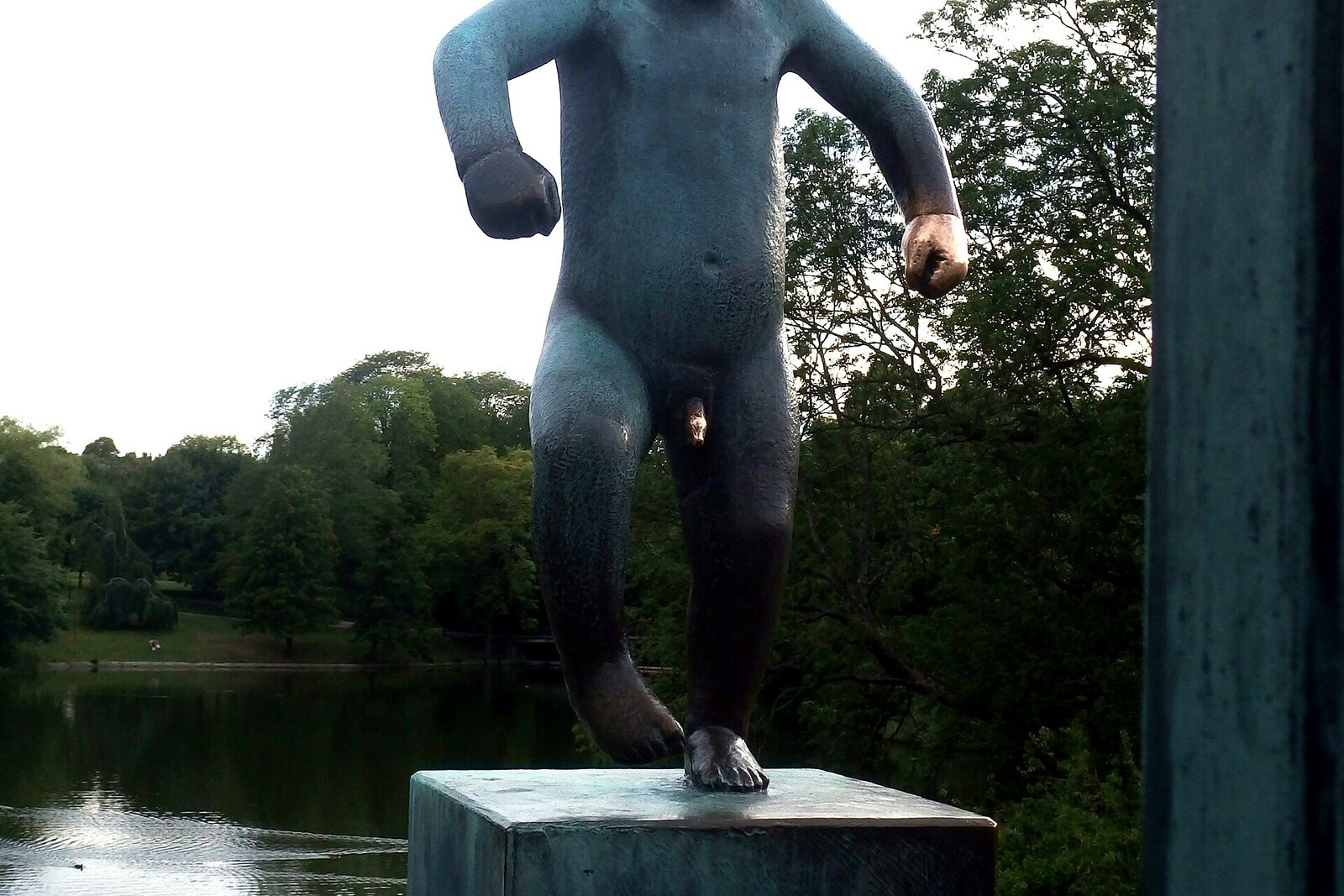
Look around first
What to notice
- Bronze figures on the parapets
- The figure Angry Boy
- Granite groups with lizards
- Two ponds
The story of the place
A bridge already stood here: it was built between the two Frogner Ponds for the Jubilee Exhibition of nineteen fourteen. Gustav Vigeland saw the crossing as a ready-made entrance to his future composition. From the city gates, people were going to walk this way toward the fountain and then up to the rise anyway—so everyone could be led between human figures.
In nineteen thirty, the sculptor opened his studio and showed visitors a model of a wider bridge with bronze groups on its parapets. The public streamed in. A year later, the Oslo City Council, which was to pay for the casting, stone, and construction, approved the project by a large majority. Gustav Vigeland himself received no fee for the park's sculptures: the city supported the studio and its assistants, while he earned money for personal expenses by selling other works and prints. The bridge meant that the figures he had been working on since the mid-nineteen twenties would truly leave the studio.
Gustav Vigeland wanted to arrange the ensemble's main parts at roughly the same time. The war forced him to abandon that order. He considered it too risky to leave finished works in the studio and decided to begin with the bridge. In nineteen thirty-nine, the first granite groups with people and lizards were installed here. The following summer, forty-six of the present fifty-eight bronze sculptures appeared on the parapets—among them Angry Boy, stomping his foot.
On July seventh, nineteen forty, when Norway was already under German occupation, the bridge was opened to the public. A construction site still surrounded it, and many of the structures Gustav Vigeland had planned existed only as models or stood in scaffolding. The sculptor lived less than three years after the opening and never saw the entire park completed.
All fifty-eight bronze figures stand on the present granite bridge. Gustav Vigeland had intended to show them at the same time as the rest of the ensemble, but this old crossing between the ponds became the first completed section of his vision.
Useful on site
Open 24/7; free access.
Checked: June 25, 2026. Check the official source before visiting.Do not touch the bronze boy or hold up the passage for a photograph; the other figures deserve no less attention.