 Guide On Map
How Central Oaxaca Changed
From Zócalo de Oaxaca through Alameda de León and the theater to Santo Domingo de Guzmán Complex
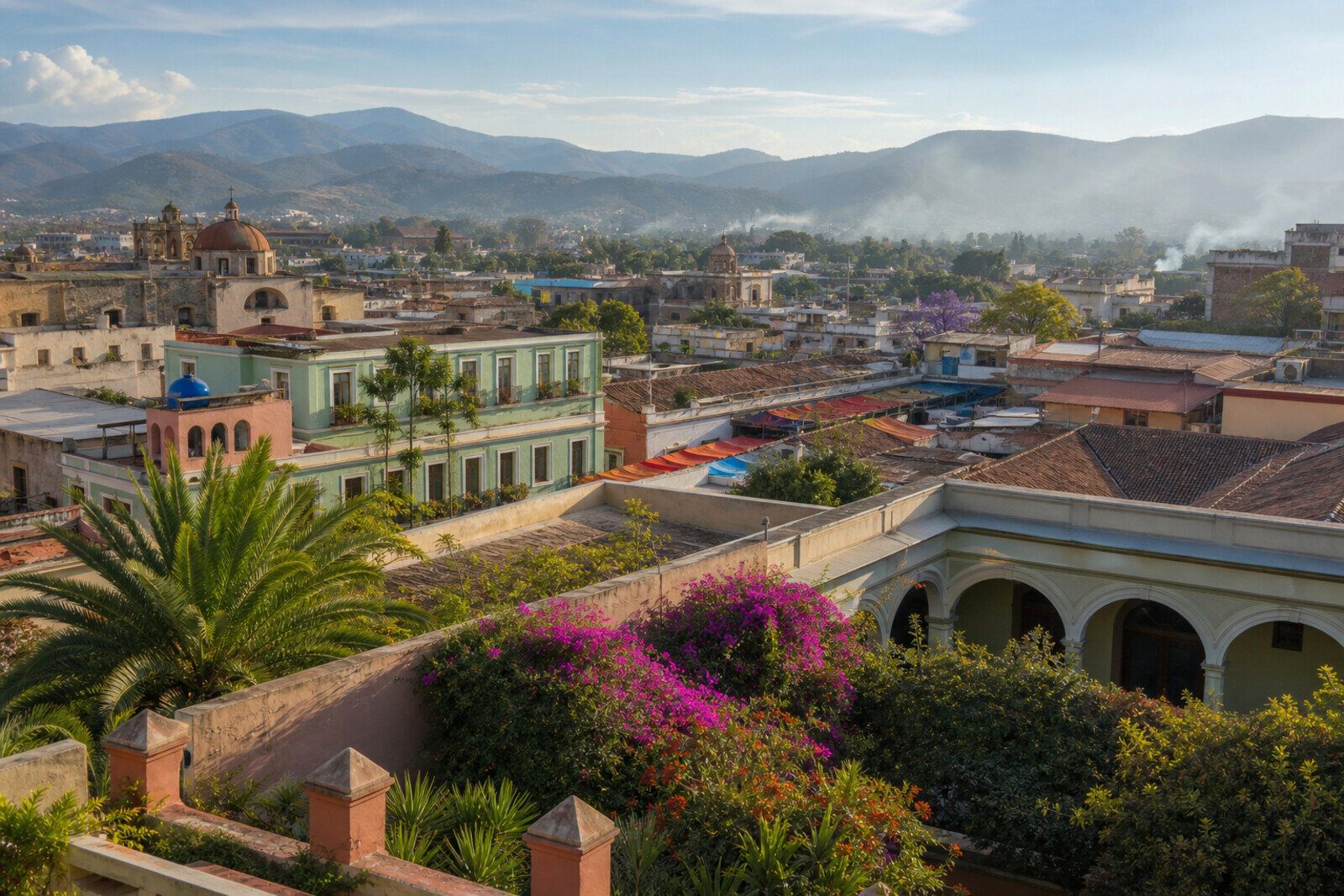
Guide On Map on your phone
Open the walk like a regular app
It takes about 10 seconds to install. No app store needed.
The whole path
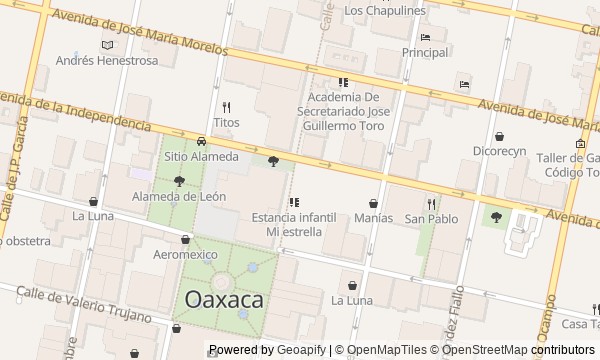
Route map
About the walk
You will cross Oaxaca's historic center from Zócalo de Oaxaca to Santo Domingo de Guzmán Complex. First, the route links the square, the Cathedral of Our Lady of the Assumption, and a small garden. Then you will reach the theater and follow the pedestrian street to the former convent complex.
Along the way, you will encounter a vegetable figurine, a refusal to sign, a newspaper complaint about aching feet, and a rope thrown over a convent wall. Each object opens a question, but the answer arrives only at the stop itself.
The story rests on documents and small human acts. Where a city legend has survived, you will hear a qualification rather than a confident retelling.
At the end, you will be able to walk the route again without guidance and explain why the stretch between Zócalo de Oaxaca and Santo Domingo de Guzmán Complex contains a garden instead of a market, a theater with a divided audience, and a street the city's residents did not want to yield to pedestrians.
Why this order
Zócalo de Oaxaca is the starting point because this is where the city grid brought together government, the Cathedral of Our Lady of the Assumption, and trade. The cathedral stands along the square's northern edge: after the center's everyday life, you will find yourself beside the place where its main institutions argued over the future of government. Immediately to the west lies Alameda de León—on the same cathedral façade, the cost of turning a market into a strolling garden comes into view. From the garden, the route returns along the southern edge of the central hub to Macedonio Alcalá Theater, where public leisure acquired a new façade but preserved the division of its audience. The theater's name continues in the street's name: after the story of seating tiers, Macedonio Alcalá Walkway shows how what changed was no longer seats in a hall, but the right to occupy a city street. You will follow it north to Santo Domingo de Guzmán Complex. In the finale, the earlier transformations of square, garden, theater, and street come together in one complex that successively served as a convent, prison, barracks, church, and museum.
A first introduction to Oaxaca's historic center Those interested in urban decisions through the lives of ordinary people Fans of documentary stories and visible details
Those looking only for colonial architecture without social stories Those seeking a walk through markets and local food Those who avoid busy central streets
Before you go
The main story is experienced from the street, so a closed interior will not disrupt the walk. At the Cathedral of Our Lady of the Assumption and Church of Santo Domingo de Guzmán, first check whether a service is under way: do not play audio loudly, block the passage, or inspect the chapels if the space is occupied by worshippers. Macedonio Alcalá Theater is usually best planned as an exterior stop; access to the auditorium depends on a separate event or available program. Do not treat the Museum of the Cultures of Oaxaca in the former convent and the Ethnobotanical Garden of Oaxaca as a freely accessible continuation of the square: check their entry conditions separately before visiting. Bring water, sun protection, and shoes comfortable on uneven stone.
When to go
Allow about two hours for the six outdoor stops and the walks between them. If you decide to enter accessible interiors, visit the museum, or join a separate garden program, the walk may take up to four hours.
Backup plan
If doors are closed, keep the full route order: its meaning does not depend on seeing every interior. In the square, trace the directions of the streets and the ways the center is used; at the Cathedral of Our Lady of the Assumption, walk around the massive façade; and view Macedonio Alcalá Theater from both converging streets. Along Macedonio Alcalá Walkway, pause at open courtyards, memorial plaques, and cultural addresses without assuming that each one admits visitors. At Santo Domingo de Guzmán Complex, compare the church, the long convent wing, and the open square before them. If heat or crowds make listening difficult, move the audio to the shade of the nearest public square, then return to the building to observe its details.
Route conditions
Surface. Paved — 1 km
Facilities. Toilets — 3
Elevation. Ascent — 9 m; descent — 2 m
OpenStreetMap extract of June 25, 2026: database data, not a check on the ground. Data © OpenStreetMap contributors, ODbL licence
Walk plan
Open in maps ↗- 1
Zócalo de Oaxaca
Here, the route will show how a trading ploy became an annual city custom. - 2
Metropolitan Cathedral
The cathedral introduces the dispute over who has the right to speak in the name of a city occupied by rebels. - 3
Alameda de León
The garden will show you whom the new urban promenade displaced from the cathedral square. - 4
Macedonio Alcalá Theater
The auditorium will show how ticket prices divided viewers of the very same film. - 5
Macedonio Alcalá Walkway
Here, the route will examine the decision after which a contested street became the center's main pedestrian thoroughfare. - 6
Church of Santo Domingo de Guzmán
The finale will tell how monastic walls became part of a secret line of communication with a prisoner.
Route features
Everything you need stays in the browser
Progress, saves and your trip plan are stored on this device.
Add Guide On Map to your home screen so the walk opens outside the browser.
How we handle sources, maps and corrections: our editorial standards