 Guide On Map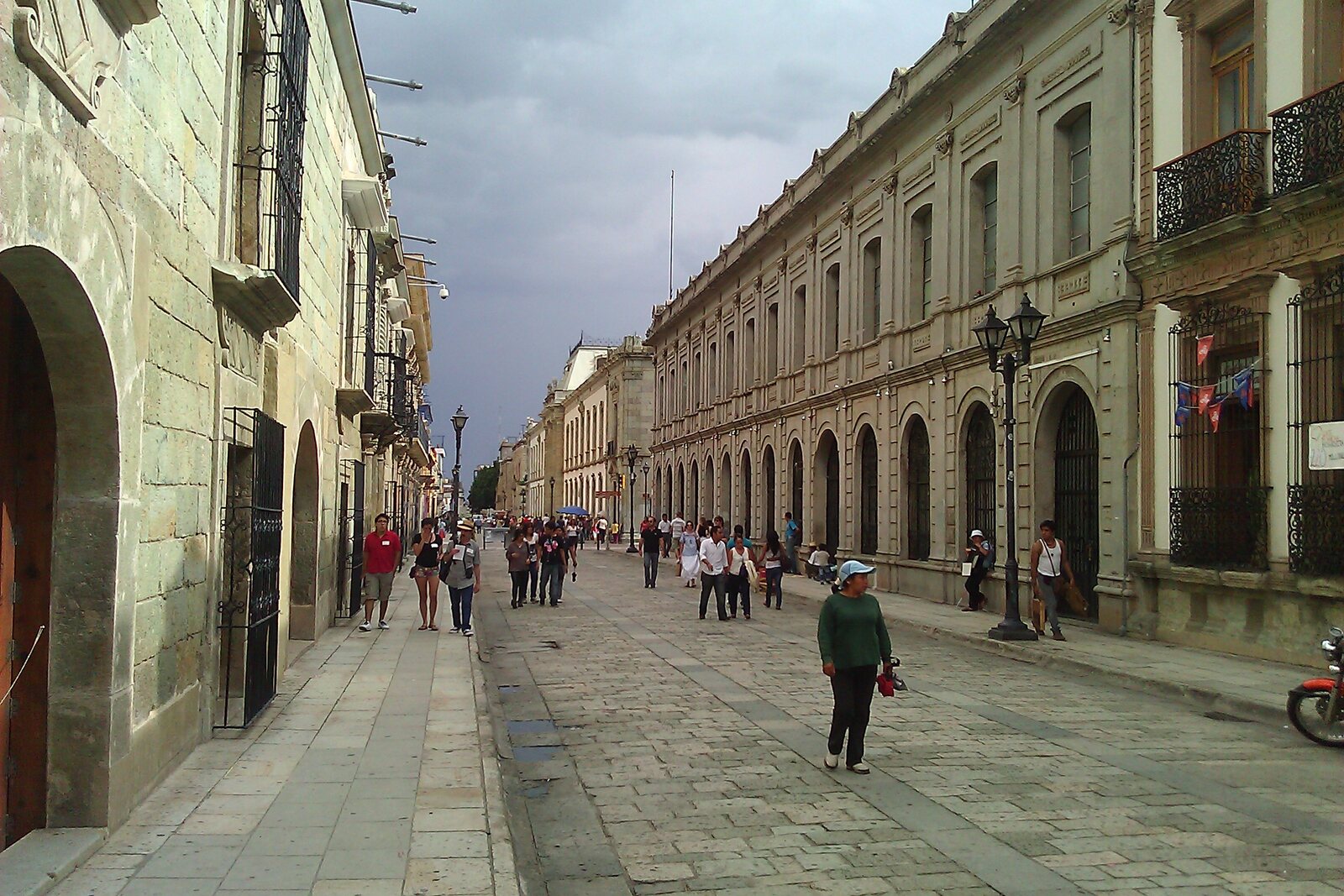
Look around first
What to notice
- Green cantera paving
- Signs bearing Macedonio Alcalá's name
- Shop windows
- Entrances to galleries and museums
The story of the place
Along this strip of green cantera, shop windows alternate with the doors of galleries and museums: the street has brought together a walking route and the commercial row of the historic center. The signs bear the name of Macedonio Alcalá, an Oaxacan violinist and composer who played at festivals, balls, and church services. His house stood elsewhere, on present-day Avenida Morelos, while here the musician is remembered through the name. The waltz Dios nunca muere outlived its author and became Oaxaca's unofficial anthem.
In nineteen eighty-five, Oaxaca's mayor, Jorge Fernando Iturribarría Bolaños, decided to close several blocks between the Zócalo de Oaxaca and the Santo Domingo de Guzmán Complex to cars. He wanted people to be able to walk through the historic center without having to go around parked cars and moving traffic.
Shop owners and street residents resisted. Among the opponents was the owner of the Kronos watch shop: he traded right here and risked losing the usual vehicle access for customers and deliveries. The mayor's decision was called mad and ruinous for trade. Iturribarría nevertheless blocked traffic. Cars were removed, and the street for vehicles became the first pedestrian walkway, a strolling street in Oaxaca. Instead of a stream of cars, the project's opponents received the city's busiest pedestrian route; shops, galleries, and museums clustered along it.
Macedonio Alcalá's name appeared here before this transformation. Alcalá was an Oaxacan violinist and composer who earned a living by performing at festivals, balls, and church services. Toward the end of his life, he was seriously ill and destitute. In eighteen sixty-eight, Alcalá wrote the waltz Dios nunca muere—“God Never Dies.” The stories of coins left by a friend under the sick musician's pillow and of a commission from the residents of Tlacolula belong to legend: the exact circumstances in which the waltz was composed are unknown.
Alcalá died in eighteen sixty-nine. The waltz continued to be performed and, over time, became Oaxaca's unofficial anthem. The municipality gave this street the composer's name.
The house where Alcalá died stands on present-day Avenida Morelos; his dwelling has not survived on the walkway. Here, all that remains of him is his name on the signs, and all that remains of Iturribarría's decision is several blocks of green cantera without vehicle traffic between the Zócalo de Oaxaca and the Santo Domingo de Guzmán Complex.
Useful on site
Open pedestrian street. Access is free, but the courtyards, galleries, shops, and temporary exhibitions along the route operate on their own schedules.
Checked: June 29, 2026. Check the official source before visiting.Walk slowly: the surface is uneven in places, and the flow of people is dense. Access to libraries, workshops, and exhibition spaces depends on their current operations; do not enter an open courtyard if it clearly remains private.