 Guide On Map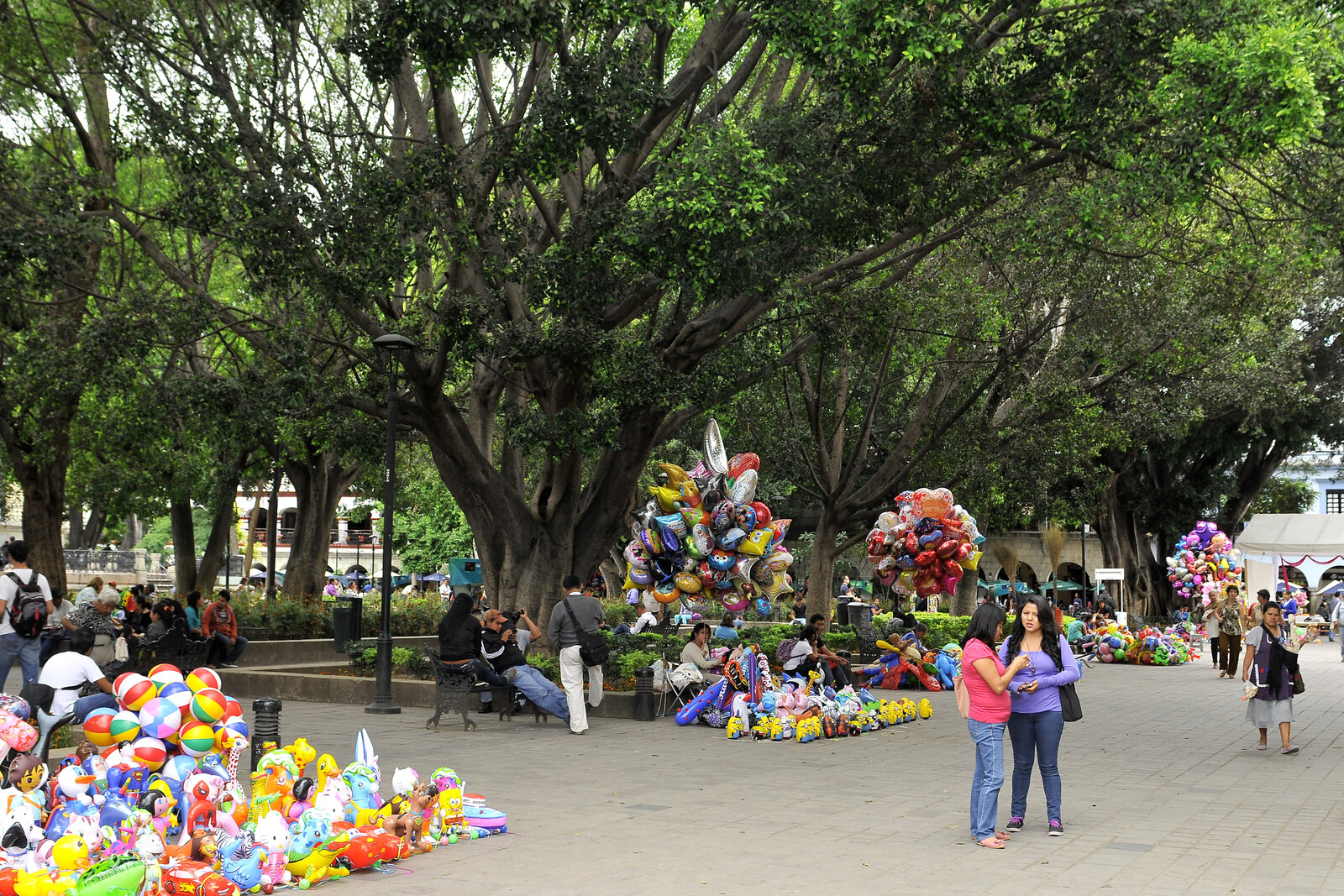
Look around first
What to notice
- Central kiosk
- Radial paths
- Arcades of the commercial porticoes
The story of the place
The kiosk in the middle of the square is the point from which paths radiate, while arcades run along its edges. At the end of the nineteenth century, the square was called Arms Square, and on the eve of the Christmas vigil a market operated here for a meatless supper. Sellers brought vegetables from nearby market-garden districts, which later almost disappeared as urban development took their place.
Paths radiate from the central kiosk, while commercial porticoes stand around the edges. Officially, this is Constitution Square, although in Oaxaca it is usually called the Zócalo de Oaxaca. City planners designated this site for it in fifteen twenty-nine: from here they laid out a rectangular street grid, placing city government and the Cathedral of Our Lady of the Assumption nearby. That is why people came to the square both to settle matters and to shop.
At the end of the nineteenth century, it was called Plaza de Armas—Arms Square. On December twenty-third, a market was held here before the Christmas Eve vigil. Catholics abstained from meat that day, and city residents bought dried fish, lettuce, onions, cabbage, and radishes for their meatless supper.
The vegetables were brought by residents of Trinidad de las Huertas and La Consolación—market-garden districts not far from the center. The harvest provided them with income, and several neighboring stalls competed for each customer in the square. The gardeners began cutting radishes and using their irregular roots as the bodies, heads, and limbs of little figures. They carved them for profit: decorated goods made people linger at a stall.
Francisco Vasconcelos Flores, head of the city council, decided to reward the most skillful gardeners. According to the city’s accepted chronology, the first competition was held here on December twenty-third, eighteen ninety-seven; the earliest surviving competition rules and award record in the municipal archive date to the following year. Participants displayed radish scenes, judges chose the winners, and the contest began to be repeated.
Over the past century, the gardens of Trinidad de las Huertas and La Consolación have almost disappeared beneath urban development. Now special long, round roots are grown for the competition on a plot at El Tequio, and participants receive the harvest just before the exhibition. They assemble dancers, animals, Christmas compositions, and entire village scenes from radishes.
Every December twenty-third, rows of stalls are set up around the kiosk again. They no longer hold supplies for supper, but works from the “Night of the Radishes.” The route remains the same: spectators walk around the Zócalo de Oaxaca where shoppers once chose vegetables from the gardeners.
Useful on site
Open city square. Access is free, but fairs, demonstrations, security services, and city works may alter passageways without tourist notice.
Checked: June 29, 2026. Check the official source before visiting.Listen away from musicians, vendors, and gatherings; the square remains a working public space, not a quiet museum courtyard.