 Guide On Map
Downtown Mexico City: Tenochtitlan and the ceremonial capital
From the Zócalo through Templo Mayor and Madero to Palacio de Bellas Artes
Guide On Map on your phone
Open the walk like a regular app
It takes about 10 seconds to install. No app store needed.
The whole path
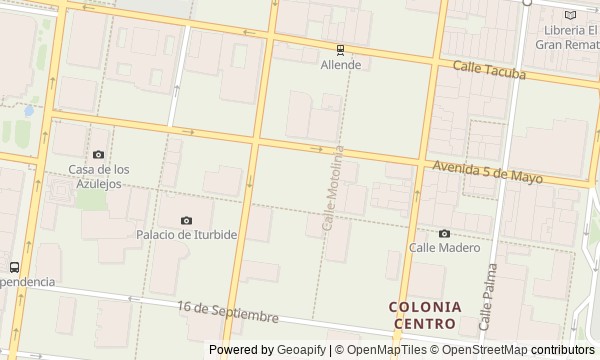
Route map
About the walk
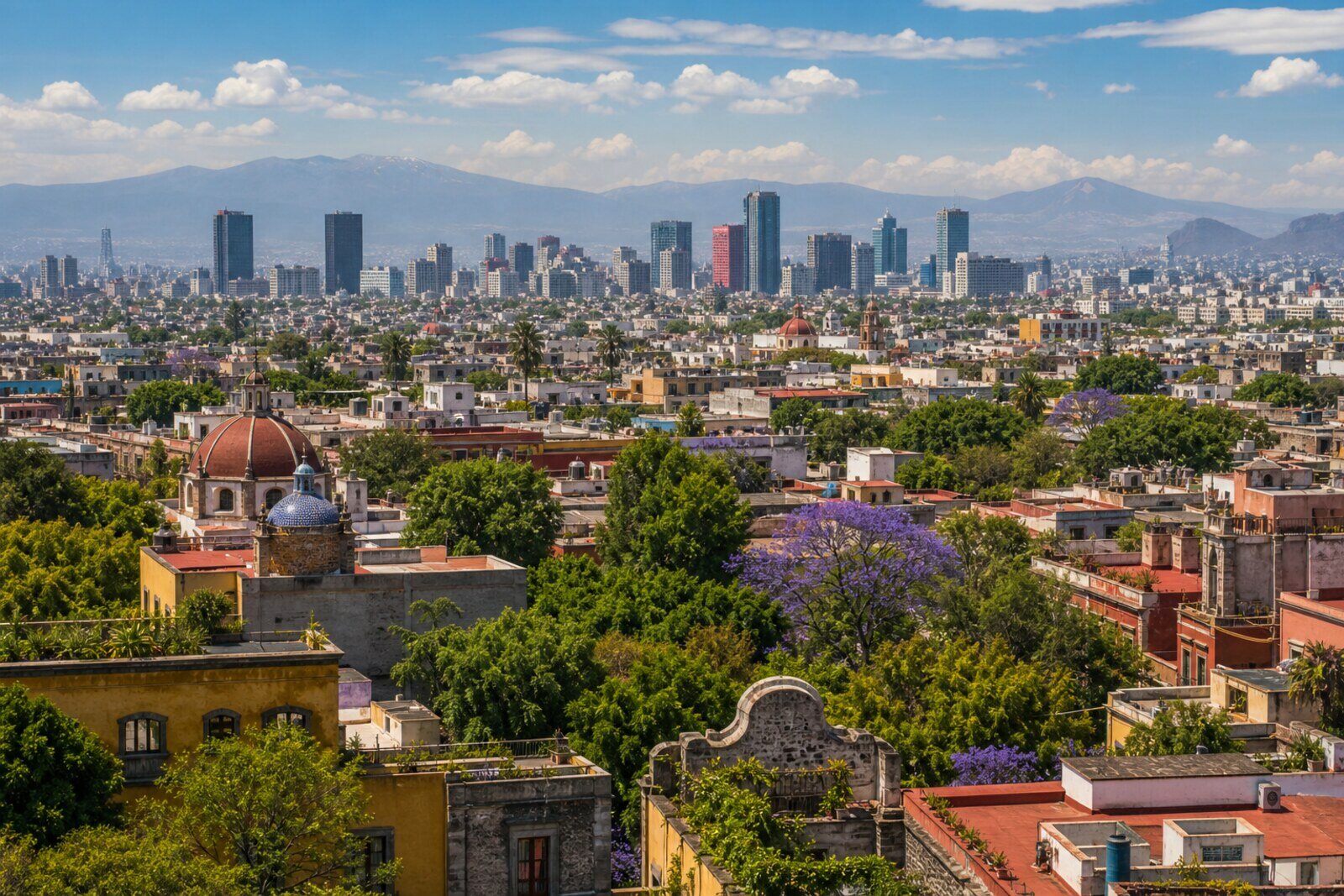
You will begin at the Zócalo, amid the flag, the Mexico City Metropolitan Cathedral, and the long facade of the National Palace. Then you will trace the square's northern and eastern edges, reach the excavated steps of Templo Mayor, and follow pedestrian Madero to Alameda Central and Palacio de Bellas Artes.
This is a walk through the ceremonial heart of the city, where nearly every official symbol grew out of an argument, a demolition, an accidental discovery, or someone's risk. A round base remains hidden beneath the flagpole. Construction ladders are hauled up to the palace windows. A night crew hits a stone and decides not to smash it. A street sign has to be put up from a ladder, under threat.
The story stays with documents, objects, and human decisions. It separates what is confirmed from what is legend, without turning history into a solemn myth. By the end, you will be able to read downtown Mexico City along its real seams: beneath the square, an unfinished monument; beside the cathedral, Tenochtitlan; and behind state ceremonies, particular people and the cost of their choices.
Why this order
The Zócalo comes first because its emptiness and its flag raise the question of how the center was remade into a place of state ceremony. The Mexico City Metropolitan Cathedral stands on the same square's northern side; after the story of displacement, moving there shows that the struggle over the center was fought not only through demolition, but through the clash of church and royal power. Beyond the cathedral's eastern side, Templo Mayor opens up: after a colonial revolt, its excavated steps bring back the earlier Tenochtitlan hidden beneath the same neighborhood. From the temple, the route reaches the National Palace; the bell above its balcony carries the ancient ceremonial center into the state ceremony of the republic. Then cross the Zócalo and head down Madero: the argument over power gives way to a fight over a name, right on the road out of the square. This street leads to Alameda Central, where a public ceremony became a police staging. Palacio de Bellas Artes stands at the park's edge and closes the line: after a ceremony in the open air, the route enters a state hall where official recognition, too, required a personal decision and came at a cost.
Those visiting downtown Mexico City for the first time Those who care about human decisions rather than a list of architectural styles Those who want to connect Tenochtitlan, the colonial city, and the republic in one walking route
Those looking for a route only about pre-colonial Mexico City Those who prefer an architectural overview without political history Those who find it difficult to hear about state violence and public executions
Before you go
Check official notices about access to Templo Mayor, the National Palace, the Mexico City Metropolitan Cathedral, and Palacio de Bellas Artes: services, exhibitions, security, and city events can change entry arrangements.
Do not tie the success of the walk to entering every interior—each stop has a full exterior view.
Set aside separate time for museums and halls, and arrange any necessary tickets independently of the route itself. Bring water and comfortable shoes: downtown has plenty of stone paving, dense crowds, and few places where you can stop for long without blocking the way.
When to go
Go in daylight if you can, so you can make out the contours of the excavation, facade carvings, and palace details. Morning is better for possible interior visits; toward evening, Madero's street life, the shadows in Alameda Central, and the view of Palacio de Bellas Artes through the trees become more vivid.
Backup plan
If part of downtown is closed off, keep to the broad arc from the Zócalo westward and view closed buildings from accessible sides without crossing barriers.
If the interiors of the Mexico City Metropolitan Cathedral, the National Palace, or Palacio de Bellas Artes are closed, focus on their facades, balconies, and the layout of the surrounding space; save museum stories for a separate visit.
In rain or exceptionally dense crowds, shorten your stops at the square and on Madero, and take longer breaks under accessible shelter and along the broad avenues of Alameda Central.
Route conditions
Surface. Paved — 2.6 km (data covers 81% of the route)
Facilities. Toilets — 4
Elevation. Ascent — 40 m; descent — 35 m
OpenStreetMap extract of June 18, 2026: database data, not a check on the ground. Data © OpenStreetMap contributors, ODbL licence
Walk plan
Open in maps ↗- 1
Zócalo
The square will set the route's theme: the ceremonial center arose after the removal of what stood in the way of the new state symbol. - 2
Metropolitan Cathedral
Here you will see how the construction of the main church became part of the struggle between church and royal authority. - 3
Templo Mayor
A discovery beneath the street brings the Tenochtitlan layer back into the route and explains how the main temple was arranged. - 4
National Palace
The bell will link the façade of state power to the annual independence ceremony established here at the end of the nineteenth century. - 5
Pedestrian Madero
One city corner shows how armed victors removed and restored a president's name. - 6
Alameda Central
The park will show how an open state ceremony turned into a police staging. - 7
Palacio de Bellas Artes
The finale will show what price an official might pay for publicly recognizing an artist.
Route features
Everything you need stays in the browser
Progress, saves and your trip plan are stored on this device.
Add Guide On Map to your home screen so the walk opens outside the browser.
How we handle sources, maps and corrections: our editorial standards