 Guide On Map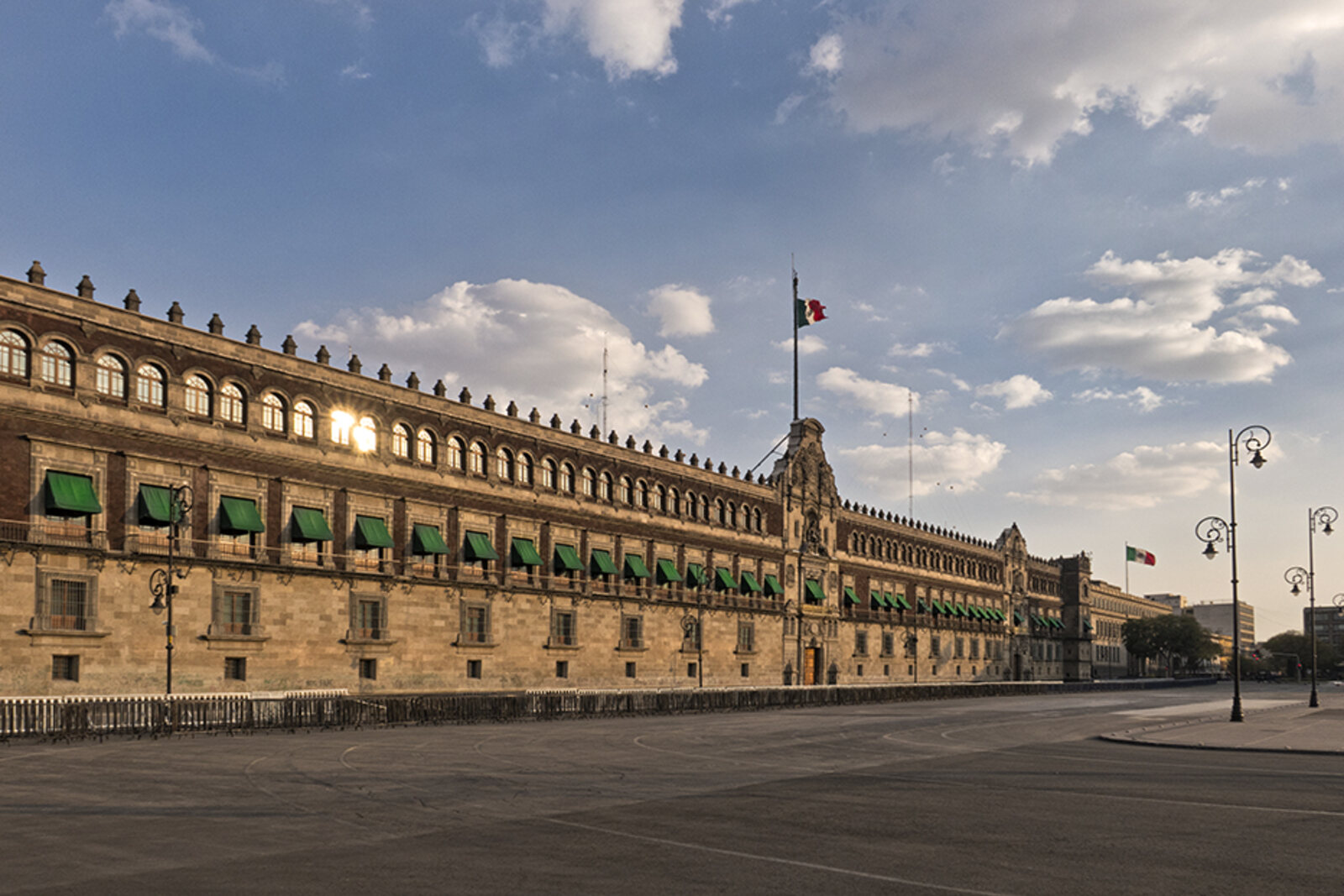
Look around first
What to notice
- Central balcony
- Bell in the niche
- Carved supporting figures
- Sun rays around the niche
The story of the place
Above the central balcony is a niche with sun rays and two carved figures with childlike features; federal institutions work behind the façade. Before the Spanish conquest, the New Houses of Moctezuma, ruler of Tenochtitlan, stood here. The site then passed to the Spanish Crown, and the building housed the viceroy, the royal court, and government offices. After independence, the former Viceroyal Palace was renamed the National Palace.
On September fifteenth, eighteen ninety-six, a ceremonial carriage drawn by six horses made its way to the National Palace. On it lay a bell removed from the tower of the parish church in the town of Dolores—now called Dolores Hidalgo. President Porfirio Díaz ordered the bell brought to the capital and made part of the annual independence ceremony.
The bell was cast in seventeen sixty-eight and dedicated to St. Joseph. Early in the morning of September sixteenth, eighteen ten, the parish priest Miguel Hidalgo, who was gathering local people for an uprising against Spanish rule, ordered that this particular bell be rung. The parish gave Hidalgo status and an income; the rebellion cost him both. The priest was captured and executed the following year. The war he began ended with Mexico’s independence ten years later, while the bell remained in the church tower in Dolores. Before it was moved, its authenticity was established from local residents’ testimony: no written document has survived identifying which of the church bells rang that morning.
This address was chosen for the relic because of the building’s purpose. Before the Spanish conquest, the New Houses of Moctezuma, ruler of Tenochtitlan, stood here. After the city fell, Hernán Cortés appropriated the site, and in fifteen sixty-two his heirs sold the property to the Spanish Crown. The viceroy, the royal court, and government offices were housed here. After independence, the former Viceroyal Palace was renamed the National Palace. Federal institutions still work behind its façade, and the central balcony is used for the main state ceremonies.
The bell was transported under a military guard decorated with a laurel wreath and flags. At the palace, soldiers raised it above the central balcony. Porfirio Díaz announced that from then on, the bell would be rung every year in memory of the beginning of the uprising. At about eleven at night, the president stepped onto the balcony and rang it over the square for the first time. The arrangement established then has remained in place: the ceremony begins here on the evening of September fifteenth.
The present niche did not yet exist that day. In nineteen twenty-six, when a third floor was added to the palace, the bell was raised higher. A niche with sun rays and two carved supporting figures with the features of Indigenous children was made for it. The original acknowledged as Hidalgo’s bell hangs above the central balcony of the National Palace; since nineteen sixty, a copy has been in the tower of the church in Dolores.
Useful on site
The main image of this stop works from the square. Treat a visit to the inner courtyards, murals, and memorial rooms as a separate program with its own access rules.