 Guide On Map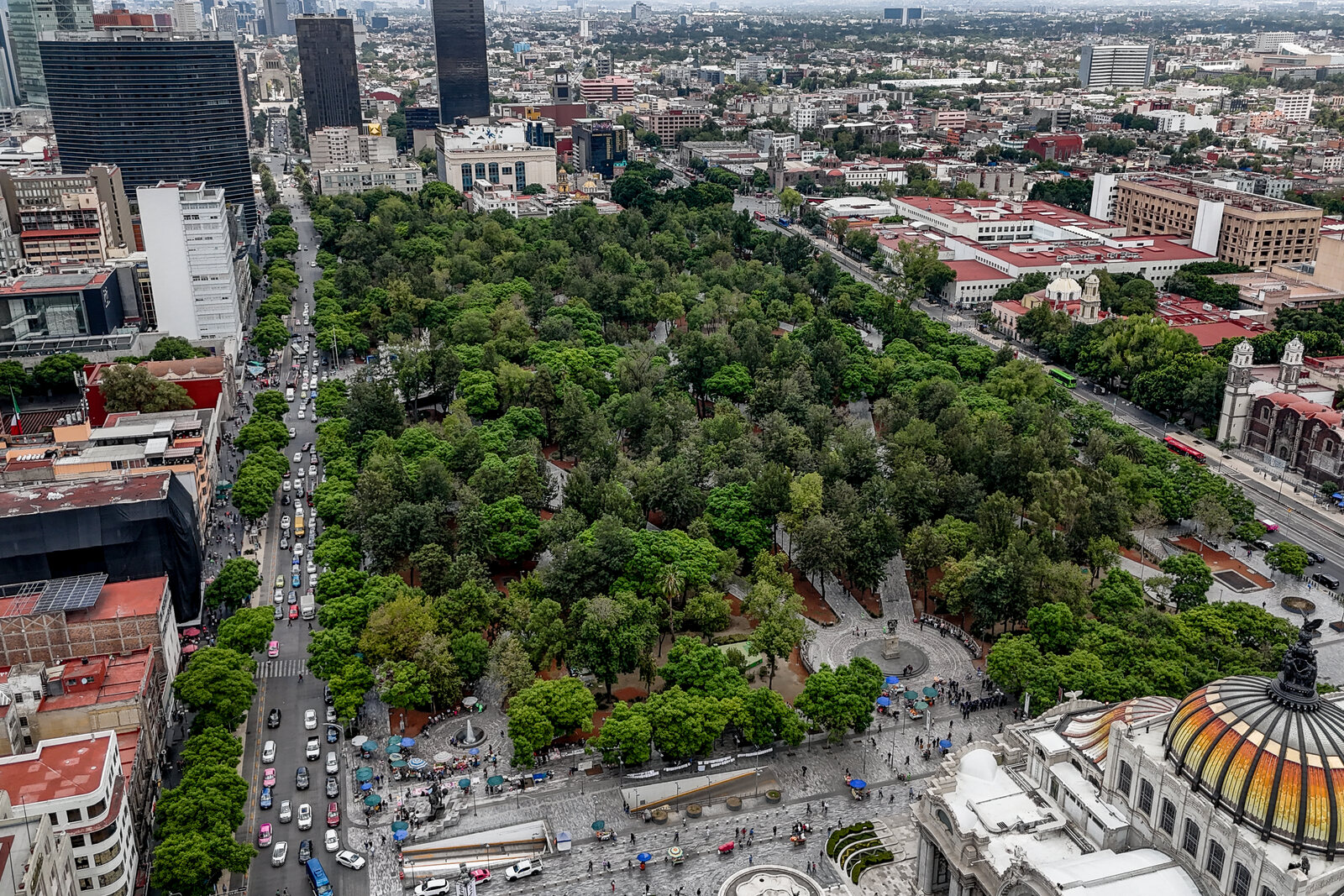
Look around first
What to notice
- Diagonal paths
- Circular plazas
- Fountains
- Monument to Benito Juárez
The story of the place
Diagonal paths run between circular plazas and fountains according to a layout that did not take shape all at once. At first, there was a square garden here, with a ditch around its edge and one entrance on the eastern side; it was planted with poplars at the city's western edge. Then the park was enlarged, surrounded by a fence, and made into a place where wealthy residents came in carriages to display their clothes and horses. Later, the fences began to be dismantled, and the former class prohibitions were abolished.
On September sixteenth, eighteen ninety-seven, President Porfirio Díaz was walking along the southeastern edge of the Alameda toward the Moorish Kiosk. A ceremony honoring the heroes of independence was being prepared there. Cadets from the military academy formed a living corridor, with townspeople standing behind them—from officials and wealthy families to people who were not usually allowed so close to the president.
The Alameda was a natural choice for ceremonies of this kind. In fifteen ninety-two, Viceroy Luis de Velasco ordered a place for walks and recreation to be laid out at the city's western edge. The Spanish word “alameda” meant a promenade lined with poplars. The first garden was square, surrounded by a ditch, with a single entrance from the east. Later, officials added diagonal paths, circular plazas, and fountains, expanded the grounds, and put up a fence. Carriages traveled along the avenues: wealthy residents came to display their clothes, horses, and status. Guards drove away the poor and beggars.
Under President Benito Juárez, class restrictions were lifted, and part of the walls and fences was soon dismantled. By the end of the nineteenth century, the Alameda was already hosting citywide celebrations. The open park allowed the president to walk before thousands of people, but now only a chain of cadets could separate the invited guests from everyone else.
Arnulfo Arroyo broke through it—a thirty-year-old man with legal training who lived in poverty. During questioning, he would say that poverty had driven him to despair and that he wanted a change in the system of government. He had no weapon. Arroyo reached Díaz and struck him from behind.
People from the presidential entourage knocked the attacker down and began beating him. Díaz was barely hurt and personally ordered the blows stopped: Arroyo was to be handed over to the court. The chief inspector of the city police, Eduardo Velázquez, took it upon himself to carry out this order. He took the bound and gagged detainee to a cell at the city palace, although he understood that the guard there was too small.
That evening, Velázquez showed the prisoner to his guests. The inspector then arranged with two subordinates to kill Arroyo and present the murder as retaliation by an outraged crowd. At night, police officers from the second inspectorate entered the cell and inflicted numerous stab wounds on the unarmed prisoner. Other officers fired into the air and seized random adults and children: in the morning, they planned to pass them off as participants in the lynching.
At first, newspapers printed the police version. It meant that a crowd had entered a guarded building without obstruction, and the investigation quickly reached the officers themselves. Velázquez and his accomplices were arrested; several police officers confessed to the staging. The chief inspector killed himself in his cell with a revolver secretly smuggled in. Arroyo, whom the president had ordered tried, did not live to stand trial.
There is no marker at the southeastern corner of the Alameda identifying the place where he struck. The Moorish Kiosk that Díaz was walking toward has also disappeared: later, on Díaz's orders, the metal building was dismantled and moved to the Santa María la Ribera neighborhood. A semicircular monument to Benito Juárez now stands at the kiosk's former site on the park's southern side.
Useful on site
Choose a quieter side avenue where you will not need to block the way. Diego Rivera's mural is not in the park itself—plan your visit to it separately.