 Guide On Map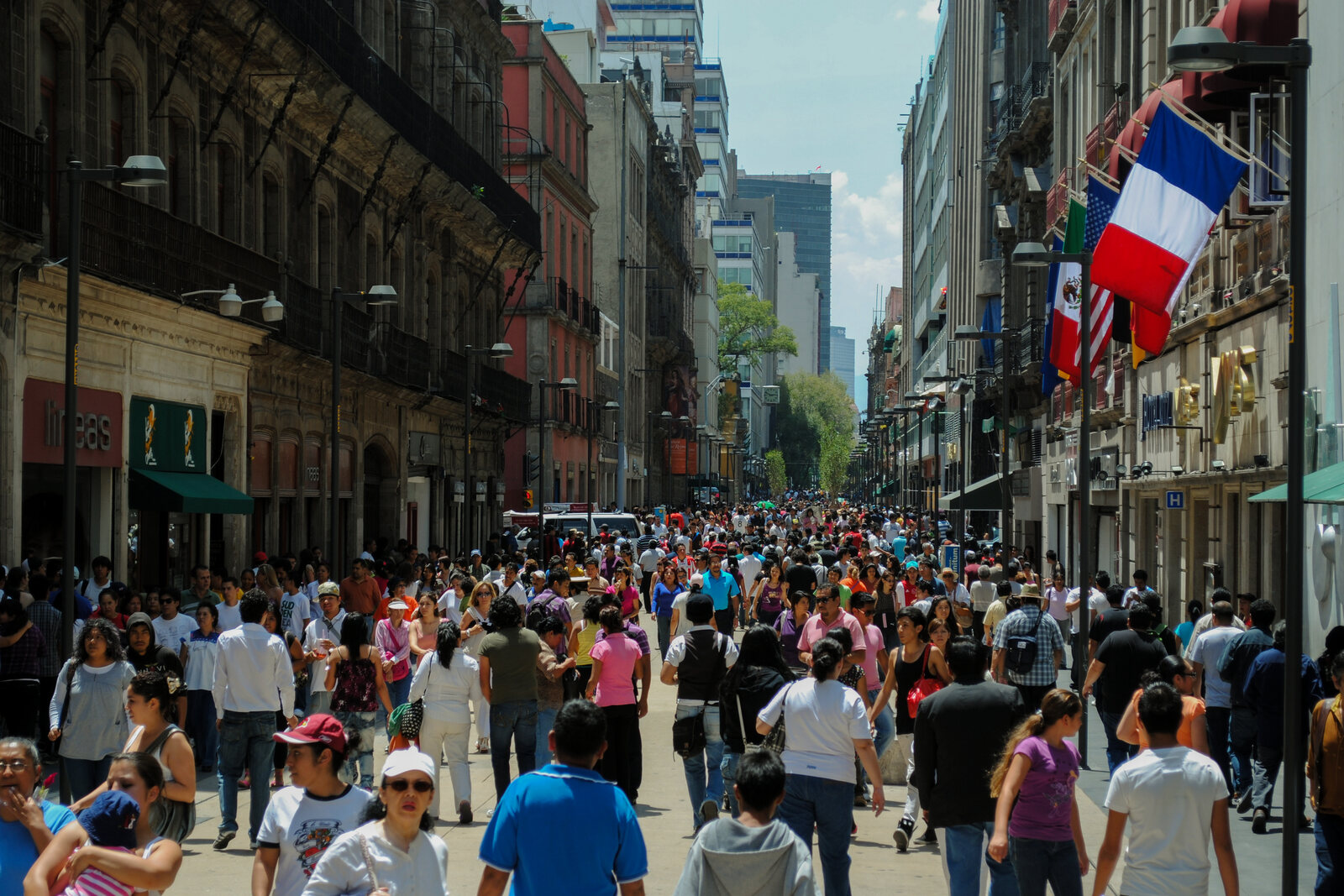
Look around first
What to notice
- Street signs bearing the name Madero
- The façade of the former La Esmeralda
- The entrance to Museo del Estanquillo
The story of the place
Today's pedestrian Madero runs from Eje Central toward the Zócalo along the route of an old commercial street. Its sections once had different names: after the Franciscan monastery, the Church of San Felipe Neri “La Profesa,” and silversmiths' workshops. In the seventeenth century, silversmiths were brought closer to the main square, and the jewelry trade outlived the old guilds themselves. At the corner with Isabel la Católica, the façade of the former jewelry store survives; Museo del Estanquillo now operates behind it, and the signs retain the name Madero.
On the morning of December eighth, nineteen fourteen, Francisco Villa, commander of the Division of the North, ordered a ladder placed against the façade of La Esmeralda jewelry store on the corner with Isabel la Católica. In the surviving photograph, Villa stands on a rung with a pistol at his belt and fastens a sign: “Avenida Madero.”
Previously, sections of what is now the street were named for San Francisco Monastery, the Church of San Felipe Neri “La Profesa,” and the silversmiths—Plateros. In the seventeenth century, city officials ordered silversmiths to settle closer to the main square. Jewelry stores remained here even after the old guilds disappeared. Yet uniting the three sections under one person's name proved harder than putting up a sign.
Francisco I. Madero was the president who secured Porfirio Díaz's resignation after his many years in power. Madero promised free elections and a review of the seizures of communal land. He became president, but the peasants of the south did not receive land as quickly as they expected. Madero demanded that their detachments disarm. In response, the fighters of the Liberation Army of the South declared him a traitor and continued the war.
After a military coup, Madero was killed in February nineteen thirteen. Several months later, the revolutionary general Lucio Blanco, who had taken the capital and wanted to honor the slain president, gave this street his name. When the Zapatistas entered the city, they tore down the sign: to them, the surname Madero meant an unfulfilled promise to return the land.
Villa had his own score to settle with this memory. After the revolution's first victory, he returned to Chihuahua and opened four butcher shops with his brothers. When a rebellion rose against Madero's government, Villa left the trade, gathered an armed detachment, and set out to defend the president. Madero assigned command of the campaign to the federal general Victoriano Huerta. Huerta despised the former rebels and, after an argument, accused Villa of insubordination.
In June nineteen twelve, Villa was led out to be shot. A colonel first stopped the execution because he saw no evidence of rebellion, and then Madero sent a telegram ordering them not to fire. The president nevertheless kept Villa in prison and did not answer his requests for a meeting. Villa escaped to the United States. When Huerta overthrew and ordered the killing of Madero, the fugitive returned, gathered an army again, and now fought against the man who had nearly had Villa himself shot.
By December nineteen fourteen, Huerta had been defeated, and Villa entered Mexico City together with those same Zapatistas who rejected Madero. Two days after their joint march, he restored the sign to the corner of La Esmeralda. According to chronicles, Villa threatened to shoot anyone who tried to take it down. He then went to the French Cemetery and, speaking at Madero's grave, wept.
Today, Museo del Estanquillo operates in the former La Esmeralda. Cars were removed from Madero only in October two thousand ten, turning the old commercial route between Eje Central and the Zócalo into a pedestrian corridor. Modern signs retain the name that was first put up here, then torn down, and put up again.
Useful on site
Do not stop in the middle of the flow; for the story, move over to the façade or a wider section of the street. The interiors of palaces and establishments are not required for this part of the route.