 Guide On Map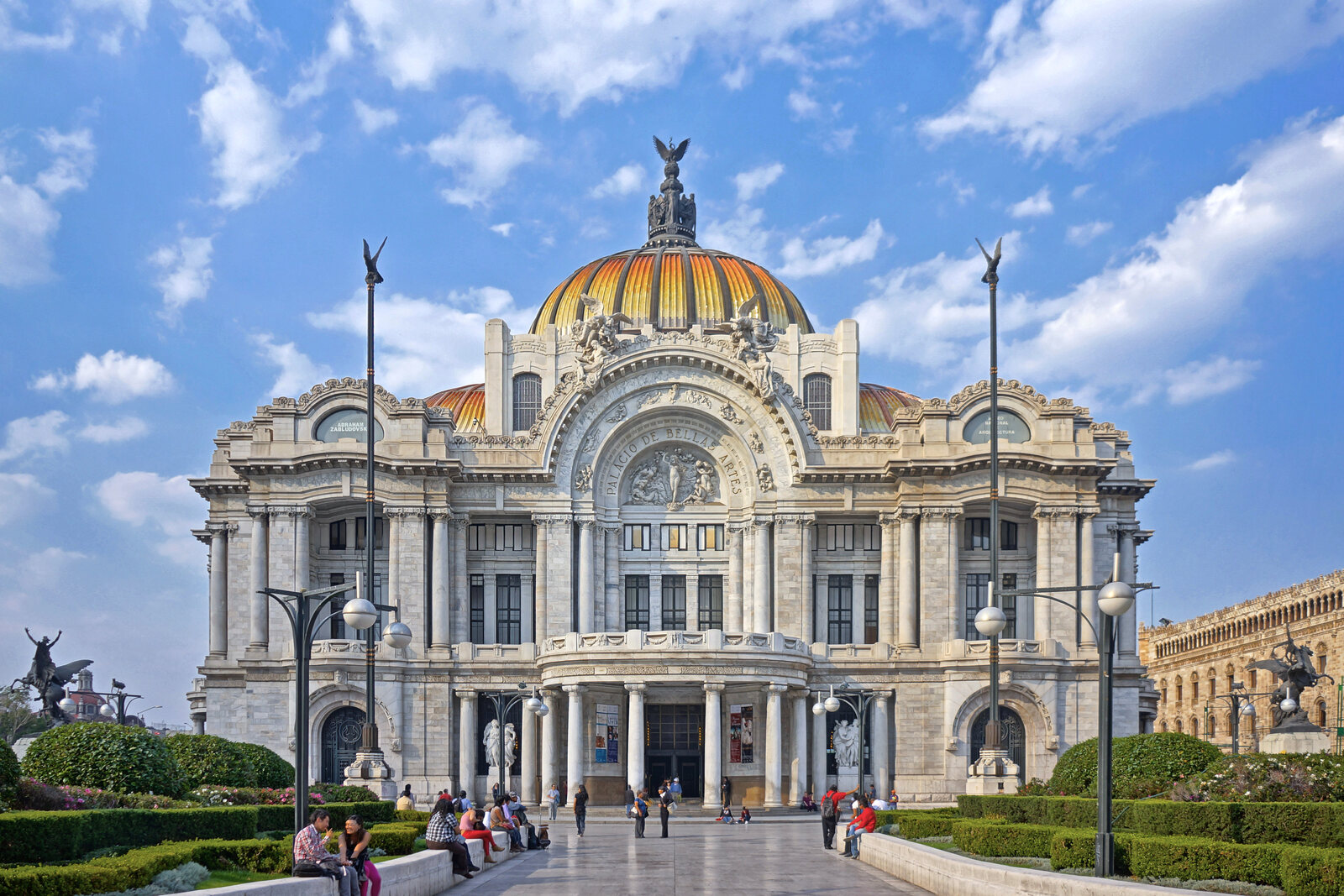
Look around first
What to notice
- Main facade
- Ceremonial entrance
- Ceremonial lobby
The story of the place
On July thirteenth, nineteen fifty-four, the artist Frida Kahlo died. The following day, her coffin was brought to the ceremonial lobby of Palacio de Bellas Artes. Andrés Iduarte, director of the National Institute of Fine Arts, gave permission. It depended on him whom they would honor here on behalf of the country's leading arts institution.
Kahlo's fame today can distort what was at stake in this decision. During her lifetime, she held just one solo exhibition in Mexico—only a year before her death. Doctors forbade her to leave her bed, so the artist arrived at the opening in an ambulance and received guests while lying down. The Institute was already preparing the next exhibition of her work: the paintings were held by different owners, collecting them was taking time, and Kahlo was eagerly awaiting it. Her death cut the preparations short.
Iduarte decided to replace the unrealized exhibition with a posthumous tribute. Various arts associations asked him to receive the coffin at the Palacio. He did not coordinate the decision with the minister of education: in his view, the law on the Institute's autonomy allowed the director to make such decisions himself. Later, Iduarte explained his choice plainly: assessing artists' merits was his job, and Kahlo's works deserved such a farewell.
Why the coffin was brought here is explained by the building's name. It was begun as the new National Theatre. In nineteen thirty-two, Finance Minister Alberto Pani ordered the unfinished theater to be turned into the country's leading national arts institution, with museums and exhibition halls. That was when the name Palacio de Bellas Artes appeared—the Palace of Fine Arts. After it opened in nineteen thirty-four, opera, ballet, and dramatic performances were staged here, and concerts and art exhibitions were held. A public farewell in its lobby meant official recognition of a person as part of national culture.
During the ceremony, a red flag of the Mexican Communist Party was laid on Kahlo's coffin. Iduarte maintained that he had not permitted this and had not known about the flag in advance. Several times, he asked the relatives to remove it. They replied that they were carrying out Kahlo's last wish. The director then refused to interrupt the farewell at the coffin, though he understood what he was risking.
A day after the ceremony, Education Minister José Ángel Ceniceros removed Iduarte from office. The director lost his position specifically for the decision to admit the coffin to the Palacio and for not ordering the flag removed by force. After the farewell, Kahlo's body was taken away for cremation; her ashes are now in an urn at the Blue House in Coyoacán.
Nothing remains in the lobby: neither the coffin nor the red flag nor a permanent marker of that day. Public farewells for artists, writers, musicians, and performers are still held here: the coffin is again placed in the ceremonial hall of Palacio de Bellas Artes, and the doors are opened for a public ceremony.
Useful on site
An exterior visit is enough to complete the route. The murals, exhibition halls, and performances require a separate visit; do not count on getting inside without checking the program.