 Guide On Map
Belém by the Tagus: monastery, monuments and a river fortress
From the old pastry shop through Empire Square to Belém Tower
Guide On Map on your phone
Open the walk like a regular app
It takes about 10 seconds to install. No app store needed.
The whole path
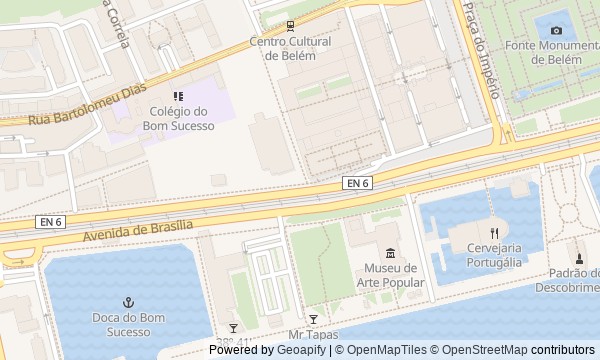
Route map
About the walk
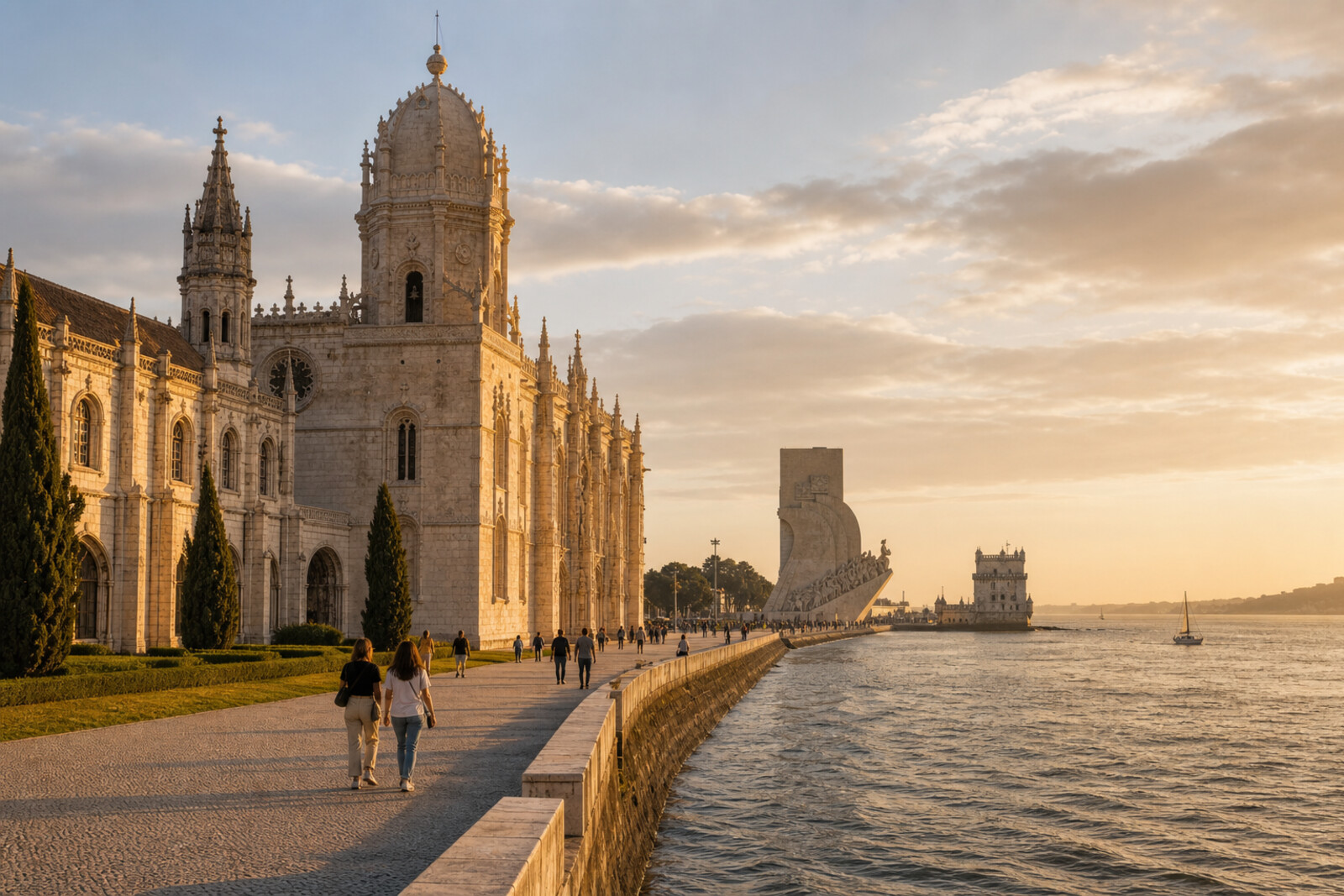
You will begin in old Belém, beside the pastry shop and the monastery, then cross the formal garden of Empire Square, pass the modern cultural centre and reach the Tagus. From there, the route will stay close to the water: a stone caravel, a marina on the site of an air base, and a tower at Lisbon’s river entrance.
This will not be a ceremonial parade of great navigators. You will see how Belém was assembled over centuries for very different purposes: for the royal family, a major exhibition, European meetings, a long-distance flight and the defence of the harbour. Along the way come a deed for a secret recipe, a drawing made in a single night, a monument its own author opposed, and three aircraft needed for one journey across the ocean. The answers will appear at particular doors, pools, figures and cannon openings; legends will be separated from documents. By the time you reach the tower, you will no longer arrive through a postcard of discoveries, but through a Belém where state ambitions repeatedly came down to a human decision.
Why this order
The pastry shop and Jerónimos Monastery stand side by side and are connected by the monastery’s closure, so the route begins with a family business and then moves to the place that made it possible. Empire Square lies before the monastery’s south façade: here royal Belém gives way to the Belém of the 1940 exhibition. On the square’s western side, the Belém Cultural Centre shows how the same setting was later used for European meetings. From its stone buildings, the route reaches the Tagus and the Monument to the Discoveries—the defining image of the exhibition waterfront. The promenade then leads to Bom Sucesso Dock: after the stone navigators comes the place where a real ocean crossing began. The final stretch along the water ends at Belém Tower, where the whole route to the river turns into a question of defending the harbour entrance.
Those who want to understand Belém beyond the postcard image of navigators People who enjoy stories of construction, mistakes and human decisions Those who like alternating between architecture, urban history and a walk by the water
Those expecting only biographies of famous navigators Those uninterested in twentieth-century history Those who prefer walks without long exposed stretches by the river
Before you go
The main story can be followed from outside, so entering every building is not essential. If you want to see the Jerónimos cloister, the Belém Cultural Centre exhibitions, the interior of the Monument to the Discoveries or the rooms inside the tower, check access conditions on their official websites in advance: each site has its own visiting arrangements.
Bring water, comfortable shoes, and protection from sun or rain—much of the route crosses open squares and the waterfront. It can be windy by the river. For historic interiors, allow for stairs, narrow passages and possible waits; if accessibility is a concern, check the appropriate entrance before setting out.
When to go
Allow 2–3 hours for the walk and listening. Visiting the cloister, museums, viewing platform or the tower interior will add time; it is better to choose one or two of these stops than try to fit everything in at once.
Backup plan
If a site is closed or the queue is too long, keep the order unchanged: the stories of Jerónimos Monastery, the Belém Cultural Centre, the Monument to the Discoveries and the tower can all be read through their façades and surrounding space. Save interior visits for another day.
In heavy rain or strong wind, split the route: do the first four stops first, then leave the river section from the monument to the tower for later. If fatigue catches up with you sooner, finish at the Belém Cultural Centre or the Monument to the Discoveries—from there the route’s main theme is already clear, though the stories of aviation and the defensive tower will remain unheard.
Route conditions
Elevation. Ascent — 18 m; descent — 21 m
OpenStreetMap extract of June 18, 2026: database data, not a check on the ground. Data © OpenStreetMap contributors, ODbL licence
Walk plan
Open in maps ↗- 1
Pastéis de Belém
Here, a family product will open into the history of a closed monastery, sugar, and ownership of a recipe. - 2
Jerónimos Monastery
This stop will link the royal burial place with the shore from which sea expeditions set out. - 3
Empire Square
Here it becomes clear which part of exhibition-era Belém outlasted the temporary pavilions. - 4
Belém Cultural Centre
This stop replaces the imperial scenography with Portugal’s controversial construction project within the new Europe. - 5
Monument to the Discoveries
Here, the permanent monument must be compared with its temporary exhibition original and its creator’s intent. - 6
Bom Sucesso Dock
This stop will return the story from the stone navigators to the people who tested ocean navigation in the air. - 7
Belém Tower
The finale will test the river fortress not by its decorative façade, but by one real attack.
Route features
Everything you need stays in the browser
Progress, saves and your trip plan are stored on this device.
Add Guide On Map to your home screen so the walk opens outside the browser.
How we handle sources, maps and corrections: our editorial standards