 Guide On Map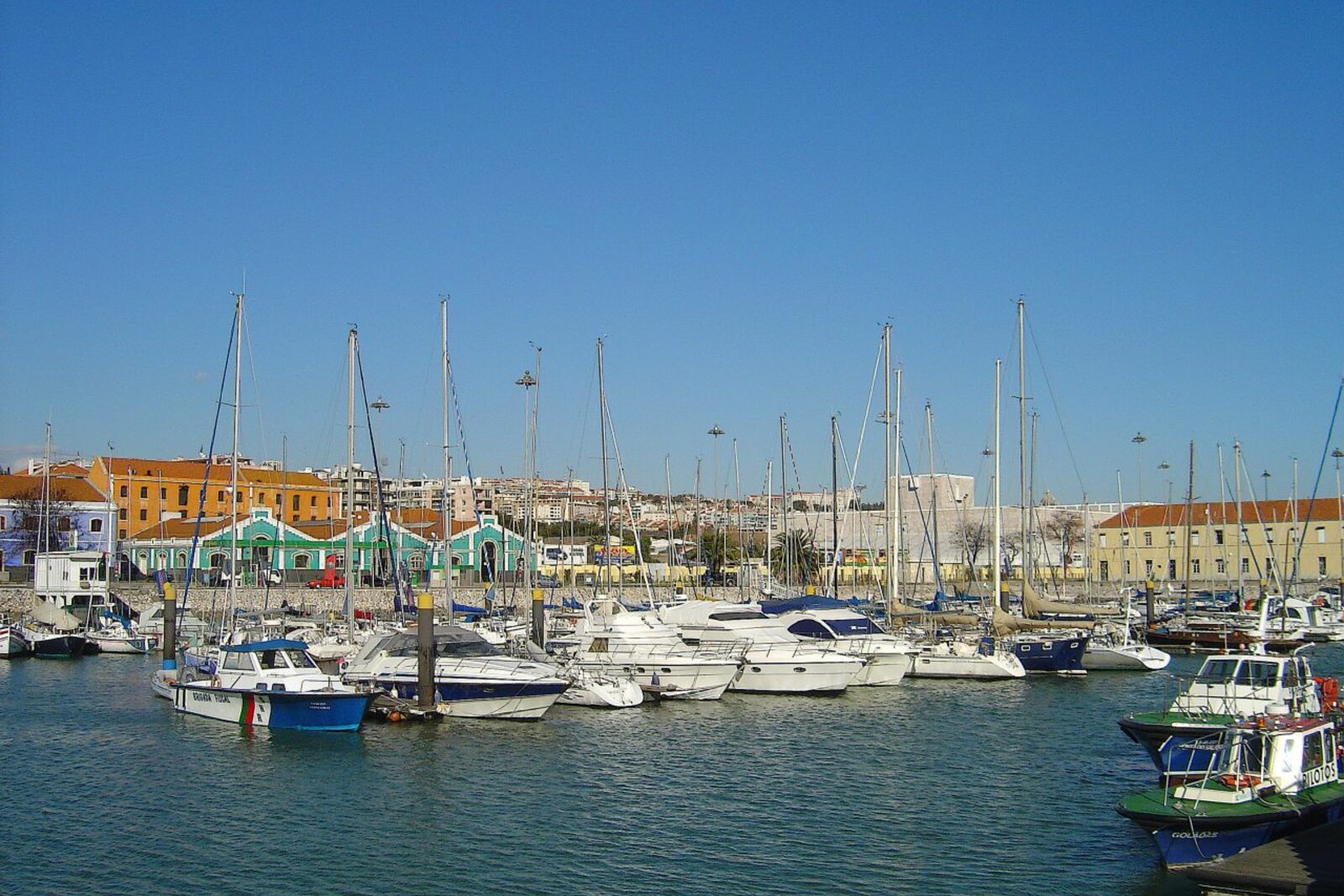
Look around first
What to notice
- Steel biplane
- Marina basin
- Floating pontoons
- The dock's exit onto the Tagus
The story of the place
Today, pleasure craft and private vessels stand in the sheltered basin of Bom Sucesso Dock, and water and electricity are supplied to the floating pontoons. In nineteen seventeen, the navy established Portugal's first operational naval aviation center here: aircraft were kept and repaired on shore, then lowered into the water. The dock's exit leads straight onto the broad Tagus, so aircraft on floats did not need a runway. A steel biplane remains at the berth, while water between the vessels now conceals the place of the actual departure.
On March thirtieth, nineteen twenty-two, at seven in the morning, the seaplane Lusitania left this basin and entered the Tagus. The departure had not been announced in advance, but a small crowd gathered on the shore anyway. Two career naval officers sat in the open cockpits. The pilot Sacadura Cabral wanted to be the first to take an aircraft from Lisbon to Rio de Janeiro. The hydrographer and cartographer Gago Coutinho was to prove that a route could be determined over the ocean with maritime precision.
Seaplanes were here because of their landing gear: they had floats instead of wheels. In nineteen seventeen, the navy established Portugal's first operational naval aviation center at Bom Sucesso Dock. The aircraft were stored and repaired on shore, lowered into the sheltered basin, and taken out onto the open Tagus for takeoff. Sacadura Cabral commanded this center. He knew its shortcomings well: the dock was cramped, and there was nowhere to expand the base. For the start of a long-distance flight, something else mattered more—the aircraft went straight onto the river from the basin gates.
From nineteen nineteen onward, Cabral chose an aircraft and calculated the fuel supply, while Coutinho adapted maritime navigation to a cramped cockpit. An ordinary error in course over the ocean accumulates hour after hour; you can pass the needed island at a distance and not even know it. Coutinho drew maps on stiff cardboard so he could do without a navigator's table, checked the aircraft's position by the sun, and calculated with Cabral how much the wind was carrying the aircraft off course.
Their most dangerous test awaited them between Cape Verde and the rocks of the Saint Peter and Saint Paul Archipelago. These scraps of rock in the middle of the ocean were the only possible stop before Brazil. Lusitania used more fuel than Cabral had expected, and its floats were taking in water. After several hours, it became clear that the gasoline might not be enough. Cabral and Coutinho discussed turning back by notes—they could not talk in flight. They continued, understanding that if they were forced to land far from the rocks, no one would be able to distinguish a fuel shortage from a navigator's error.
After eleven hours and twenty-one minutes, having covered about one thousand seven hundred kilometers over the open sea, they found the tiny rocks. Coutinho's calculations worked. But during the landing, a wave broke a float, and Lusitania sank. The second aircraft sent to them lost its engine over the sea; the officers were picked up by a passing vessel. The Portuguese Navy sent a third aircraft, and on June seventeenth Cabral and Coutinho finally reached Rio de Janeiro. The first aerial crossing of the South Atlantic took three seaplanes.
The name Bom Sucesso existed long before this flight and means “a favorable outcome.” The coastal area received it from the Monastery of Our Lady of Bom Sucesso, founded nearby by Irish Dominicans. Today the former air base serves as a marina: pleasure craft and private vessels stand in the basin, and water and electricity are supplied to the floating pontoons. Lusitania did not return from here; the steel biplane at the dock is a monument, and water between the berths now occupies the place of its actual departure.
Useful on site
The marina is open around the clock for walks; it is a harbor for yachts and small boats.
Checked: June 17, 2026. Check the official source before visiting.Listen from the public waterfront and do not go out onto the service pontoons. Traces of the seaplane base may not be visible: here it is more important to compare the quiet water with the scale of the departure.