 Guide On Map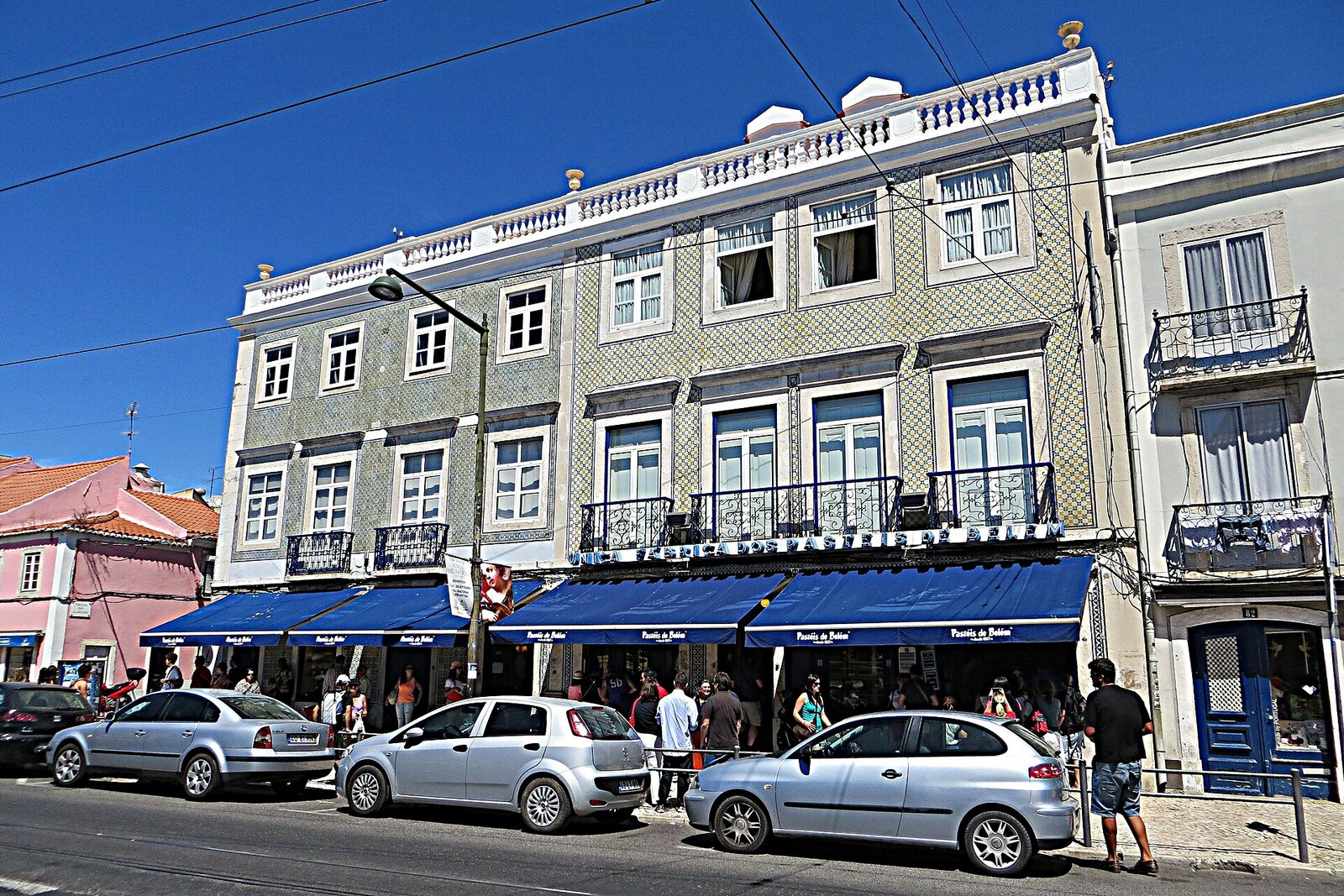
Look around first
What to notice
- The pastry-shop counter
- Tarts in the display cases
- The white door marked “Oficina do Segredo”
The story of the place
Behind the pastry shop's display cases, its own workshop is at work: the dough and custard are made here separately from the rest of the production. The white door behind the counter leads to a closed workshop, where only a few pastry chefs are admitted. The tarts made here are not distributed to branches, so their name has remained tied to one Belém address. In other pastry shops in the country, similar baked goods are called differently.
At the beginning of the nineteenth century, people at the site of today's counter sold a little of everything. Behind the shop was a sugar-refining workshop owned by the merchant Domingos Rafael Alves: cane sugar was purified here. This proximity proved decisive when people from Jerónimos Monastery across the road lost their former lives.
After the liberals' victory in the civil war, the Portuguese government dissolved the male monastic orders. In eighteen thirty-four, the Hieronymites had to leave the monastery; laypeople who served there lost their work as well. According to legend, one of the monastery's former residents or workers brought small puff-pastry tarts with egg custard to Alves's shop. He wanted to earn a living and began selling what he had previously made for the monastery household.
No one remembers this man's name. The pastry shop itself calls him only “someone from the monastery.” Portugal's state catalogue of traditional products is more cautious: it calls the monastery origin of the tarts a legend, while another version attributes the recipe to nuns from Odivelas. So history has preserved neither an undisputed inventor nor the moment when the recipe came into Alves's hands.
The merchant's subsequent actions are clearer. He already had sugar, premises, and a shop with customers. In eighteen thirty-seven, Alves set up production in annexes to the sugar-refining workshop. The tarts were sold among other goods until they gradually displaced everything else. Customers called them “Pastéis de Belém” — Belém tarts, after the place where they were sold. Belém was then outside Lisbon, and the name indicated an almost exact address.
The first known bill of sale connected with the secret of the recipe appeared much later, in eighteen seventy-nine. Under it, Alves paid one hundred thousand reis to his godson José Vicente da Silva Pinto — the man who appears in the document as the holder of the secret. The bill of sale does not reveal who invented the tarts or how the recipe passed from hand to hand before this transaction. It confirms something else: the formula was already regarded as separate property that could be sold for an agreed sum.
The counter still occupies the site of the old general store, and production remains behind it. The dough and custard begin to be made separately from the rest of the workshop, behind a white door marked “Oficina do Segredo” — “Workshop of the Secret.” Only the owners and a few authorized pastry chefs know the full formula. The company does not open branches: each one would require another factory and the transfer of the recipe to new people.
In other Portuguese pastry shops, similar tarts are called “pastéis de nata.” The owners registered the name “Pastéis de Belém” for the products made here. It still connects the monastery across the road, the former sugar-refining workshop behind the counter, and the recipe that is sold only at this address.
Useful on site
Daily 08:00–22:00 (1 July – 30 September); 08:00–21:00 (1 October – 30 June). May close earlier on public holidays.
Checked: June 17, 2026. Check the official source before visiting.You do not have to buy a tart to listen. If it is cramped or crowded inside, stop outside: this story's main connection is with the neighboring monastery.