 Guide On Map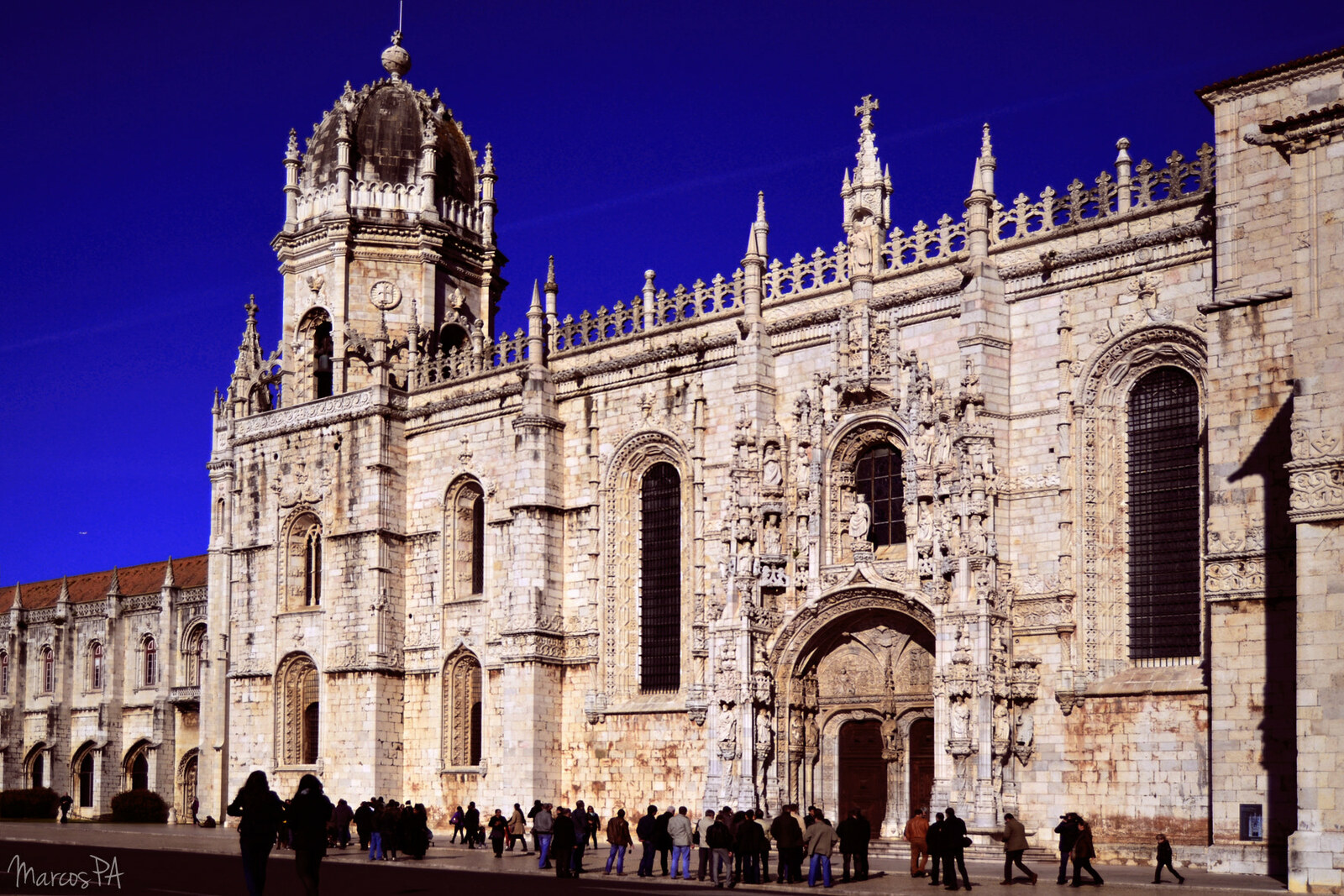
Look around first
What to notice
- The western portal with figures of the king and queen
- The southern portal with scenes from the life of Saint Jerome
- The tombs in the main chapel
- The tomb monument of Vasco da Gama beneath the lower choir
The story of the place
Behind the carved western entrance stretches the former monastic complex, with a church, a two-story cloister, cells, a refectory, and a library. The complex replaced a small chapel where people from Restelo Beach came before setting out to sea; the chapel itself is no longer there. The monks here prepared sailors for voyages and commemorated the royal family. Carved scenes from the life of Saint Jerome, whose name remained here after the brethren disappeared, survive on the southern portal.
In the first year of his reign, Manuel I asked the pope for permission to build a large monastery on this shore. The crown had come to him in fourteen ninety-five, after the deaths of five older brothers and the lawful heir of the previous king. One of Manuel’s aims was to establish the Aviz-Beja branch of the dynasty that he had begun and to arrange its own burial place in advance.
The site was determined by the old Chapel of Santa Maria de Belém. Prince Henry the Navigator had ordered it built for people setting out to sea from Restelo Beach. Brothers of the Order of Christ received sailors here before their departure. That is why the new king chose the shore at the entrance to Lisbon’s harbor: prayer, farewells to the crew, and ships’ departure into the Atlantic already took place at this spot.
Papal permission arrived in fourteen ninety-six. Vasco da Gama had not yet set out for India. A year later, Manuel commissioned him to find a sea route around Africa, and four ships departed from Restelo. Sources disagree on the number of participants in the expedition, but the king himself later acknowledged that fewer than half returned home. Paulo da Gama, the captain’s brother and commander of the second ship, died on the return voyage. The remaining sailors brought back the news Manuel had sought: Indian ports could be reached by sea, and spices could be brought back.
Construction of the monastery began only after their return. The king allocated to it part of the five-percent levy on trade with Africa and the East. Thus, distant voyages paid for the stone vaults above the shore from which they began.
Manuel settled monks of the Order of Saint Jerome—the Jeronymites—here. They lived by prayer and scholarship, but in Belém they received two special duties: to pray for the king’s soul and to prepare sailors spiritually for voyages. The complex’s official name is the Royal Jerónimos Monastery of Santa Maria de Belém. The familiar “Jerónimos” means “monastery of the Jeronymites” and recalls the people for whom the cells, refectory, library, and two-story cloister were built.
In fifteen seventeen, Manuel ordered the church to be turned into a pantheon for his family. Four years later, he was buried in the main chapel beside his wife, Queen Maria of Castile. Burials of their children and descendants appeared in the side chapels. The Jeronymites remained with the royal tombs until the monastery was closed in eighteen thirty-four.
Services are still held in the Church of Santa Maria de Belém, while the secularized cloister is open as a historic monument. The old sailors’ chapel is no longer there: the present church took its place. Manuel and Maria are carved on the western portal, their tombs stand in the main chapel, and beneath the lower choir is the nineteenth-century tomb monument of Vasco da Gama. The Jeronymites themselves are no longer here; their name remains on the façade, and two scenes from the life of their patron, Saint Jerome, survive above the south doors.
Useful on site
May–September: 09:30–18:00 (last entry 17:30); October–April: 10:00–17:30 (last entry 17:00). Closed on Mondays and January 1, Easter, May 1, June 13, December 24–25.
Checked: June 17, 2026. Check the official source before visiting.The façade provides enough material for this stop. Plan a visit to the church or cloister separately, and check access in advance: they are different parts of a large complex.