 Guide On Map
Arashiyama: River, Gardens, and Bamboo
From Togetsukyo Bridge through Tenryu-ji to Hozu Gorge
Guide On Map on your phone
Open the walk like a regular app
It takes about 10 seconds to install. No app store needed.
The whole path
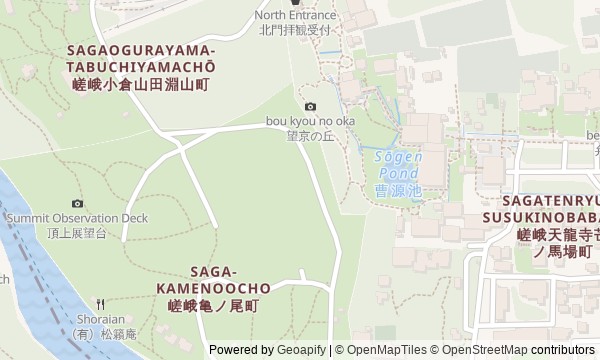
Route map
About the walk
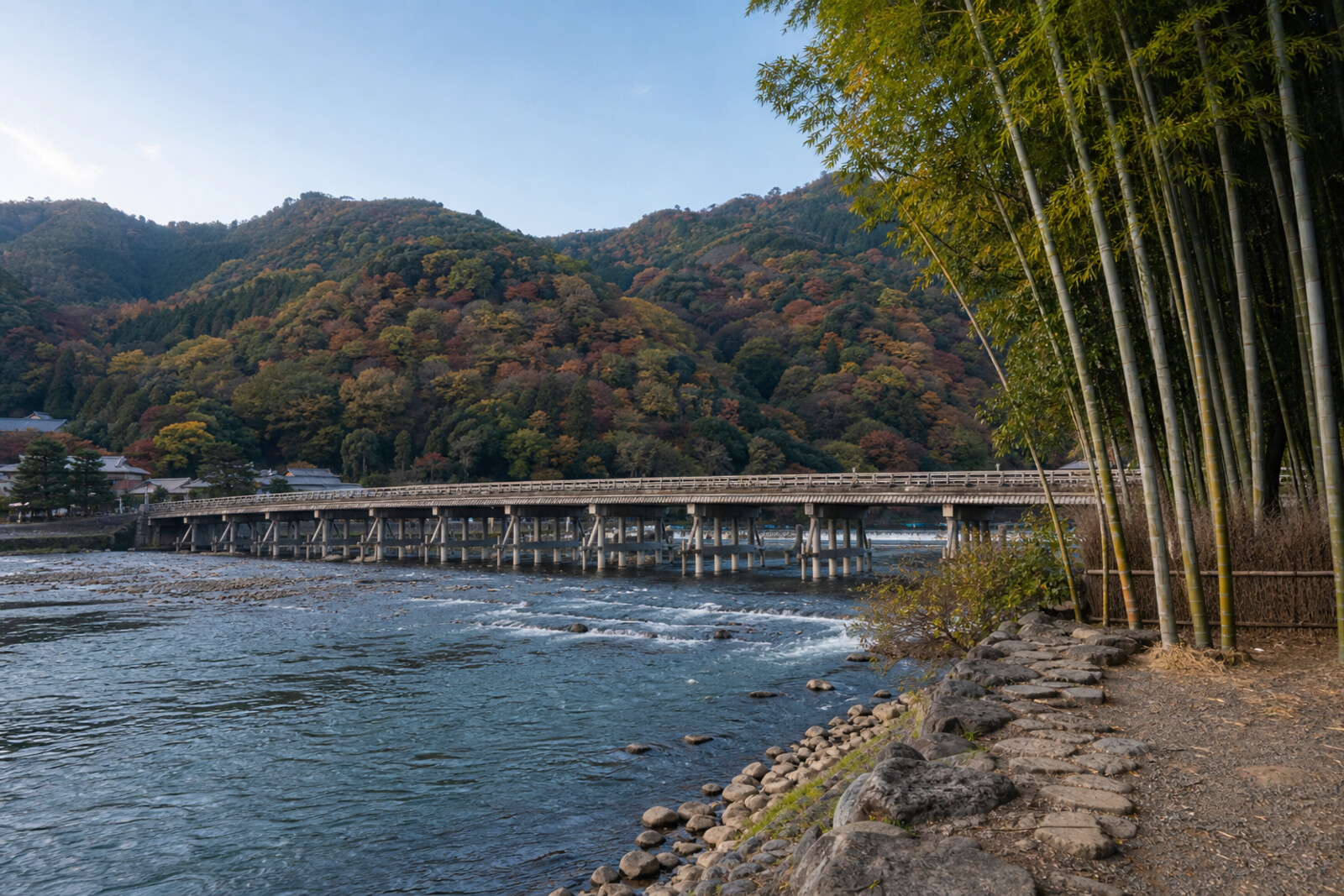
You will begin at Togetsukyo Bridge and move from the broad river to the garden of Tenryu-ji. Then the path will narrow by the black torii of Nonomiya, pass beneath a bamboo canopy, and climb toward a private villa. The final stretch follows the slope of Mount Kameyama to a view over Hozu Gorge.
This will not be a walk through Kyoto postcards. You will see a landscape people have remade many times: clearing the riverbed, relocating a bridge, creating gardens, and bringing back a dying grove. Along the way, you will come across a boxwood comb, four cut stems, and a portrait of a one-eyed samurai. Each detail leaves a question behind.
The story will separate documents from legends and connect the decisions of rulers with the work of boatmen, monks, scholars, and gardeners. By the end of the walk, you will know why the bridge, the bamboo, and the view of the Hozu cannot be treated as unchanging scenery from old Kyoto.
Why this order
Togetsukyo Bridge sets the route's main thread: a river people adapted for work. From the relocated crossing, the path climbs to Tenryu-ji, where trade will again decide the fate of the place, this time across the sea. After the great monastery, the route leads to Nonomiya: a state conflict gives way to the personal service of a princess. From the black torii, the path enters the grove without a break, and a temporary residence yields to a landscape restored in the twentieth century. The bamboo leads directly to Okochi Sanso, where a private garden created by one owner appears beside the public grove. Beyond the villa begins the slope of Mount Kameyama. The climb toward the Hozu brings the river back into view, while the final dynastic dispute continues the story of two imperial lines begun at Tenryu-ji.
Those who want to see the work of specific people behind Arashiyama's landscapes Lovers of Japanese gardens, temples, and historical turns Those who value verified facts and an honest distinction between history and legend
Those looking only for a short bamboo photo walk Those not ready for climbs and walking loops through gardens Those who prefer a route without detailed historical connections
Before you go
Start in the morning, when it is easier to stop on the bridge and in the bamboo corridor without blocking the flow. Before setting out, check current access conditions for Tenryu-ji and Okochi Sanso: they are separate sites, and their visits need to be planned into the day individually. Choose shoes for stone paths, dirt ground, and the climb to Mount Kameyama; it is best to bring water in advance. At the shrine, remember that this is an active sacred place, not literary scenery. In the bamboo, stay behind the barriers and do not carve anything into the stems: a scratch harms the plant, and damaged bamboo has to be removed.
When to go
Allow three to four hours for the full route: there are about 2 km between the six stops, but a considerable part of the time will go to garden loops, pauses for audio, and the climb to the river view. The version without the villa takes about two hours, though it loses the transition from a public landscape to a private author-designed garden.
Backup plan
If you have less time or energy, keep Togetsukyo Bridge, Nonomiya, the bamboo path, and Mount Kameyama: this preserves the start by the water, the ritual threshold, the living corridor, and the river finale. If only one separate admission is possible, choose Tenryu-ji—Sogenchi Pond best reveals the central theme of a preserved design. If you feel unwell, do not push through the final climb: end the walk after Okochi Sanso or at the bamboo, and save the Hozu view for a separate return.
Route conditions
Elevation. Ascent — 95 m; descent — 0 m
OpenStreetMap extract of June 18, 2026: database data, not a check on the ground. Data © OpenStreetMap contributors, ODbL licence
Walk plan
Open in maps ↗- 1
Togetsukyo Bridge
The crossing connects today’s strolling Arashiyama with the reworking of a river freight route. - 2
Tenryu-ji and Sogenchi Pond
The garden links the war of two courts, maritime trade, and the memory of a defeated emperor. - 3
Nonomiya Shrine
A temporary residence will show how a courtly selection changed one princess's life. - 4
Sagano Bamboo Path
This stop will change the familiar image of an ancient grove: a new generation of bamboo has risen above the path. - 5
Okochi Sanso
This private estate shows where an actor put his earnings between shoots. - 6
Mount Kameyama and the view of the Hozu River
The final height links the view of the Hozu River with a family decision that split the imperial dynasty.
Route features
Everything you need stays in the browser
Progress, saves and your trip plan are stored on this device.
Add Guide On Map to your home screen so the walk opens outside the browser.
How we handle sources, maps and corrections: our editorial standards