 Guide On Map
Chinatown and Central Market: markets, temples, and lanes
From the confluence of the Gombak River and Klang River through Petaling Street to REXKL
Guide On Map on your phone
Open the walk like a regular app
It takes about 10 seconds to install. No app store needed.
The whole path
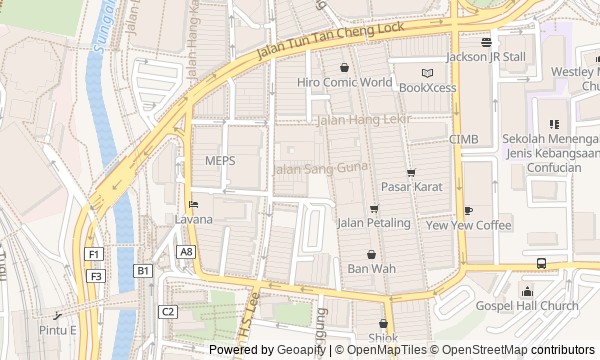
Route map
About the walk
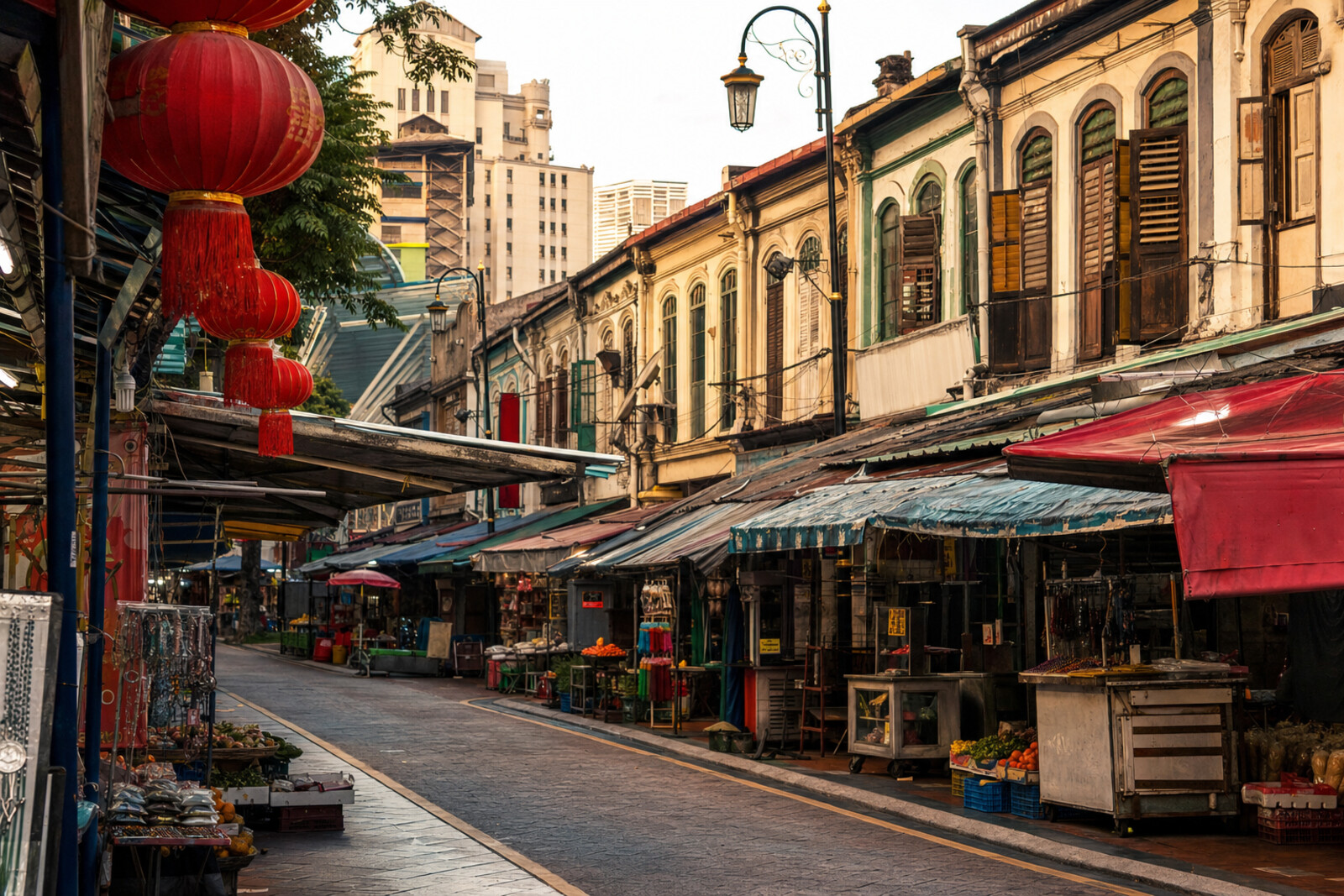
You will begin at the confluence of the Gombak River and Klang River, where a riverside transshipment point mattered more than any monument to a founder. Then the route heads into Chinatown: through a lane rebuilt between shophouses, a working Tamil sanctuary, the gates of a street market, and a courtyard where commercial debts were once settled. After the temples, you will return to the markets—first beneath the roof of Central Market, then to a shopping row beneath kites. The finale is the former REXKL cinema. You will find out why old planks were left in a new bridge, why one mother came to a temple over missing money, and what had to be lost to preserve Central Market. The story rests on documents, human decisions, and honest caveats where only a legend remains instead of an answer. By the end of the walk, you will be able to tell a surviving shell from a reconstructed scene in Chinatown, and explain why Central Market and REXKL carry old names but do entirely new work.
Why this order
The confluence of the rivers has to come first: this is where the transshipment point emerged that grew into a trading city. Kwai Chai Hong follows because, beside the site of the real beginning, you will encounter a modern reconstruction of the past, and the difference between surviving geography and a created scene becomes clear at once. After the lane, the route leads to Sri Mahamariamman Temple: from the story of migrant life, you move to the sanctuary they created, which grew from a family temple into a shared one. The Petaling Street gates continue the community theme through livelihoods and a failed attempt to replace the tin trade. Right beyond them, Guan Di Temple narrows the commercial story to a single debt and shows how the Kwang Siew Association handled such disputes. Central Market broadens the scale from a private matter to city trade. Kasturi Walk, next door, follows naturally: from outside, you can see how commercial redevelopment extended the market into the street. REXKL finishes the route with a later experiment—temporary commerce tested a new model there before the building's conversion was complete.
a first introduction to Chinatown's history those interested in the life of markets and urban communities lovers of old buildings with new purposes
those looking for a food route through Chinatown those who only value untouched antiquity walks away from markets and urban trade
Before you go
Wear shoes that are easy to remove: you may need to take them off at the entrance to working temples. Your clothing should let you enter a religious space without awkwardness; inside, do not disturb worship and ask permission before photographing people or altars. Bring water and protection from sun and rain—the route partly follows open, hot, crowded streets. Before you set out, separately check the schedules for Central Market, Kwai Chai Hong, REXKL, and any events that interest you: different spaces inside them may operate independently.
When to go
2–3 hours
Backup plan
In heavy rain, shorten the open stretches by the river, on Kasturi Walk, and on Petaling Street, leaving more time for Central Market and REXKL. If the temple is closed or a service is underway, view the entrance, tower, and decoration from the street without trying to follow worshippers inside. In heat or fatigue, skip a detailed circuit of the shopping rows: the central story remains intact if you go from the market to the temples, then through Kwai Chai Hong to the finale. Plan a visit to an exhibition, concert, or digital gallery at REXKL separately from the walk itself.
Route conditions
Surface. Paved — 777 m (data covers 47% of the route)
Facilities. Toilets — 4; drinking water — 2
Elevation. Ascent — 29 m; descent — 30 m
OpenStreetMap extract of June 18, 2026: database data, not a check on the ground. Data © OpenStreetMap contributors, ODbL licence
Walk plan
Open in maps ↗- 1
Pasar Seni and the confluence of the rivers
This stop explains why the city grew at a transshipment point, without reducing its founding to a single person. - 2
Kwai Chai Hong
Here it becomes clear how the lease of ten houses turned into a public version of the past. - 3
Sri Mahamariamman Temple
This stop will connect the family shrine with a shared Tamil sanctuary and the Thaipusam route. - 4
Petaling Street Gate
Here, an unsuccessful mill explains the old Chinese name of the shopping street. - 5
Guan Di Temple
One recorded dispute will show why the association needed both an altar and its own court. - 6
Central Market
The building will show the price of the compromise that saved the market from demolition. - 7
Kasturi Walk
This stop examines what street trading gained and lost under the new roof. - 8
REXKL
The finale shows how a temporary market became a test of a large vacant building’s viability.
Route features
Everything you need stays in the browser
Progress, saves and your trip plan are stored on this device.
Add Guide On Map to your home screen so the walk opens outside the browser.
How we handle sources, maps and corrections: our editorial standards