 Guide On Map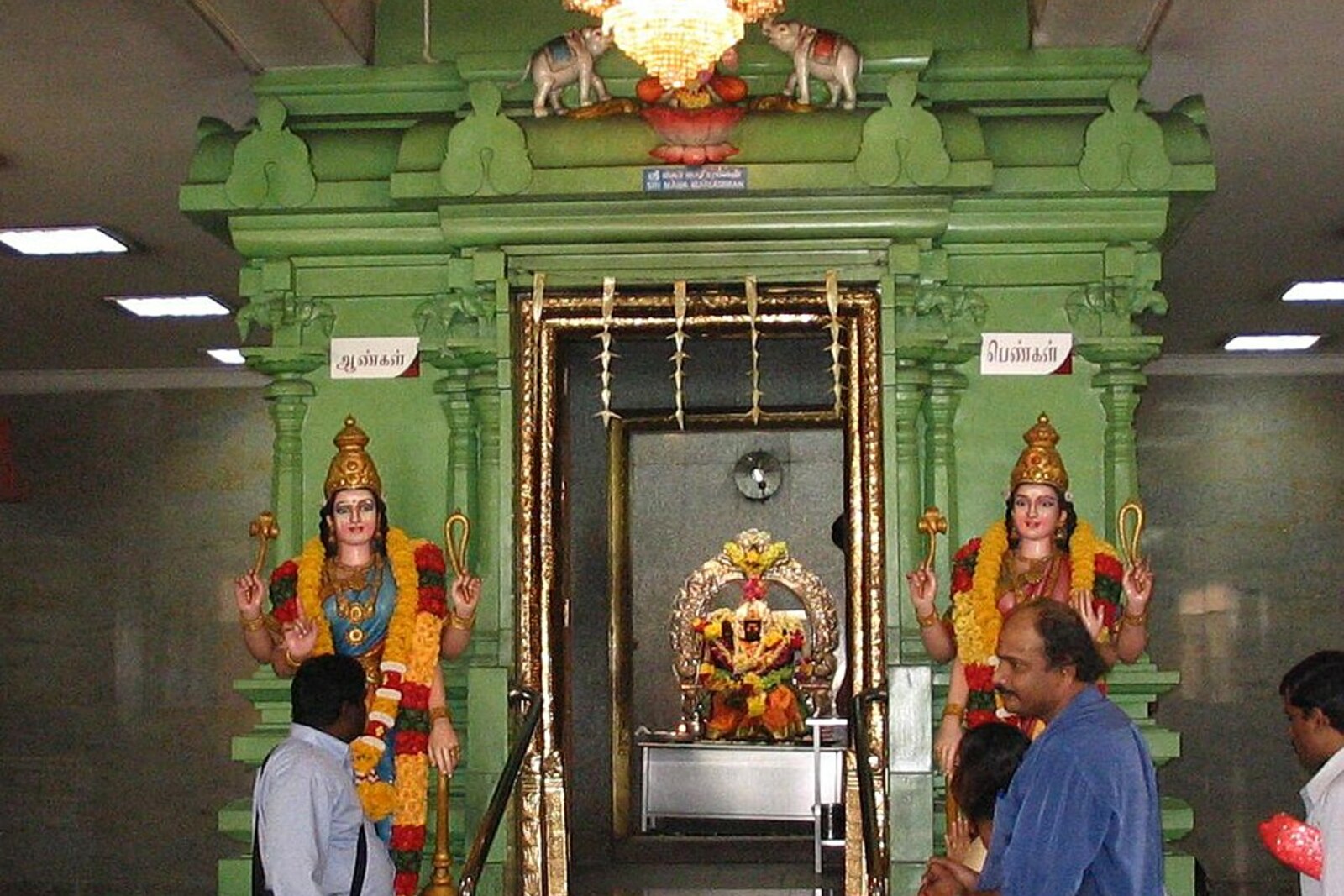
Look around first
What to notice
- Multistoried gate tower
- Temple gates
The story of the place
Behind the tall multistoried tower with the temple gates stands a Hindu shrine whose present building was completed in nineteen sixty-eight, while the tower was finished four years later. The family temple once stood closer to the site of the future railway station, then it was moved here. For a long time, the altar belonged to one family, until the relatives opened it to all worshippers and handed it over to trustees. Thus, a private shrine became a shared sanctuary of the city's Tamil community.
Before Thaipusam, priests bathe the statue of Murugan here, decorate it, and set it on a chariot. The procession then leaves for Batu Caves, about fifteen kilometers from here, and returns to this temple a few days later. The route to Murugan's sanctuary begins at the altar of another goddess, Mariamman. That arrangement was made long ago by the founder of both temples.
K. Thamboosamy Pillay was not a priest. He began as an interpreter and office clerk, and made his fortune from tin mines, construction contracts, and trade. In eighteen seventy-three, Pillay established a small shrine to Mariamman for his family. The first building stood closer to the place where the railway station later appeared. The family moved the temple to its present site in eighteen eighty-five.
The name explains why the family needed precisely such a shrine. “Sri” and “Maha” are honorific titles, while the Tamil word “amman” means “mother.” Mariamman is a Tamil mother goddess, whom people turned to for rain and protection from fevers, smallpox, and other epidemic diseases. For people settling a new city far from their native places, she remained the familiar protector of the family.
During Pillay's lifetime, the temple was closed family property. He died in nineteen oh two, and in the late nineteen twenties his relatives opened the shrine to all worshippers and handed its management over to a board of trustees. The family gave up its exclusive right to the altar; the oldest Hindu temple in Kuala Lumpur became a shared shrine of the city's Tamil community.
Pillay himself later founded a shrine to Murugan at Batu Caves. The board that received this temple from the family eventually came to manage the cave temple as well. That is why the chariot sets off from here: the two shrines are linked by one founder and one organization.
The present building was completed in nineteen sixty-eight, and the multistoried gate tower four years later. None of the former walls of Pillay's family shrine remain here. The connection he established has endured: on Thaipusam days, the chariot leaves these gates for Batu Caves and returns here with images of Murugan and his consorts.
Useful on site
Usually 06:00–21:00/21:30 according to current public directories; services and holidays may affect access.
Checked: June 26, 2026. Check the official source before visiting.This is an active temple: remove your shoes where indicated, keep away from rituals, and do not photograph the altar without permission.