 Guide On Map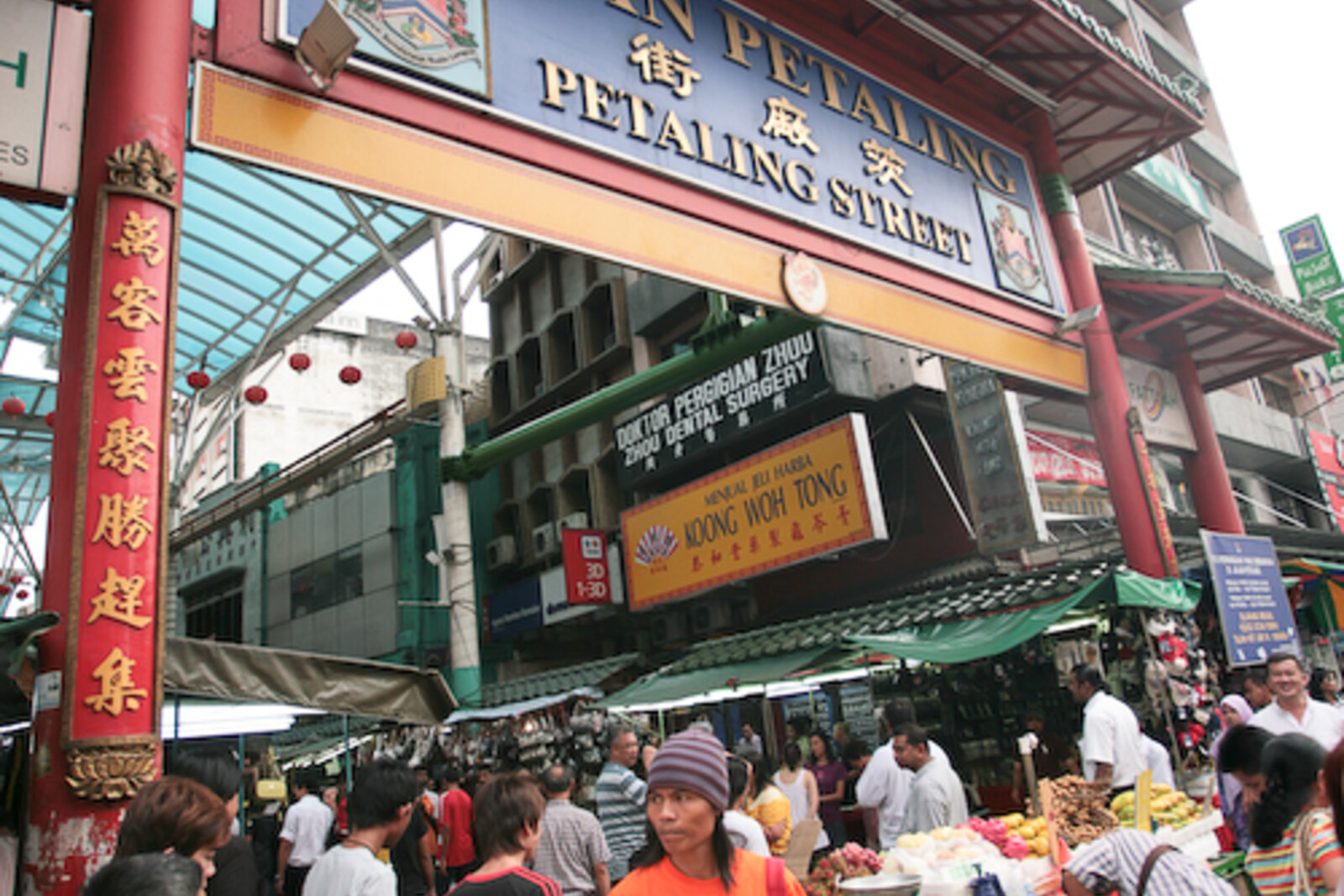
Look around first
What to notice
- Red-and-green arch
- Green canopy over the street
- Market stalls on the roadway
The story of the place
The red-and-green arch was erected in two thousand three. At that time, the city administration installed gates like this at both ends of the shopping stretch and extended a green canopy over the street. There was no historic gate here: the arch marks the entrance to a pedestrian market, where stalls have taken over the roadway.
It bears the words “Petaling Street”—Petaling Street. This is an old road name: the route led to the village of Kampung Petaling and the surrounding tin mines. The village itself was probably named after the local petaling tree, whose termite-resistant wood was used for house posts. Chinese residents use another name—Chi Chong Kai, the street of the tapioca starch factory.
This name appeared after the civil war in Selangor. In the early eighteen seventies, armed groups ravaged Kuala Lumpur, and the abandoned tin mines flooded. The Chinese prospectors who returned had nowhere to work. Yap Ah Loy, the appointed head of the Chinese community and a mine owner, worked to keep people from leaving the settlement. Both his businesses and the rebuilding of the city, which he was financing with borrowed money, depended on their labor.
Yap persuaded the miners to stay and seek income in agriculture. He established cassava plantations and built a mill here: he hired a British engineer, installed machinery, and brought roots from his fields to grind them into starch flour. The business provided work for people who had to wait for the mines to be drained.
The plan was struck by two blows at once. Work animals on the plantations fell ill, and the price of tapioca flour dropped sharply. Yap closed the mill; his attempt to replace tin with cassava ended in losses, and in the second half of the decade he came close to bankruptcy. A later rise in tin prices saved him, and the former prospectors returned to the city’s main livelihood.
The factory is no longer here. Market rows stand in its place, and the modern arch leads to them. The road name Petaling remains on the gate, while in spoken Chinese there remains the memory of a business that existed far less long than the street named after it.
Useful on site
Open street; the hours of individual shops and stalls vary, especially with the weather, holidays, and in the evenings.
Checked: June 26, 2026. Check the official source before visiting.The passage can be crowded: keep an eye on your belongings, do not block the stalls for a photograph, and calmly decline vendors’ offers.