 Guide On Map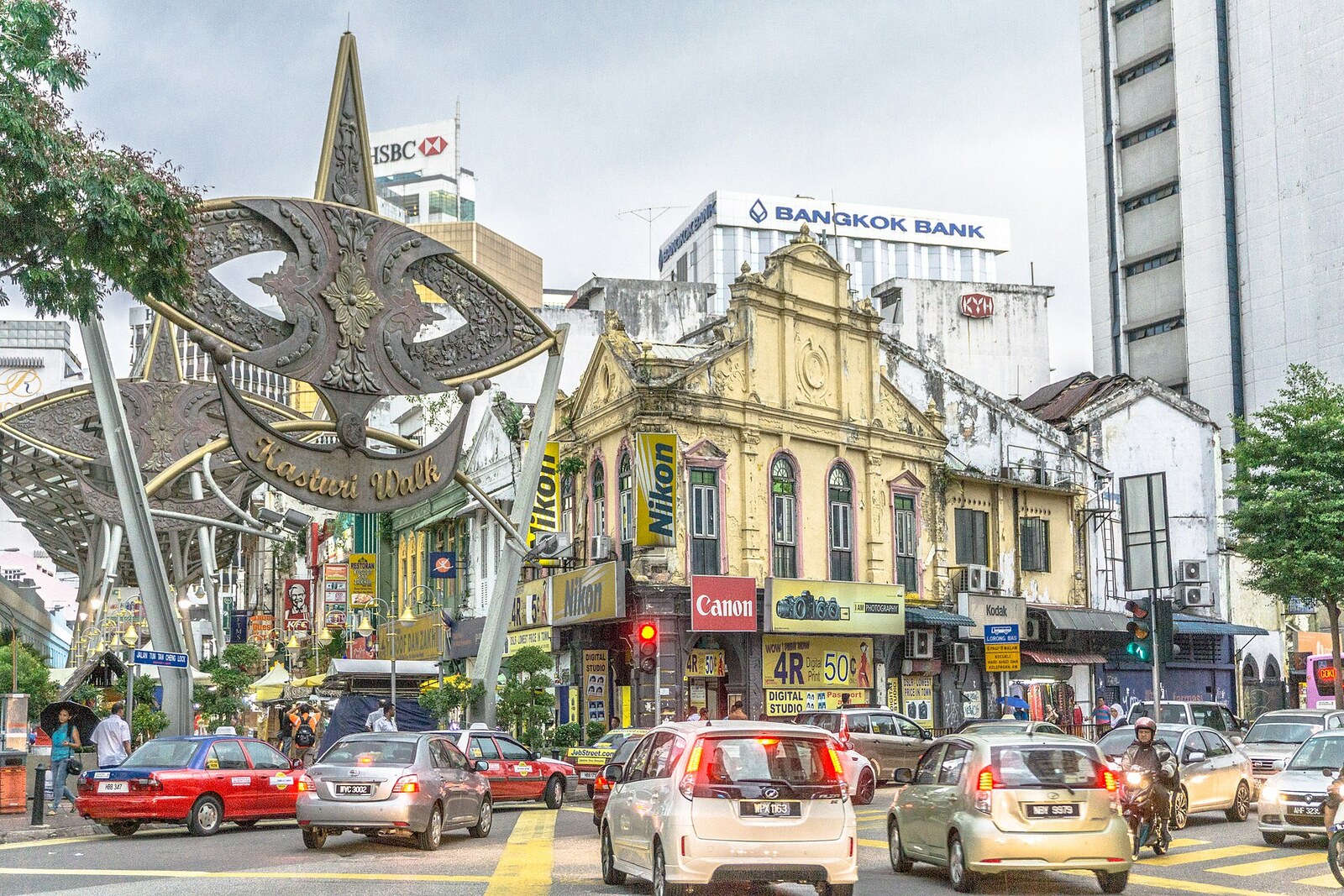
Look around first
What to notice
- Three wau bulan kite figures
- Polycarbonate roof
- Rows of stalls
The story of the place
At first, this was the open Lorong Kasturi alley between Central Market and the station: people arranged to meet there, and street musicians played. Now a polycarbonate roof runs above the passage, and fifty-five stalls selling food, clothing, handicrafts, and souvenirs stand on both sides. Three large wau bulan figures, Malay kites, hang above them; the row's name came from the neighboring street, named after a hero of legend. The roof gathers passersby into the middle of the passage, but in slanting rain water still reaches the counters from the sides.
A batik designer who had traded at Central Market since nineteen eighty-eight took three stalls under this roof at once. His income depended on customers, and the new retail row let him display the same fabrics and souvenirs directly along the path of passersby. He called Kasturi Walk an extension of the market—exactly what it had been intended to be.
Before the redevelopment, Lorong Kasturi was here. People arranged to meet there, and street musicians performed. After Central Market gained a new owner in two thousand four, managing director Bernard Bond set about expanding trade beyond the building. The neighboring alley was ideal: shoppers were already walking through it to the market and the station.
The company invested eight million ringgit in the project. A polycarbonate roof was installed over the alley, cameras and security were put in place, and fifty-five stalls selling food, clothing, handicrafts, and souvenirs were arranged along the passage. Three large figures above the passage repeat the shape of the wau bulan, a traditional Malay kite. Bond wanted the new row to be recognizable as Malaysian, and he reduced its purpose to two activities: shopping and eating. In February two thousand eleven, Kasturi Walk was opened to the public.
The traders quickly found that an extension of the market also brought new expenses. One of the cultural market's first vendors kept her shop in the air-conditioned hall, but also rented another stall here and hired an employee. It became easier to catch customers from the street, but she had to pay a second rent and compete with neighboring shopping centers. The batik designer approved of the project, but noted that the narrow roof protects the middle of the passage while slanting rain reaches the counters from the sides.
The name of the retail row comes from Hang Kasturi Street. Hang Kasturi is a legendary warrior of Malacca, one of the five companions of Hang Tuah in Malay literary tradition. There is no documentary biography of him: old tales disagree even about the role he played in a rebellion against the sultan. The street was named after a hero of legend; no evidence exists that he ever visited this place.
Stalls and snack shops still stand beneath the wau bulan figures. Bernard Bond marked out the open alley, where people met and performed, as retail spaces; the roof, cameras, and rows of counters remain from the project through which the batik seller once gained three new display windows here.
Useful on site
Follow the hours of Central Market and individual stalls; some Kasturi Walk tenants operate on their own schedules.
Checked: June 26, 2026. Check the official source before visiting.The canopy protects against direct sun and some rain, but the passage remains open at the sides and can be crowded.