 Guide On Map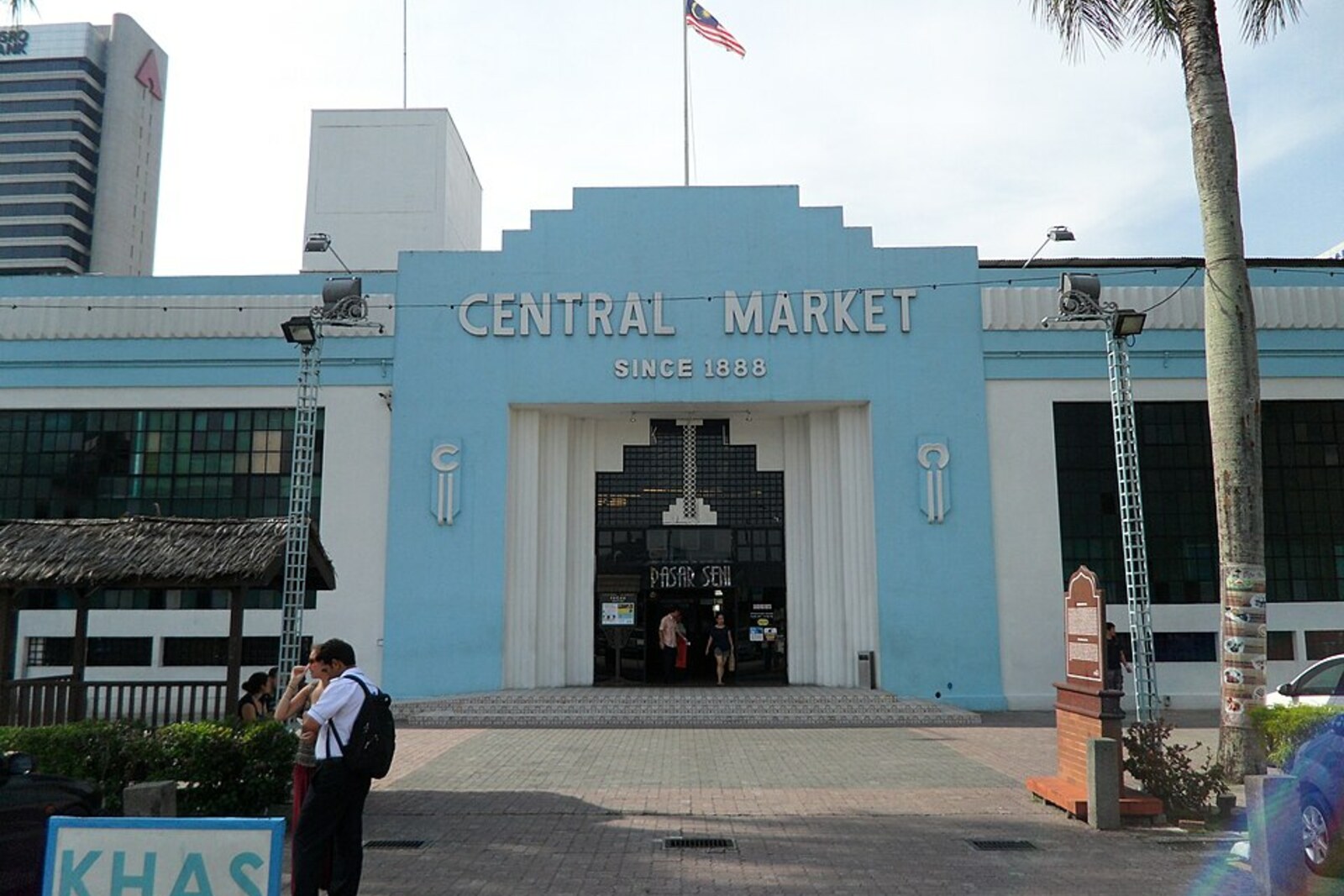
Look around first
What to notice
- The date “1888” on the facade
- The exterior walls of the old hall
- Separate interior pavilions
- The mezzanine
The story of the place
The date eighteen eighty-eight on the facade remains from the first market, where fresh-produce trade was moved from the former Market Square. The present spacious hall brought sellers of fish, meat, vegetables, and fruit under one roof; the nearby railway and bus station helped bring in goods and distribute them around the city. Outside, the walls and roof of the old market survived, while separate pavilions stand inside and a mezzanine runs through it. Between them are about one hundred twenty small shops selling crafts, paintings, and souvenirs.
By the end of nineteen eighty-three, the government Urban Development Authority had already bought this hall along with the neighboring shophouses. The people making the decision intended to clear the site for high-rise offices, a hotel, and shops. Central Market was to be demolished.
The date eighteen eighty-eight on the facade refers to the first market on this site. Fresh-produce trade was then moved here from the former Market Square. The present enormous hall was completed by nineteen thirty-seven: the municipal department responsible, among other things, for the sanitary condition of streets and markets brought wholesale and retail sellers together under one roof. A railway and bus station stood nearby, so produce could be brought here and distributed around the city from here. The name “Central Market” described its actual business: people bought fish, meat, vegetables, and fruit here, not souvenirs.
One of the people trying to stop the demolition was the practicing architect Chen Voon Fee. Shortly before that, he had founded Badan Warisan Malaysia—the Malaysian heritage conservation society—together with another architect, a judge, and a writer. Its members had already lost a campaign for another old building and now wanted to secure a new purpose for Central Market that would justify the cost of maintaining it. They even registered the society as a company able to acquire, repair, and lease historic buildings. For this hall, they proposed a very specific function: the National Art Gallery.
The proposal was rejected. The decision changed in nineteen eighty-five, when an economic downturn and an oversupply of vacant offices made the earlier project less profitable. The government adopted another plan: a private developer would preserve the old hall and turn it into a commercial market for crafts and art. Chen Voon Fee joined the architectural team for the reconstruction—the person seeking to have the building reused was given the opportunity to arrange its interior.
The architects did not attach the new rooms to the exterior walls or roof. They placed separate pavilions inside, added a mezzanine, and divided the space into about one hundred twenty small retail spaces; none was to exceed sixty square meters. This turned the former produce hall into a bazaar of workshops and shops, rather than an ordinary shopping complex with long enclosed corridors.
The former traders paid for the preservation of the walls. In the final weeks before closing, the photographer Hari Ho came here every day with a camera. He wanted to have time to photograph the sellers and porters, among whom were families that had worked at the market for generations. At first, he got to know them and took almost no photographs; people agreed to portraits already knowing that they would soon scatter. In nineteen eighty-five, the produce market was closed, and the traders were assigned to markets on the city outskirts. Hari Ho showed their portraits to the public only thirty-two years later.
On April fifteenth, nineteen eighty-six, “Central Market” opened beneath the old roof—a cultural market more often called “Central Market,” the arts market. Today’s stalls selling batik, craft goods, paintings, and souvenirs appeared as a result of that reconstruction. What remains here from the produce market is the hall’s exterior shell, the date on the facade, and the name. The sellers photographed by Hari Ho and their stalls are no longer inside.
Useful on site
Daily 10:00–22:00 according to Central Market’s current public listing; individual tenants and events may differ.
Checked: June 26, 2026. Check the official source before visiting.It is convenient to rest from the heat inside; the shops operate as ordinary retail outlets, so ask the vendors before taking close-up photographs.