 Guide On Map
From Market to Courtyards: Living Jerusalem Beyond Agrippas
Family shops, communal ovens, and prayer melodies of Nachlaot
Guide On Map on your phone
Open the walk like a regular app
It takes about 10 seconds to install. No app store needed.
The whole path
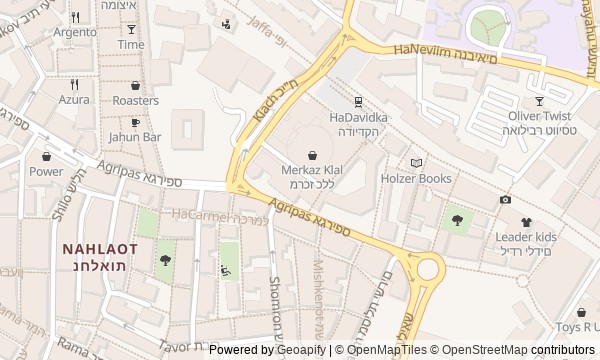
Route map
About the walk
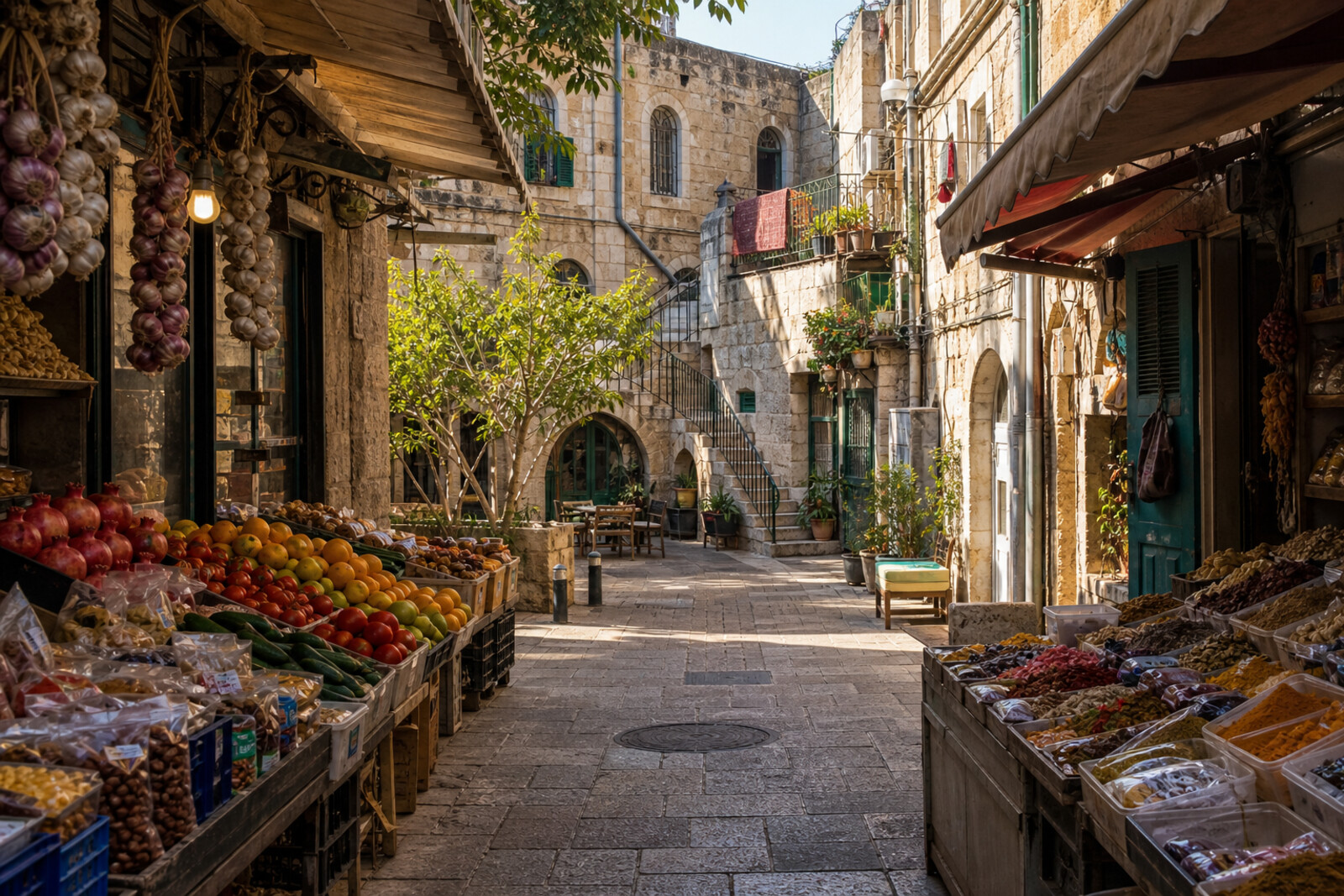
This walk begins where Jerusalem bargains, tastes, bustles, and keeps changing the rules. At Mahane Yehuda Market, family shops live several lives, old recipes take on new flavors, and trade unexpectedly supports a religious school. Beyond Agrippas Street, the scale of history shifts: instead of the market, courtyards appear, where residents shared water, an oven, debts, prayer space, and responsibility for the common home. You will hear about a neighborhood that grew to only a third of what was planned, a Montefiore monument in the form of affordable housing, a beer hall that became a synagogue, and the childhood of a future president among the sounds of Ladino. The final stop is Ades Synagogue, where the memory of Aleppo lives not only in mother-of-pearl and painted walls, but above all in a system of melodies. Take this route for a rare feeling: big history is not displayed separately here—it still works, bakes bread, argues, and sings.
Why this order
The route follows a gradual change in the city's roles. First, the market opens up as a self-contained organism; then Etz Chaim Street reveals its inner link to family memory and Etz Chaim Yeshiva. Agrippas Street serves as the transition from trade to residential Jerusalem. After that, the courtyards unfold almost like chapters in one story of settlement beyond the walls: the cooperative Even Yisrael, Mishkenot Yisrael, unfinished according to its original plan, the Ashkenazi Mazkeret Moshe, and the Sephardi Ohel Moshe. The finale at Ades Synagogue shifts the conversation from stone and daily life to music—the most intangible, yet enduring form of heritage.
Those interested in history through daily life, crafts, and human stories Those who love markets, old signs, and residential architecture Those ready to listen for the differences between communities and family traditions
Those who find dense market crowds difficult Those expecting to freely explore the interiors of every synagogue Those looking for a walk along broad, quiet streets without uneven stone
Before you go
Wear shoes comfortable for cobblestones, thresholds, and narrow passages. At the market, keep your bag close and do not stop in the middle of the flow of shoppers to take photos or listen.
The courtyards are still residential: speak quietly, do not photograph people or windows close up without permission, and do not block home entrances. The synagogues are active, so modest clothing and respect for prayer matter more than a complete look inside.
Entry to Ades Synagogue and other prayer spaces is not guaranteed. If the interior or bakashot singing is essential to you, arrange and check such a visit separately.
When to go
During the day, the commercial character of the first part of the route comes through best: shops are open, scents mingle, and the market is at work. In the evening, Mahane Yehuda Market changes its voice, but the courtyards call for especially careful respect for residents' quiet. Bakashot singing at Ades Synagogue is tied to winter nights before Shabbat and is not a usual part of the walk—ask about the possibility of attending in advance.
Backup plan
If the market stalls are closed, do not cancel the whole route: look at the artwork on the metal shutters and begin with the market's story as an account of its nighttime face. Then continue to Agrippas Street and the courtyards—their layouts, arches, and facades can be read even without open shops.
If the synagogues are closed, limit yourself to exterior details and materials from the Picture in Stone project. Do not try to enter behind congregants or through service doors; leave an inaccessible interior for a separately arranged visit.
Route conditions
Facilities. Toilets — 1
Elevation. Ascent — 8 m; descent — 9 m
OpenStreetMap extract of June 18, 2026: database data, not a check on the ground. Data © OpenStreetMap contributors, ODbL licence
Walk plan
Open in maps ↗- 1
Mahane Yehuda Market
Here you can see how the market preserves itself not despite change, but because of it. - 2
Etz Chaim Street
The shopping arcade explains how coffee, halva, and shop rents helped sustain communities and support a yeshiva. - 3
Agrippas Street
This is not the edge of the market, but an urban seam between trade and the neighborhoods that grew around shared courtyards. - 4
Even Yisrael Courtyard
Fifty-three participants turned a collective building agreement into a protected neighborhood and wrote their number into its name. - 5
Mishkenot Yisrael
Here, the unrealized plan for 140 houses became a story of a shared fund, a lottery, and the slow building of a city. - 6
Mazkeret Moshe
Here, the monument to Montefiore took the form of houses, and neighborhood premises repeatedly gained new communal lives. - 7
Ohel Moshe and Ades Synagogue
The finale brings together courtyard memory, Ladino, Syrian craftsmanship, and the Aleppo tradition that continues to live on in song.
Route features
Everything you need stays in the browser
Progress, saves and your trip plan are stored on this device.
Add Guide On Map to your home screen so the walk opens outside the browser.
How we handle sources, maps and corrections: our editorial standards