 Guide On Map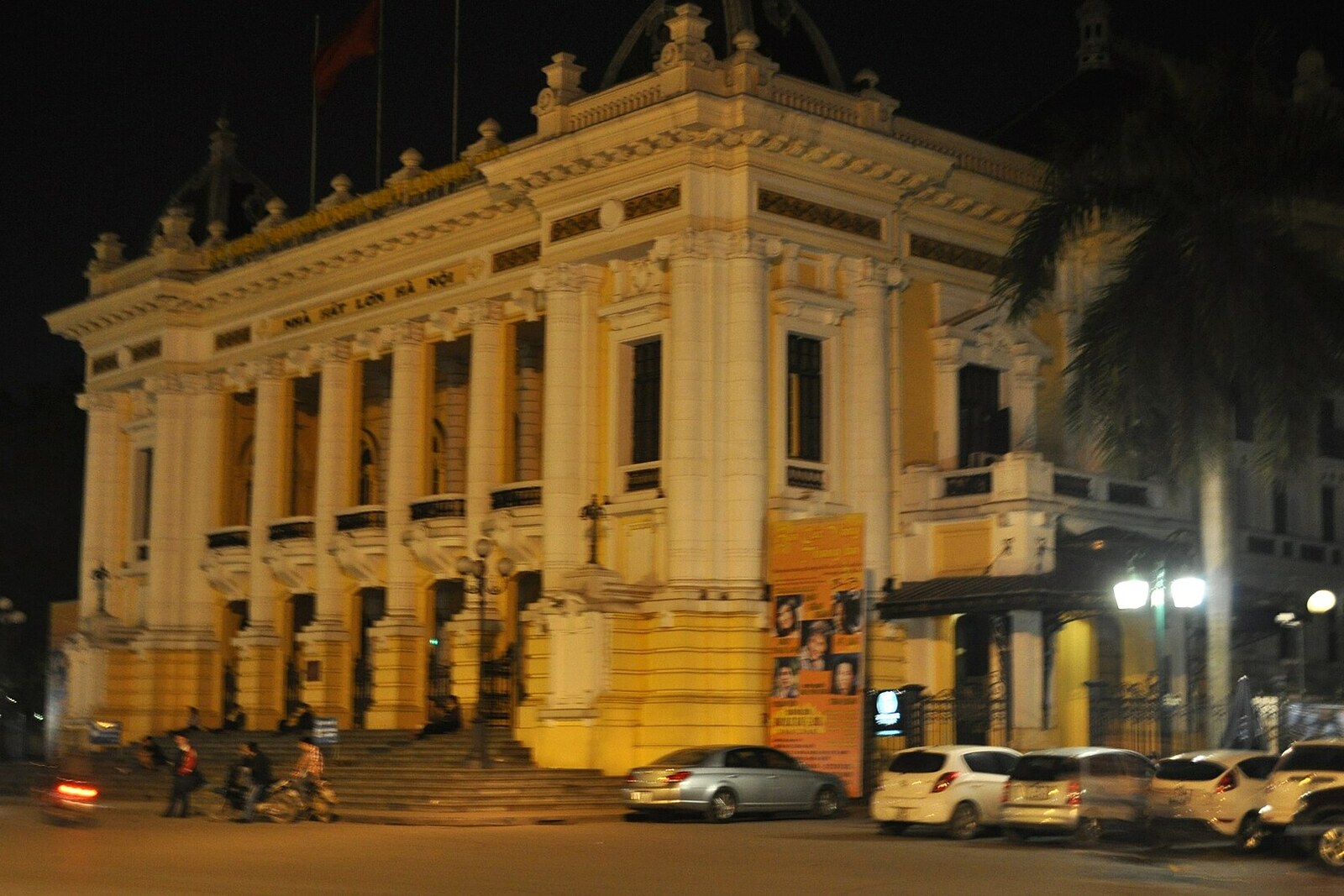
Look around first
What to notice
- Main facade of the Hanoi Opera House
- Steps in front of the entrance
- Balcony above the main entrance
- Open space of the square
The story of the place
On August seventeenth, nineteen forty-five, Quan Xuan Nam was preparing to take over the platform in front of the Hanoi Opera House. He was paid to print documents at Hanoi City Hall and was at the same time a member of an underground Viet Minh cell—a front seeking independence and planning to replace the government. For what he had planned, Nam used what his clerical job gave him: information, acquaintances among city employees, and access to the theater.
Two days earlier, Japan had announced its surrender. Its soldiers still stood armed in Hanoi, while Tran Trong Kim, the prime minister appointed by Emperor Bao Dai, was trying to preserve his cabinet, created with Japanese support. The civil servants' union decided to hold a rally here in its defense.
The place was familiar for such a gathering. The French administration built the Hanoi Opera House between nineteen oh one and nineteen eleven for a European audience. Parades and city ceremonies took place in front of the facade; nearby stood City Hall and the residence of the French head of Northern Vietnam. The steps, balcony, and loudspeakers turned the entrance into a ready-made platform.
Nam proposed that the Hanoi Viet Minh committee seize the rally. Had the plan been discovered in advance, the City Hall and theater employees who passed keys and microphones to the underground activists would have been exposed along with it. The manager of the Hanoi Opera House opened a passage to the second floor. The employee responsible for the loudspeakers prepared the equipment for different speakers. Another member of the group went up to the balcony, where he was to unfurl a large red banner with a yellow star.
At two in the afternoon, the organizers began the rally. After a ceremony with the flag of Tran Trong Kim's cabinet, an armed Viet Minh group made its way through the crowd. It pushed the organizers away from the microphone, and the organizers' banner was taken down. The prepared red flag was unfurled from the balcony. Through the very equipment that official employees had installed to support the government came a call to rise against it. Tens of thousands of those gathered left the square in a column and marched along the central streets beneath Viet Minh banners.
That evening, the leaders of the uprising decided to repeat the successful move openly. On August nineteenth at eleven in the morning, a new rally began in front of the Hanoi Opera House. After the speeches, those gathered split into columns and set off to occupy City Hall, the treasury, the post office, the police headquarters, and the governor's palace—the palace of Emperor Bao Dai's representative in the North. Japanese units could have stopped the poorly armed participants, but after negotiations they remained in their barracks. By evening, the former city administration had ceased to issue orders in Hanoi. On September second, a new state was proclaimed—the Democratic Republic of Vietnam.
The theater still stages performances and concerts, and the balcony remains above the main entrance. On August seventeenth, a flag was unfurled from it; two days later, columns gathered beneath it before heading to the city institutions. These events gave the square its present name—August Revolution Square.
Useful on site
Open urban space; choose a viewing point that does not obstruct pedestrian flow.
Checked: date not specified. Check the official source before visiting.It is best to listen from the edge of the square, where you do not obstruct passersby and can safely take in the whole facade. Check theater entry separately.