 Guide On Map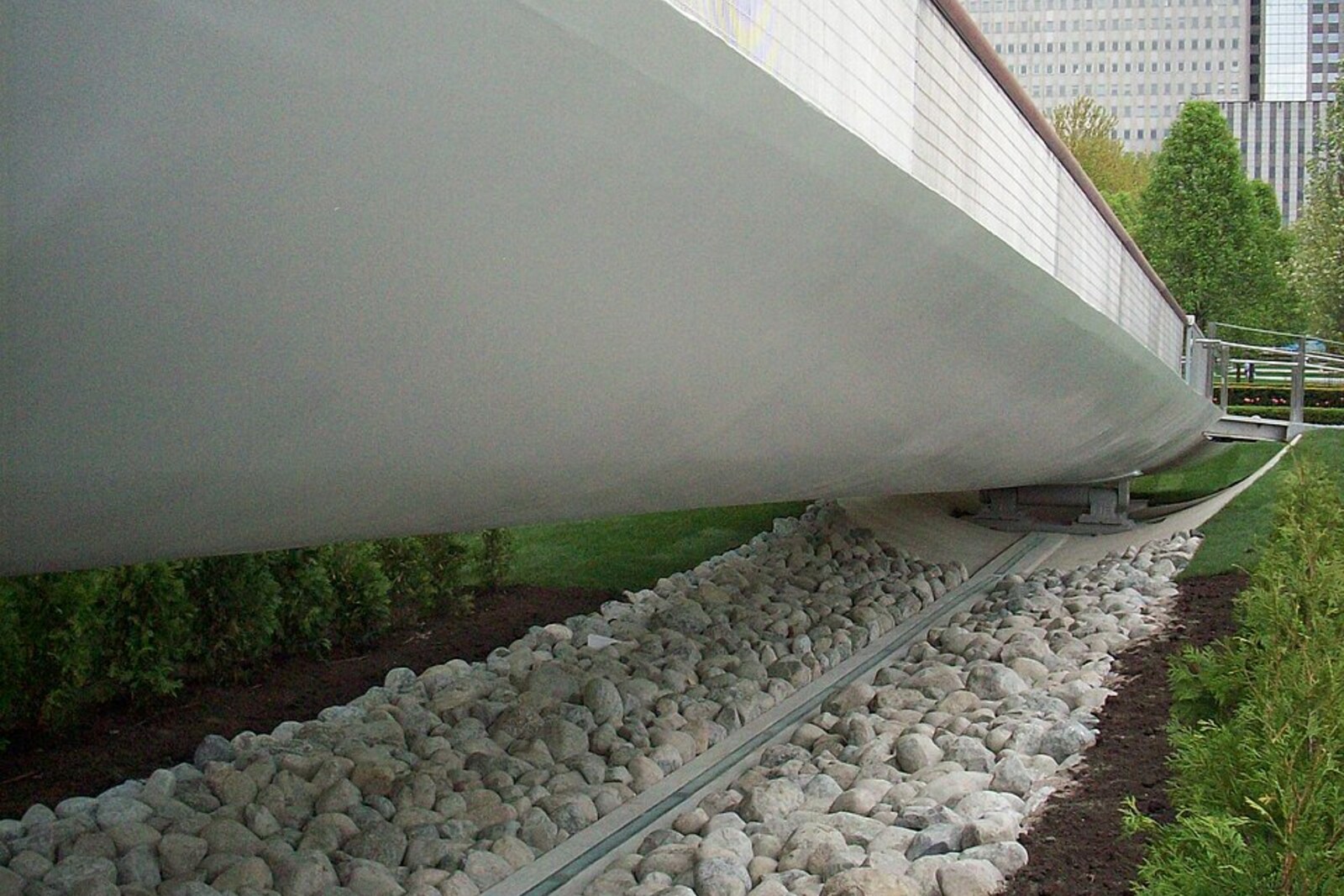
Look around first
What to notice
- The bridge’s gentle ascent
- The museum’s upper terrace
- Monroe Street beneath the bridge
The story of the place
At a restaurant table, architect Renzo Piano drew a long pedestrian bridge on a tablecloth. Sitting opposite were John and Alexandra Nichols, a married couple on whom it depended whether this drawing would remain part of the costly plan. John made his fortune heading the industrial group Illinois Tool Works, then chaired the board of trustees of the Art Institute of Chicago. Alexandra was among the trustees and followed the project for the new museum wing.
By then, they had been unable to begin construction for several years. Without the bridge, it was already estimated at about two hundred million dollars. The trustees required at least one hundred fifty million dollars in pledged donations, but by the autumn of two thousand four, about one hundred twenty million had been raised. Then Millennium Park opened: three hundred thousand people came here in its first three festive days. From the new park, they could see the museum’s service side across Monroe Street—the railway tracks, the loading dock, and the old buildings.
After his first visit to the completed park, Piano proposed making a direct route from here to the new wing. The bridge was to rise from the Great Lawn and enter the museum at the level of the top floor. This required adding another floor to the building. Otherwise, the wheelchair-accessible gradient would end in a flight of stairs, and the pedestrian connection to the park would immediately cease to be barrier-free.
The cost of the bridge and the additional floor had not yet been precisely calculated. The trustees feared using for them money intended for the galleries and the museum fund, and agreed to include such additions only on the condition that a separate donor could be found for each one. Piano then brought the plan to the Nicholses, together with the restaurant tablecloth.
The Institute later recounted that it was the drawing at dinner that persuaded the couple to increase their donation by another ten million dollars. The Nicholses did indeed take the tablecloth home and hang it there in a frame. John himself objected to the attractive version: in his words, what mattered to them was connecting the museum with Millennium Park, not wine and the architect’s charm.
In May two thousand nine, the first visitors walked across the bridge. Its long, gentle ascent is a direct consequence of that agreement: Piano got the height he needed, the museum got an entrance from the upper terrace, and people from the park could cross Monroe Street without descending to the intersection. The surname in the official name belongs to both donors: Alexandra and John Nichols, who paid specifically for this connection.
Useful on site
Access depends on the park, museum, weather, and events; if it is closed, go around via Monroe Street and Michigan Avenue.
Checked: July 1, 2026. Check the official source before visiting.Pause on the bridge for the changing height and perspective; if passage is restricted, approach the museum by the street route.