 Guide On Map
Cairo Power: From the Citadel to the Arms Market
From Muqattam Hills through Salah al-Din Square to Souq al-Silah Street
Guide On Map on your phone
Open the walk like a regular app
It takes about 10 seconds to install. No app store needed.
The whole path
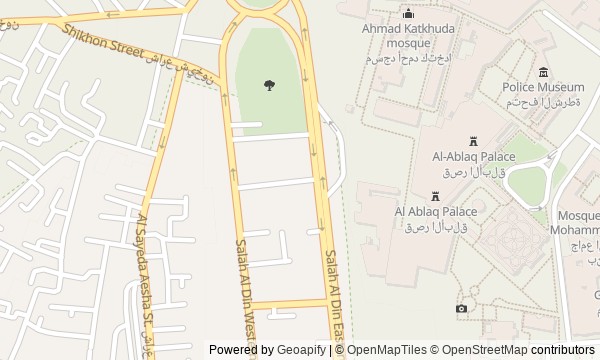
Route map
About the walk
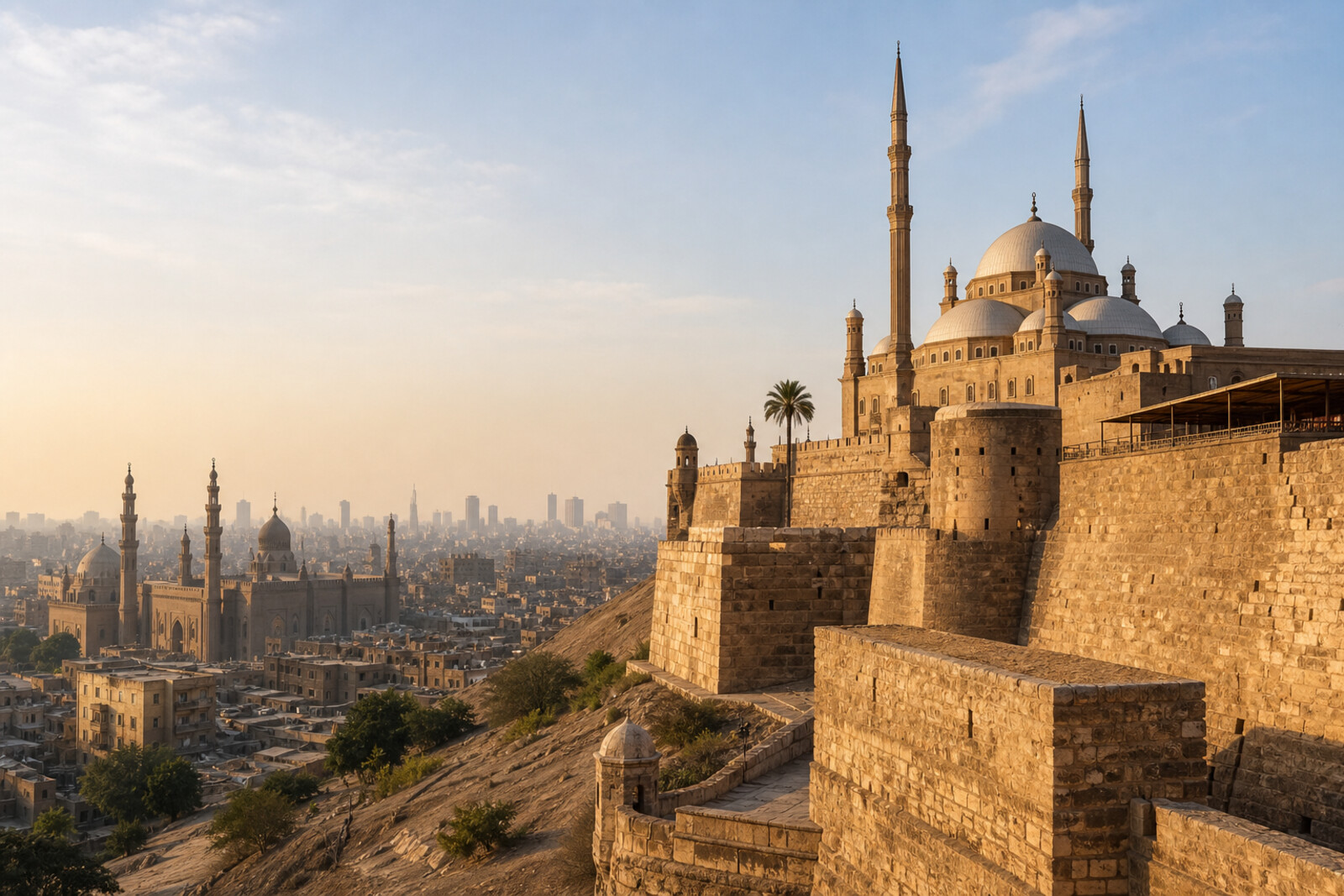
You will begin in the upper courtyards of Cairo Citadel, where fortress towers stand beside two sultans' mosques. Then you will descend through the gates to the square at the foot of the walls, find yourself between 2 immense religious complexes, and finish at the former Arms Market beside a small water-dispensary pavilion.
This is a walk about power: the kind rulers fixed in place through stone, ceremony, and public presence. Behind each grand facade, a human calculation will come into view. Shutters will slam shut in a narrow passageway, siege engines will appear on a roof, and a place prepared in advance will remain empty.
The story moves through decisions, the cost of trust, and visible traces, without any sultans' gloss. By the end, you will see fortress, mosque, square, and sabil in Cairo as 4 different ways to hold on to power—or at least to a name.
Why this order
First you will unpack the Cairo Citadel's original defensive design, then enter the Mosque of Muhammad Ali, built on the site of former Mamluk palaces: the change of regime becomes visible inside the fortress itself. The neighboring Mosque of al-Nasir Muhammad brings the route back to a Mamluk sultan who used Friday prayer to publicly affirm his power. Afterward, Bab al-Azab shows how a fortress passageway could settle a political struggle by force. Descending to Salah al-Din Square, you will see the space between the gate and Mosque-Madrasa of Sultan Hassan, where rebels made their way toward the throne. The complex itself continues the story of a ruler who elevated a dangerous rival. Across from it, Al-Rifa'i Mosque carries the same dynastic calculation into the nineteenth century. The final stretch to Souq al-Silah Street shifts from a sultan's scale to a private commission: instead of a fortress and a vast mausoleum, there are 3 water windows and the name of 1 girl.
Those who want to connect the major monuments of Islamic Cairo through a single historical story Those interested in palace coups and dynastic projects Those who enjoy finding the consequences of major events in particular gates, inscriptions, and rooms
Those looking above all for a walk about everyday contemporary Cairo Those who find accounts of military violence and struggles for the throne difficult to hear Those who prefer free exploration without a continuous historical story
Before you go
Choose clothing that covers your shoulders and knees and is comfortable for walking on slopes and stone; be ready to remove your shoes before entering prayer spaces. Bring water and sun protection: open areas and the walk from the citadel to the lower stops offer little shade. Before setting out, check visiting conditions separately for the citadel and the mosques by the square—access to different complexes should not be assumed to be the same, and prayer or a ceremony may change the order of entry. Do not plan the route too tightly: security checks, finding an allowed passage, and pausing respectfully at an active mosque matter more than a strict schedule.
When to go
Allow 3–4 hours without rushing. It is best to start in the first half of the day, leaving enough time for interiors, viewing stops, and an unhurried descent to the square.
Backup plan
If you cannot enter 1 of the mosques, do not argue with the restrictions: follow the story from outside and focus on the silhouette, portal, minarets, and the building's position in relation to Cairo Citadel or the neighboring mosque. If Cairo Citadel is closed, shorten the route to its lower section: begin at Salah al-Din Square, compare the 2 monumental complexes, and finish on Souq al-Silah Street. If heat or fatigue makes the full route difficult, a sensible shorter version ends after Al-Rifa'i Mosque; save the final street for another outing rather than rushing through it.
Route conditions
Surface. Unpaved — 1.1 km; paved — 397 m (data covers 38% of the route)
Stairs. Flights: 6, 18 m in total
Access. Wheelchair — no; stroller — limited (stairs)
Facilities. Toilets — 2
Elevation. Ascent — 67 m; descent — 111 m
OpenStreetMap extract of June 25, 2026: database data, not a check on the ground. Data © OpenStreetMap contributors, ODbL licence
Walk plan
Open in maps ↗- 1
Cairo Citadel
Here you will untangle the design of a military capital that its founders did not live to see completed. - 2
Mosque of Muhammad Ali
This huge Ottoman mosque will show how a governor asserted the hereditary power of his family. - 3
Mosque of al-Nasir Muhammad
This stop explains why the sultan had to appear before the court and garrison every week. - 4
Bab al-Azab
You will need the stone passage to understand how the gate's design turned a procession into a trap. - 5
Salah al-Din Square
The square links the Citadel gate with the place from which the rebels attacked the sultan's domain. - 6
Mosque-Madrasa of Sultan Hassan
Here, the sultan's personal struggle continues in a building conceived for prayer, study, and the memory of its patron. - 7
Al-Rifa'i Mosque
This stop will show a dynastic building project whose patrons ended up inside it long before the work was completed. - 8
Souq al-Silah Street and the Sabil-Kuttab of Ruqayya Dudu
A small charitable building will conclude the route with a personal memory addressed to an entire city street.
Route features
Everything you need stays in the browser
Progress, saves and your trip plan are stored on this device.
Add Guide On Map to your home screen so the walk opens outside the browser.
How we handle sources, maps and corrections: our editorial standards