 Guide On Map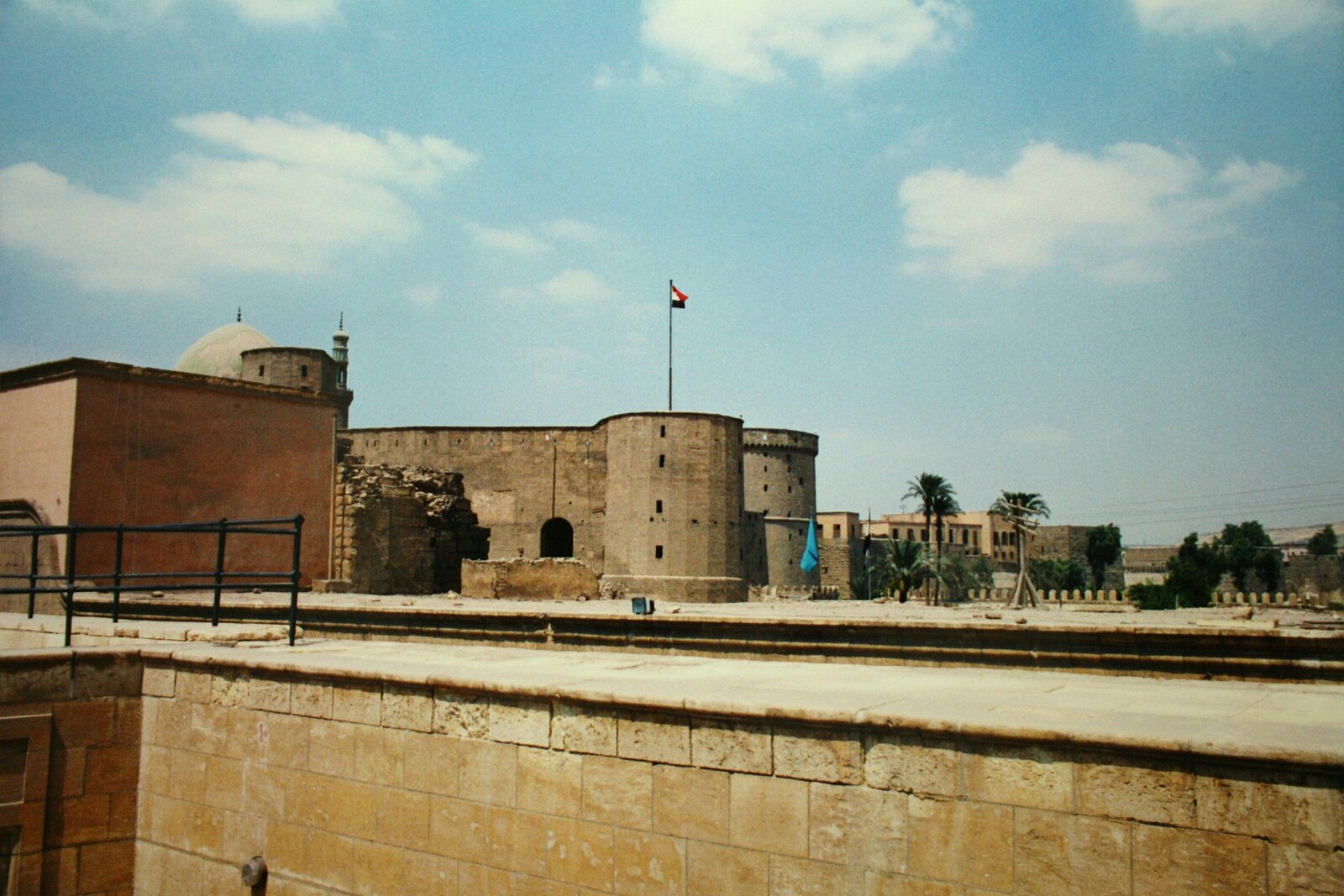
Look around first
What to notice
- Lower arch
- Two stone towers
- Narrow ascent between the walls
- Upper exit
The story of the place
On March first, eighteen eleven, the leading detachments of a ceremonial procession were first allowed through Bab al-Azab. Once they had left the Citadel, the gate leaves were locked. Several hundred Mamluks rode down the narrow descent behind them. Closed gates lay ahead, soldiers behind them, and marksmen stood above the passage.
Muhammad Ali, the Ottoman governor of Egypt, had spent six years fighting and negotiating with the Mamluk beys—military dignitaries whose households had until recently controlled most of the country. Their income came from tax farms: the right to collect levies from villages supported their mounted detachments. By eighteen ten, Muhammad Ali had taken Upper Egypt from the beys, invited them to settle in Cairo, and returned former palaces to some of them. The rivals agreed to a reconciliation, but kept their men, weapons, and claims.
The governor was now preparing an expedition to Arabia. His son Tusun, appointed pasha of Jeddah, was to command the army. Muhammad Ali did not want to withdraw troops from Egypt while leaving Mamluk commanders in Cairo. He summoned the beys to the Citadel for a ceremony in Tusun's honor. The guests were received, served coffee, and joked with. After the ceremony, the participants formed up for a procession down to the city.
The order of the column determined the outcome. Muhammad Ali's infantry had time to pass through the lower gate. The Mamluks rode into a passage cut through the rock between the upper and lower entrances. There, the riders could not turn around: their horses blocked one another's way. When the gate leaves closed, soldiers opened fire from behind and from the walls. The survivors dismounted and tried to make their way back up. Shahin Bey, one of the Mamluk leaders, threw off his heavy ceremonial clothing, drew his saber, and reached the upper courtyard. There he was shot; his head was cut off and taken to Muhammad Ali for a reward. Prisoners were executed until nightfall.
In the following days, soldiers looted Mamluk houses in Cairo and killed those who had not taken part in the procession. The remaining beys fled south. Muhammad Ali confiscated their tax farms; he had no rivals left in Egypt capable of fielding an army of their own.
The gate's name comes from another military corps. Ottoman infantrymen were called azabs; the word means “bachelors.” Their barracks occupied the lower courtyard of the Citadel. In seventeen fifty-four, the commander of the azabs, the Ottoman infantrymen, Ridwan Katkhuda al-Jalfi, built the present two-towered gate as the main entrance to this courtyard.
Nothing remains here of the column that was shot. What survives is the stone mechanism of the trap: the lower arch of Bab al-Azab, the narrow ascent between the walls, and the upper exit that Shahin Bey tried to reach.
Useful on site
The gate and its exterior can be viewed during a visit to the Citadel, but passage through Bab al-Azab may be closed or rerouted by the complex's current operating arrangements.
Checked: June 27, 2026. Check the official source before visiting.Do not look for the site of the legendary jump as a reliably established location: different retellings disagree. View the gate only from the accessible side, and do not linger in the roadway.