 Guide On Map
Freedom Trail: Boston in Dispute with Power
From Boston Common through the old center to Old North Church
Guide On Map on your phone
Open the walk like a regular app
It takes about 10 seconds to install. No app store needed.
The whole path
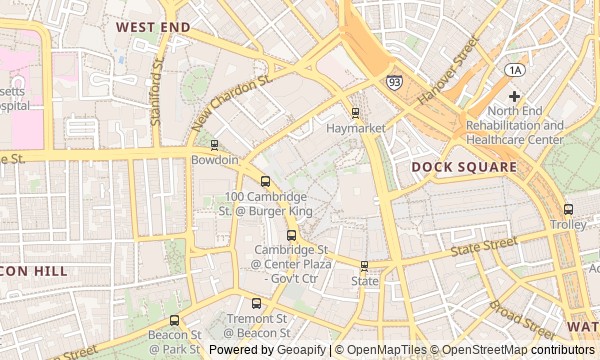
Route map
About the walk
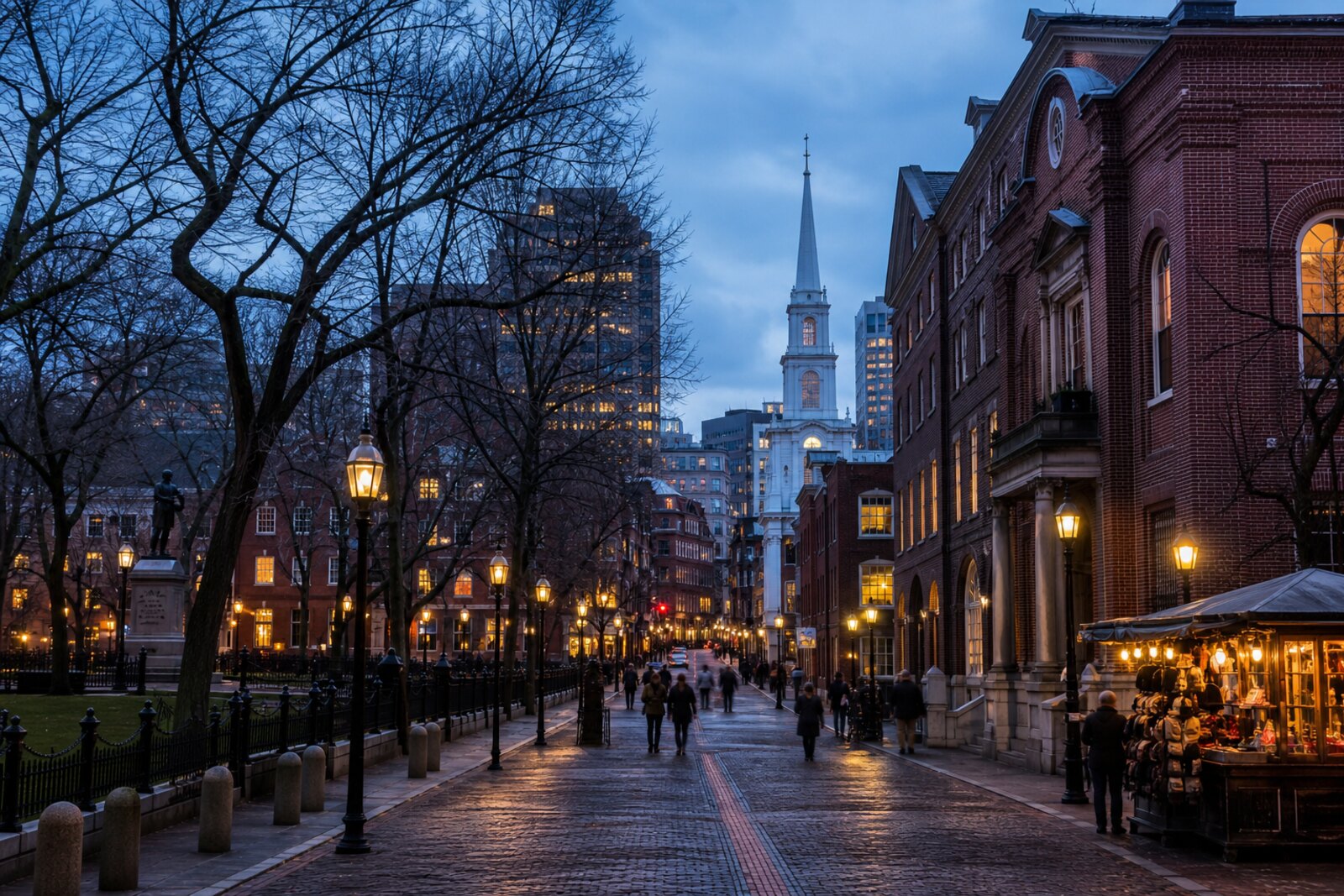
You will begin on the open ground of Boston Common, climb toward the golden dome of Beacon Hill, and descend through an old burial ground into the tight colonial center. Then the red brick line will lead you past meeting halls, a former customs house, and a market to a spire in the North End.
This is not a walk through a list of heroes, but through places where the outcome depended on boats, signatures, a receipt, and two lights. Why would there not be enough boats for a covert detachment? How would a barber's bill end up beside a volley of gunfire? Who were the two lights really meant for?
The story will hold to documents, legal disputes, and material traces. Later legends will be separated from what can be proven.
By the end, you will read the red brick line as a map of specific Boston choices—from a wet landing by Boston Common to two lights above the North End.
Why this order
Boston Common sets the opening scene: an armed plan begins on city land and ends in a siege. From there, you will climb to Massachusetts State House, where military power gives way to a civic form of resistance—a petition that became law. The descent to Granary Burying Ground moves the decision from the chamber into the city's memory: here, funerals were already gathering crowds. Old South Meeting House comes next because a procession gives way to a meeting, and a symbolic demonstration to direct action. A short walk then leads to Old State House: after the action, you will hear an earlier dispute over the limits of search, lost at the center of power. Just outside is the Boston Massacre Site, where a dispute over power becomes a dispute over testimony and guilt. Faneuil Hall continues the theme of public conflict, but returns it to the everyday market. The final crossing into the North End leads from an open hall to a secret signal and closes the night that began at Boston Common.
Those who want to understand the American Revolution without schoolbook heroics Those who enjoy legal disputes, documents, and urban details Those walking through Boston's historic center for the first time
Those expecting a strictly chronological story Those looking above all for biographies of famous revolutionaries Those who prefer an architectural overview to political history
Before you go
Most of the story works from the street, so you can choose museum visits according to your energy and time. Visiting Massachusetts State House depends on the schedule of an active government building, security screening, and separate tours; it is best to check access in advance. Old South Meeting House and Old State House have museum spaces, while Old North Church remains an active church, where services and events may change entry arrangements. Granary Burying Ground is closed by gates, and getting inside is not always possible. Wear shoes for uneven surfaces, keep your phone charged, and check the official venue pages on the day of your walk if you are counting on interiors or tours.
When to go
Allow about two hours for the outdoor route with stops for the stories. With visits to Old South Meeting House, Old State House, and Old North Church, the walk will take about 3-3.5 hours. A separate Massachusetts State House tour will require extra time and may set its own pace for the whole day.
Backup plan
If Massachusetts State House is inaccessible, take in the dome, portico, and façade from outside: the story of its foundation and state symbols does not require going in. You can read Granary Burying Ground from the gates without trying to peer through the fence between visitors. If time is short, skip the museum interiors at Old South Meeting House and Old State House, but linger by their windows, balcony, and roof figures. If the Great Hall at Faneuil Hall is in use or closed, listen to the story in the square by the market level. During a service at Old North Church, finish the route outside, focusing on the tower the signal was meant for.
Route conditions
Surface. Paved — 2.6 km (data covers 87% of the route)
Stairs. Flights: 1, 7 m in total
Access. Wheelchair — no; stroller — limited (stairs)
Facilities. Toilets — 5; drinking water — 7
Elevation. Ascent — 50 m; descent — 46 m
OpenStreetMap extract of June 18, 2026: database data, not a check on the ground. Data © OpenStreetMap contributors, ODbL licence
Walk plan
Open in maps ↗- 1
Boston Common
This stop will show why the secret plan lost time before it even left the city. - 2
Massachusetts State House
Here you will see how a personal case turned into a limit on state power. - 3
Granary Burying Ground
The burial ground will show how different lives were brought together in a single political event. - 4
Old South Meeting House
Here you will trace the moment when the meeting gave way to precise and limited action. - 5
Old State House
The courtroom is needed to see this: a revolutionary argument could lose its case and outlive the verdict. - 6
Boston Massacre Site
This stop separates the street version of the event from what the court could prove. - 7
Faneuil Hall
Here, a dispute over trade explains why a market and a public hall ended up under the same roof. - 8
Old North Church
The finale will show how the warning was sent so that it did not depend on a single rider.
Route features
Everything you need stays in the browser
Progress, saves and your trip plan are stored on this device.
Add Guide On Map to your home screen so the walk opens outside the browser.
How we handle sources, maps and corrections: our editorial standards