 Guide On Map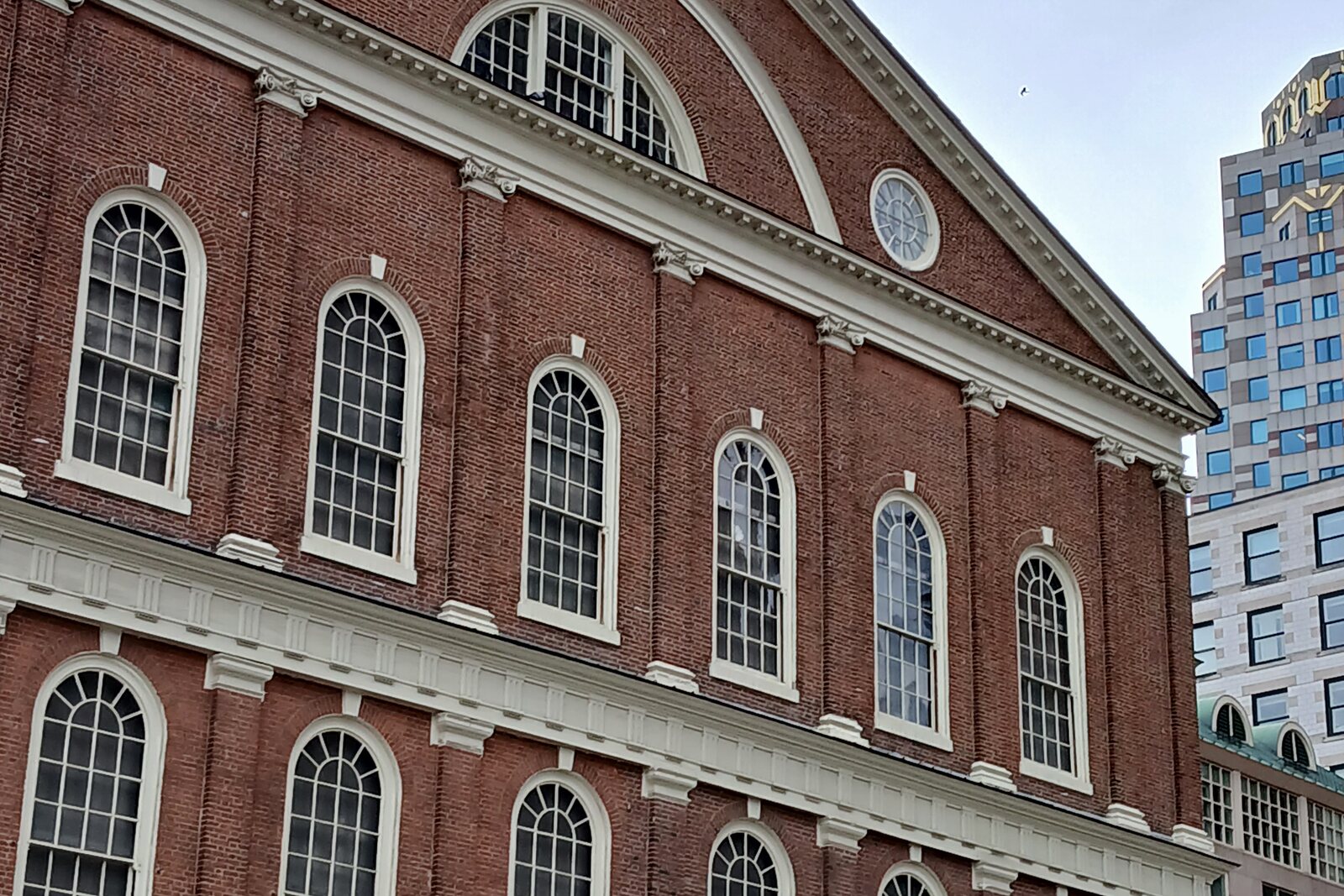
Look around first
What to notice
- Market floor
- Great Hall
- Brickwork in the southern section
The story of the place
The two floors serve different civic purposes: trade still takes place below, while above is the Great Hall for public meetings and ceremonies. Brickwork from seventeen forty-two survives in the southern part of the first two floors; it outlasted the fire after which only the shell of the earlier building remained. In the early nineteenth century, the building was greatly expanded, so its present size is much larger than that of the old covered market.
Faneuil Hall grew out of a dispute over food that Bostonians once tried to settle with crowbars. At the time, farmers delivered meat, eggs, and vegetables along the streets. Well-to-do customers had food brought to their homes, while residents of outlying neighborhoods searched the whole city for sellers and got whatever was left at the end of the farmers' routes. A regulated market could gather vendors in one place, but butchers feared direct competition from visiting farmers, and buyers feared higher prices.
In seventeen thirty-four, the town opened three markets. Two years later, they closed. When the town meeting decided to discuss their fate again, opponents of the market dismantled the wooden pavilions at night. According to contemporaries, the participants in this raid disguised themselves as clergymen. The market was gone, but they did not put an end to the dispute.
Three years later, Peter Faneuil—one of Boston's wealthiest merchants—entered the dispute. He lived on income from Atlantic trade: he sold fish and colonial goods, invested money in shipping plantation produce, and sent vessels for enslaved Africans. In one surviving letter, Faneuil instructed a captain to buy an enslaved boy aged twelve to fifteen for his household. From this same commercial fortune, he offered to pay for a permanent covered market for Boston.
The gift came with conditions: the townspeople had to formally agree to regulated trade and preserve the building's market function forever. Faneuil's proposal received three hundred sixty-seven votes in favor and three hundred sixty against. The losers said that some eligible participants had been barred from voting and demanded a review. The town's elected officials refused.
To reconcile the opponents and provide a room for the expanded town meeting, a great hall was arranged above the market. In September seventeen forty-two, the builder handed the key to the completed building to the town's elected officials. The ground floor was occupied by market stalls, town affairs began to be discussed upstairs, and the building itself was named Faneuil Hall—in gratitude to the man who had paid for it. Peter Faneuil died as early as March of the following year. A farewell address for him was delivered here as well, in the hall that bore his name.
At first, the market almost confirmed its opponents' fears. The first vendor rented a stall in December; the next vendor did not arrive for almost a year. Then the ground floor closed several times. The upper hall, added for the sake of agreement, proved far more necessary. After the fire of seventeen sixty-one, only the brick shell remained of the original building. At the opening of the restored hall, James Otis dedicated it to the cause of liberty. Soon meetings against the Sugar Act and the Stamp Act were held here, and Samuel Adams and other opponents of parliamentary taxes spoke here. These meetings acquired the nickname “Cradle of Liberty.”
In the early nineteenth century, the architect Charles Bulfinch greatly expanded the building, so the present Faneuil Hall is larger than the original one. Yet the decision won in that dispute remained: trade still takes place below, and above the market the Great Hall remains for public meetings and ceremonies. And in the southern part of the first two floors, brick from seventeen forty-two lies in place—the very brick that survived the fire together with Peter Faneuil's name.
Useful on site
Free admission; NPS talks Wed–Sun 10:30-15:30 when the Great Hall is open.
Checked: June 28, 2026. Check the official source before visiting.Access to the Great Hall depends on building operations and events; if you cannot go upstairs, remain in the square by the market.