 Guide On Map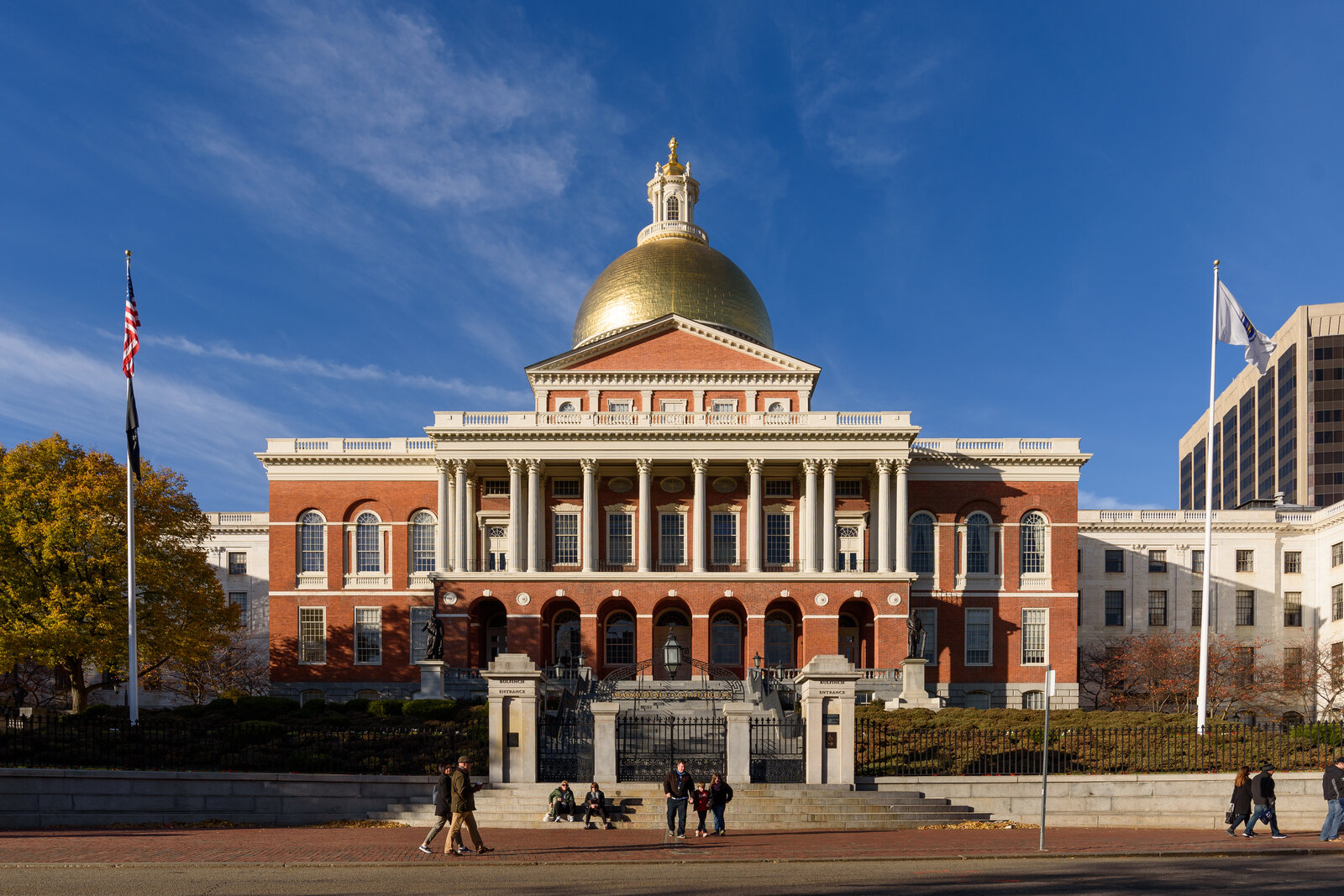
Look around first
What to notice
- Gilded dome
- Red-brick facade
- White portico
The story of the place
The governor, the Massachusetts House of Representatives, and the Massachusetts Senate found a shared home here after the Revolution, when their former space no longer held the legislators. The state bought the former pasture of the Hancock family at the top of Beacon Hill for it and opened the red-brick building in seventeen ninety-eight. Above the white portico rises a dome gilded later; the Massachusetts House of Representatives first met in the square chamber beneath it, and since eighteen ninety-five the Massachusetts Senate has met there.
In the spring of eighteen forty-three, sheets of a petition weighing about sixty-eight kilograms were rolled into this state house. Beneath them were sixty-four thousand five hundred twenty-six signatures. They all concerned the fate of one man—George Latimer, a fugitive from slavery seeking the right to remain with his family in Massachusetts.
A few months earlier, George and his pregnant wife Rebecca had fled Norfolk, Virginia. There, both were considered someone else's property; they wanted their child to be born free. In Boston, George was recognized by an acquaintance of his enslaver, James Gray. Gray came for the fugitive and accused him of theft: that accusation made it possible to carry out the arrest more quickly.
The court ruled that George should be returned to Gray. George himself told his lawyer that he preferred death to returning to Norfolk. Rebecca, meanwhile, was hiding with Boston abolitionists. People gathered around the jail, ready to free the prisoner by force, and the sheriff urged Gray to take money and leave. At first, Gray demanded one thousand five hundred dollars, but on the eve of the expected release he agreed to four hundred. The abolitionists paid, and George received papers confirming his freedom.
That was not the end of it. George was freed, but the Boston police, court, and city jail had already helped a man who intended to take him back into slavery. Latimer began traveling around Massachusetts and speaking at meetings. The signature collectors demanded that fugitive slave catchers be deprived of the support of state officials and that captured people be barred from being held in state, county, and city buildings.
The Massachusetts State House was opened for precisely such decisions in seventeen ninety-eight. After the Revolution, legislators needed more space, and the state bought the former cow pasture of the Hancock family at the top of Beacon Hill. The red-brick building housed the governor, the Massachusetts House of Representatives, and the Massachusetts Senate.
On March twenty-fourth, eighteen forty-three, the legislators passed the requested act, and the governor signed it. The law came to be called the Latimer Law. It could not repeal the federal rules on fugitive slaves, but it prohibited Massachusetts officials from taking part in captures and denied kidnappers access to local jails. Other Northern states later passed similar laws. George and Rebecca remained free and raised four children; George earned a living first as a barber and then hanging wallpaper.
In eighteen forty-three, the Massachusetts House of Representatives met in the square chamber directly beneath the dome, which was gilded later. Since eighteen ninety-five, the Massachusetts Senate has met in that room. The text of the petition and some of the sheets bearing signatures were moved to the Massachusetts Archives, while the chamber to which their demand was brought remained beneath the golden dome.
Useful on site
Weekdays 8:45-17:00; tours weekdays 10:00-15:30, weekends/holidays closed.
Checked: June 28, 2026. Check the official source before visiting.This is a working government building: an interior visit may require security screening, and a tour should be planned separately.