 Guide On Map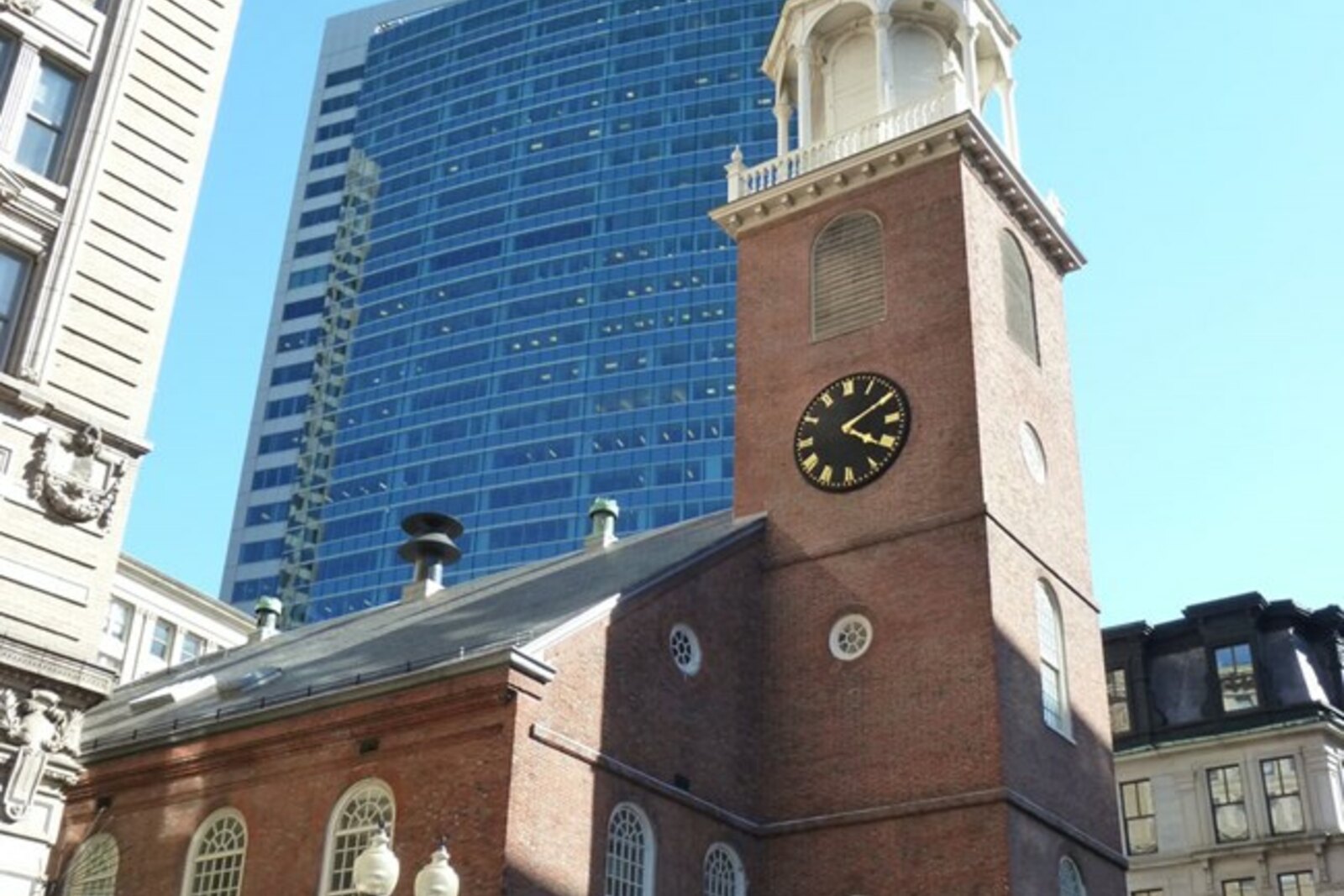
Look around first
What to notice
- Brick walls
- Lower pews
- Gallery
The story of the place
The Puritan congregation erected this brick meeting house in seventeen twenty-nine, keeping worship and the townspeople's common affairs under one roof. It is called South after an earlier meeting house of the congregation at what was then the edge of town; the old name took hold after another southern congregation appeared. Among Boston's colonial halls, none equaled it in size, and the lower pews and gallery held a large audience. Later, British cavalry turned the room into a riding arena and used the pulpit and pews for fuel, so the lower rows visible today were made from eighteenth-century plans only in nineteen forty-seven.
At a quarter to six in the evening on December sixteenth, seventeen seventy-three, Francis Rotch returns to this hall. He is twenty-three. He is a Quaker and the young representative of a family that makes its living through whaling and maritime trade. The family vessel Dartmouth carried whale oil to London and, on its return voyage, took aboard one hundred fourteen chests of East India Company tea. Now some five thousand people, gathered inside and in the street, await the fate of the ship and its cargo.
A duty on tea had existed before. A new law allowed the East India Company to sell it directly and cheaply in the colonies. The buyer would still have paid the duty imposed by Parliament, where the colonists had no representatives. Accepting the cheaper tea meant recognizing Parliament's right to impose such duties; local merchants would also gain an enormous privileged competitor.
The people of Boston decided that the tea must return to England without being unloaded. Rotch agreed to send Dartmouth back, but customs refused him clearance to leave. Twenty days after its arrival, officials could seize the cargo and unload it themselves. Nor could the ship pass the fort and warships at the harbor entrance without authorization. Rotch told the meeting plainly that such a voyage would ruin him. The crowd replied that he would try to unload the tea at his own risk.
Old South Meeting House was chosen for this dispute. Puritans built the brick building in seventeen twenty-nine for worship and public meetings. The word “South” was inherited from the congregation's first meeting house, which stood on what was then Boston's southern edge; it came to be called “Old” after another congregation, New South, appeared. In colonial Boston, it was the largest hall. When Faneuil Hall could not hold everyone who wanted to decide the fate of the tea, the meeting was moved here. The organizers called it a “Meeting of the People”: it was no longer an ordinary town meeting with its narrow circle of eligible voters.
On the morning of December sixteenth, those assembled sent Rotch to the royal governor, Thomas Hutchinson. The governor was seeking to enforce the customs rules and was at his country house in Milton, about ten miles from the city. Rotch made the journey there and back and brought a final refusal: Hutchinson would not allow the vessel to leave without customs clearance, and customs would not grant clearance while the tea remained aboard.
The meeting's chair, Samuel Adams, an organizer of the resistance who sought the return of the cargo without payment of the duty, said: “This meeting can do nothing more to save the country.” Later, the phrase came to be regarded as a prearranged signal, although there is no reliable evidence of such an arrangement. People began to leave. About one hundred fifty men, some with their faces smeared with soot and dressed in an imitation of Native American clothing, headed for Griffin's Wharf. Over three hours, they broke open and threw three hundred forty-two chests from three vessels into the harbor. They deliberately did not damage the remaining cargo or the ships themselves: Rotch lost the tea, which did not belong to him, but kept Dartmouth.
The participants went home without naming their accomplices. Exposure threatened arrest for treason and lawsuits from the East India Company; some kept the secret for many years. Parliament punished all of Boston: it closed the port until the value of the tea was repaid, restricted local self-government and meetings, and sent new troops.
During the later British occupation, cavalrymen took over this very hall. They tore out the pulpit and pews, used the wood for fuel, set up a bar in the gallery, and turned the room into a riding school. The congregation was able to restore the interior only in seventeen eighty-three. Most of the lower pews now standing inside were made in nineteen forty-seven from an eighteenth-century plan. Rotch and Adams's crowd stood between these brick walls, but sat on different pews.
Useful on site
Daily 10:00-17:00 through Revolutionary Spaces.
Checked: June 28, 2026. Check the official source before visiting.Viewing the interior is part of the museum visit; from the street, it is easier first to appreciate how a great meeting fit into a comparatively compact building.