 Guide On Map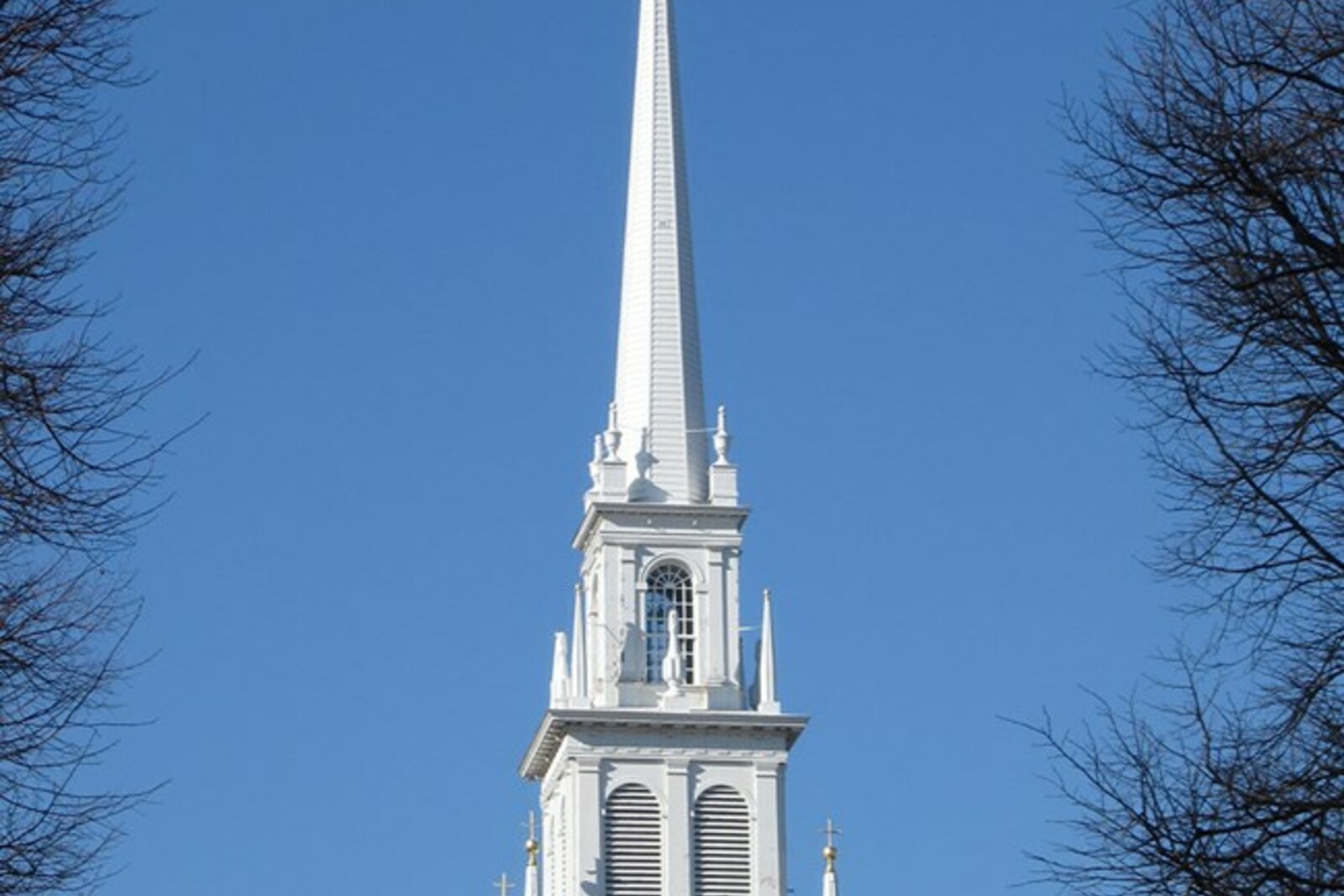
Look around first
What to notice
- Brick tower
- Tall spire
- Upper tower windows
The story of the place
Christ Church has stood here since seventeen twenty-three; an Episcopal parish now operates within its walls. The brick tower with its tall spire rose above Boston at the time and was visible across the river from Charlestown. The current spire is already the third: a hurricane tore down the first in eighteen oh four, the second collapsed in nineteen fifty-four, and this one was restored to resemble the earliest one.
On the evening of April eighteenth, seventeen seventy-five, twenty-three-year-old Robert Newman pretended to go to bed. He lived nearby with his mother, and British officers occupied rooms in their house. Newman served here as the church warden: he looked after the building and kept the keys. He was to slip out of his own house unnoticed, break the military curfew, and open the church.
A British detachment was already preparing to cross the Charles River to march to the weapons stores in Concord. Paul Revere was to warn the people across the river, but he understood that he might be detained while still in Boston. So he had arranged in advance with like-minded people in Charlestown: one lantern in the church tower would mean that the soldiers were taking the long route through Boston Neck; two, that they were crossing by boat and thereby saving time.
For the signal, Revere chose Christ Church in the City of Boston—the name it officially had then and still has today. The familiar name, Old North Church, took hold later. It was an Anglican church built in seventeen twenty-three; an Episcopal parish now operates here. As a young man, Revere rang its bells and knew the tower well. It was Boston's highest point and could be seen from Charlestown. Besides height, people able to get inside were needed: Newman had the keys, while his associate John Pulling sat on the parish council and owned several pews here. Pulling earned his living on trading voyages between Georgia and Boston.
Who exactly carried each lantern has not been reliably established. Revere later described the agreed signal but did not name his helpers. According to the reconstruction generally accepted today, Newman and Pulling entered the church, climbed the tower, and displayed two lit lanterns in the upper window for about a minute.
Their recipient was not Revere, as is often told following Henry Wadsworth Longfellow's later poem. The signal was meant for watchers on the other bank. They saw the two lights and began sending riders through the surrounding settlements. When Revere himself reached Charlestown, he was told that the message had been received. If he had been detained earlier, the warning would still have gone on.
The next day, British soldiers came for Newman: the circle of people with church keys was small. He was put in jail, but later released when he said that he had handed the keys over to Pulling. By then, Pulling had fled Boston with his family and waited out the British occupation in a fishing settlement on the southern coast. After the troops were evacuated, he returned to the city.
The lantern that Concord Museum considers one of those two is now kept in Concord; the other has been lost. The spire from that night has not survived either: a hurricane brought it down in eighteen oh four, and the next one collapsed in nineteen fifty-four. A third spire now stands above the old brick tower, restored to resemble the first one.
Useful on site
Check Old North on the day of your visit; access depends on tours, services, and events.
Checked: June 28, 2026. Check the official source before visiting.The church remains active: respect services and closed areas, and check separately about visiting the interior or taking a special tour.