 Guide On Map
Astrakhan: Kremlin and Caspian Trade
From Prechistensky Gates through trading compounds to the exchange building
Guide On Map on your phone
Open the walk like a regular app
It takes about 10 seconds to install. No app store needed.
The whole path
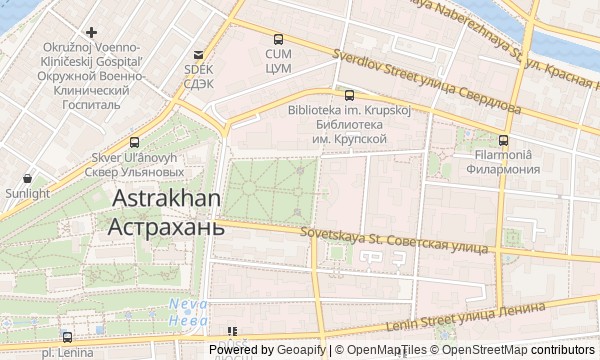
Route map
About the walk
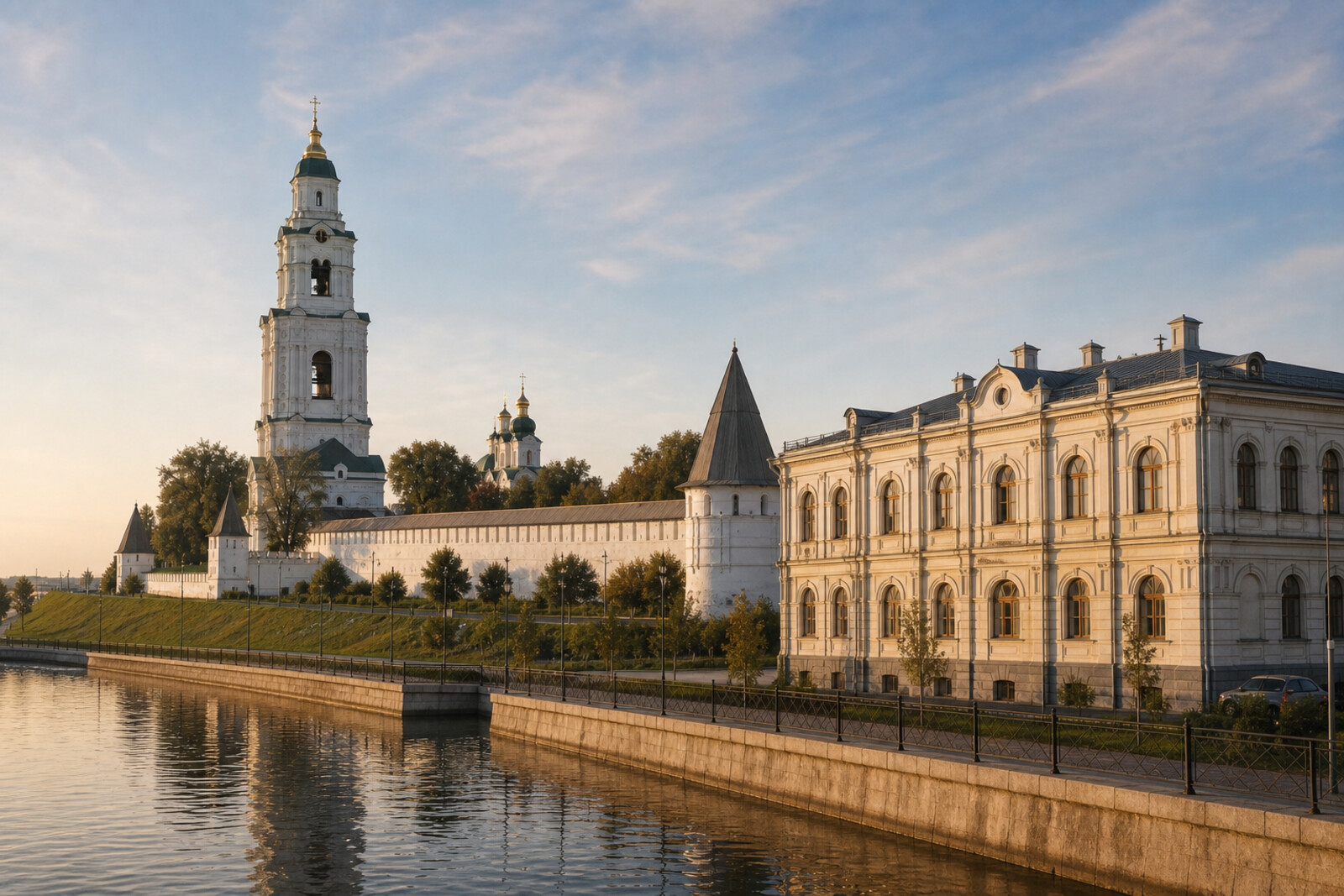
You will enter Astrakhan Kremlin through its main gates, walk from the cathedral to the Artillery Tower, and leave by the route along which goods were once carried in from the wharf.
Then white stone will give way to residential compounds: Persian and Indian. Galleries, arches, and cellars will show how a visiting merchant lived above his own warehouse. The road will then lead to a canal that could not be finished for decades, and to the exchange by the water.
The stories include silver coins instead of bullets, a church above a trading entrance, and one disaster after which merchants demanded wireless communication. You will hear a calm account of what survives, what has disappeared, and where the sources disagree.
After the walk, you will be able to read old Astrakhan through its gates, compounds, canal, and exchange window—as a city where the route from the Caspian Sea ended in a warehouse, a deal, and a message from the roadstead.
Why this order
Prechistensky Gates will first establish the Kremlin as a place of struggle for the city, while the cathedral immediately beyond them will move the story from liberation to the power of Stepan Razin's atamans. From the cathedral, the route continues to the Artillery Tower: alongside the disputed location of Raskat, you will find a surviving section of the real defenses. Next come Nikolsky Gates, where the military fortress connected to the wharf and the trading city.
Beyond the Kremlin, that connection becomes tangible: first, the enclosed compound of Persian merchants, then the surviving neighboring wing of the Indian Trading Compound, will show 2 versions of the same arrangement—home, warehouse, and deal under one roof. From the trading compounds, the route reaches the canal because capital earned from Caspian shipping was then invested in the city's embankments and crossings. The final walk to the Astrakhan Exchange Building completes the chain: there, private deals became a collective decision by shipowners about communication with the sea roadstead.
Those who want to connect the Kremlin with merchant Astrakhan Lovers of stories about human risk and stubbornness Those who value surviving details and candid caveats
Those who want only an overview of the Kremlin without going into the city Those who prefer light legends without examining sources Those uninterested in the history of trade and urban infrastructure
Before you go
Choose comfortable shoes for the Kremlin and allow extra time: access to the tower, the Powder Magazine, and cathedral spaces may differ from access to the grounds. The cathedral is active, so during services speak quietly, do not disturb worshippers, and be prepared to limit yourself to an exterior view. Treat the Persian Compound and Indian Trading Compound as city buildings, not open museums: do not enter entryways, service passages, or closed courtyards without an invitation. Weather feels stronger by the canal and the spit; in heat, bring water and a hat, and in wind or rain, a waterproof outer layer. Old names and functions are not always marked on site, so it is useful to save the stop texts in advance.
When to go
The main walk is planned for 2 hr 20 min without an in-depth visit to museum displays. If access inside the Kremlin sites is open and you want to spend time in the tower, the Powder Magazine, and the cathedrals, the total duration may grow to 4 hours.
Backup plan
If the Kremlin's interior spaces are unavailable, do not cancel the beginning: the bell tower, the cathedral's mass, Lobnoye Mesto, the towers, and Nikolsky Gates still make sense from the outside. Then continue to both compounds, the canal, and the exchange—these stops do not originally require entry into private parts of the buildings. In intense heat, heavy rain, or fatigue, shorten the middle section after the Indian Trading Compound and finish the walk at the exchange; in that case, it is better to read the canal's story separately than to stand by the water for long in uncomfortable weather.
Route conditions
Surface. Paved — 1.2 km (data covers 27% of the route)
Stairs. Flights: 3, 17 m in total
Access. Wheelchair — no; stroller — limited (stairs)
Facilities. Toilets — 1
Elevation. Ascent — 23 m; descent — 35 m
OpenStreetMap extract of July 2, 2026: database data, not a check on the ground. Data © OpenStreetMap contributors, ODbL licence
Walk plan
Open in maps ↗- 1
Prechistensky Gates and the Cathedral Bell Tower
You will learn which vanished building survives only in the name of the Kremlin's main entrance. - 2
Dormition Cathedral and Lobnoye Mesto
Here you will distinguish the known circumstances of the metropolitan's death from the disputed location of the Raskat. - 3
Artillery Tower and the Powder Magazine
You will examine the design of the final defensive sector and learn what the defenders used when their bullets ran out. - 4
Nikolsky Gates
You will see why merchants needed a church directly above the fortress's river entrance. - 5
Persian Compound
Beyond the residential doors, you can make out the former arrangement of a hotel, a warehouse, and a place for transactions. - 6
Indian Trading Compound
From the one surviving block, you will reconstruct the layout of the community compound that has disappeared from the city. - 7
Varvatsievsky Canal and Varvatsievsky Bridge
You will trace how money from Caspian Sea trade turned into a channel bed, embankments, and crossings. - 8
Astrakhan Exchange Building
The finale will connect the exchange hall with an attempt to establish a direct link between the city and the sea roadstead.
Route features
Everything you need stays in the browser
Progress, saves and your trip plan are stored on this device.
Add Guide On Map to your home screen so the walk opens outside the browser.
How we handle sources, maps and corrections: our editorial standards