 Guide On Map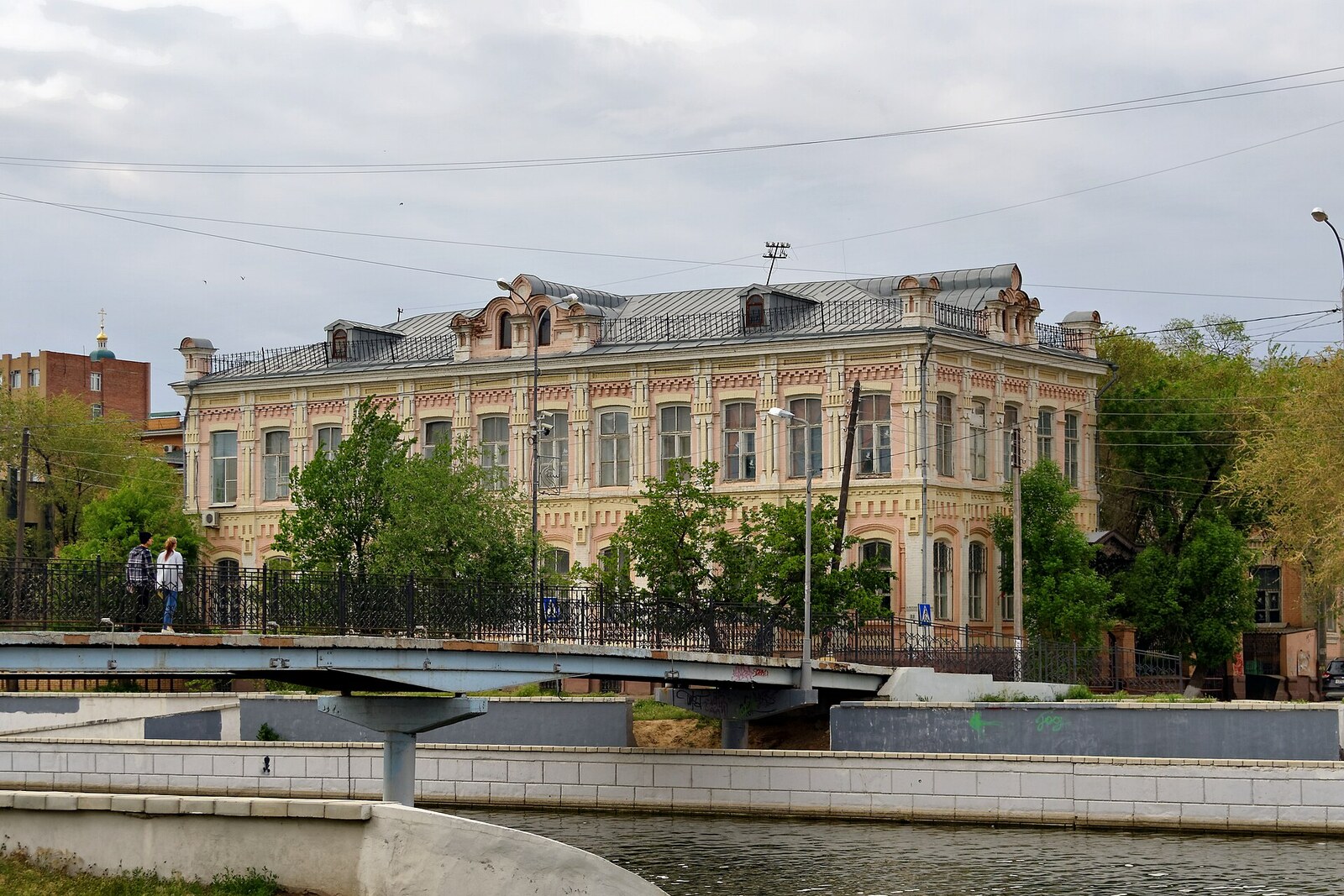
Look around first
What to notice
- Channel bed
- Varvatsievsky Bridge
- Embankments on both banks
The story of the place
Beneath the bridge runs an artificial channel bed that linked the Kutum River with the Volga River and opened a route for small vessels. On the site of boggy salt marshes, there first appeared an unfinished ditch with barriers that protected the city during high water. When the channel bed was completed, its banks were reinforced with wood, embankments and crossings were built, and development began to grow beyond the water on the former swampy land.
The old name of this crossing was a familiar address. The bridge stood in line with Police Street—today's Kirov Street—so it was called the Police Bridge. It linked central Astrakhan with the Tatar and Armenian settlements beyond the canal—Zakanalie. In the nineteenth century, carriages could travel two abreast over its broad wooden deck. The bridge is now officially called Varvatsievsky Bridge, like the canal beneath it.
The canal was dug where boggy salt marshes approached the southern edge of the old city. In seventeen twenty-two, Peter the Great ordered the Kutum River to be connected with the Volga River: flowing water was to drain the marshy land, while the new channel was to let vessels pass. Workers did not begin until seventeen forty-four. Construction dragged on for decades. In seventeen seventy, both unfinished ends were blocked with rubble, piles, and locks so that rising water would not flood the city. Residents carted rubbish into the dug section and discharged sewage there. That is how Astrakhan Canal acquired its unofficial name—the Ditch.
In eighteen oh nine, Emperor Alexander I approved a new estimate of one hundred twenty-four thousand rubles. But the sum had not yet been included in government expenditure. Then Ioannis Varvakis (Ivan Andreyevich Varvatsy) took up the work—a Greek and an Astrakhan fishing industrialist who sought to complete the canal at his own expense.
Varvatsy earned the money from the very trade for which the city needed waterways. His seagoing vessel, St Stanislaus, sailed for fish in the leased Salyan Waters off the Persian shore of the Caspian Sea. The merchant now put this trading capital at risk: he undertook to pay for the entire project, although the final cost was not known in advance. The original estimate was not enough, but Varvatsy continued to pay.
Over seven years, the workers completed the channel bed, reinforced both banks with wood, built embankments and six crossings. Boats gained a passage, the water gained drainage, and residents began building on the drained land south of the canal. Varvatsy moved to Taganrog as early as eighteen thirteen, while the work was still under way. On December thirty-first, eighteen seventeen, Alexander I ordered the completed Astrakhan Canal to be named Varvatsievsky Canal.
In nineteen twenty, it was renamed May Day Canal. Today, Varvatsy's name is again borne by the canal and bridge, the May Day name remains with May Day Embankment, and Police Street has become Kirov Street. The old center still lies on one bank, and the former Zakanalie on the other.
Useful on site
The canal embankments are accessible at any time; comfort depends on the weather and the condition of the sidewalks.
Checked: date not specified. Check the official source before visiting.Listen to the story from a safe part of the embankment or bridge, and do not approach an unguarded edge. There is little protection from the sun here in hot weather, and after rain the surface near the water may be slippery.