 Guide On Map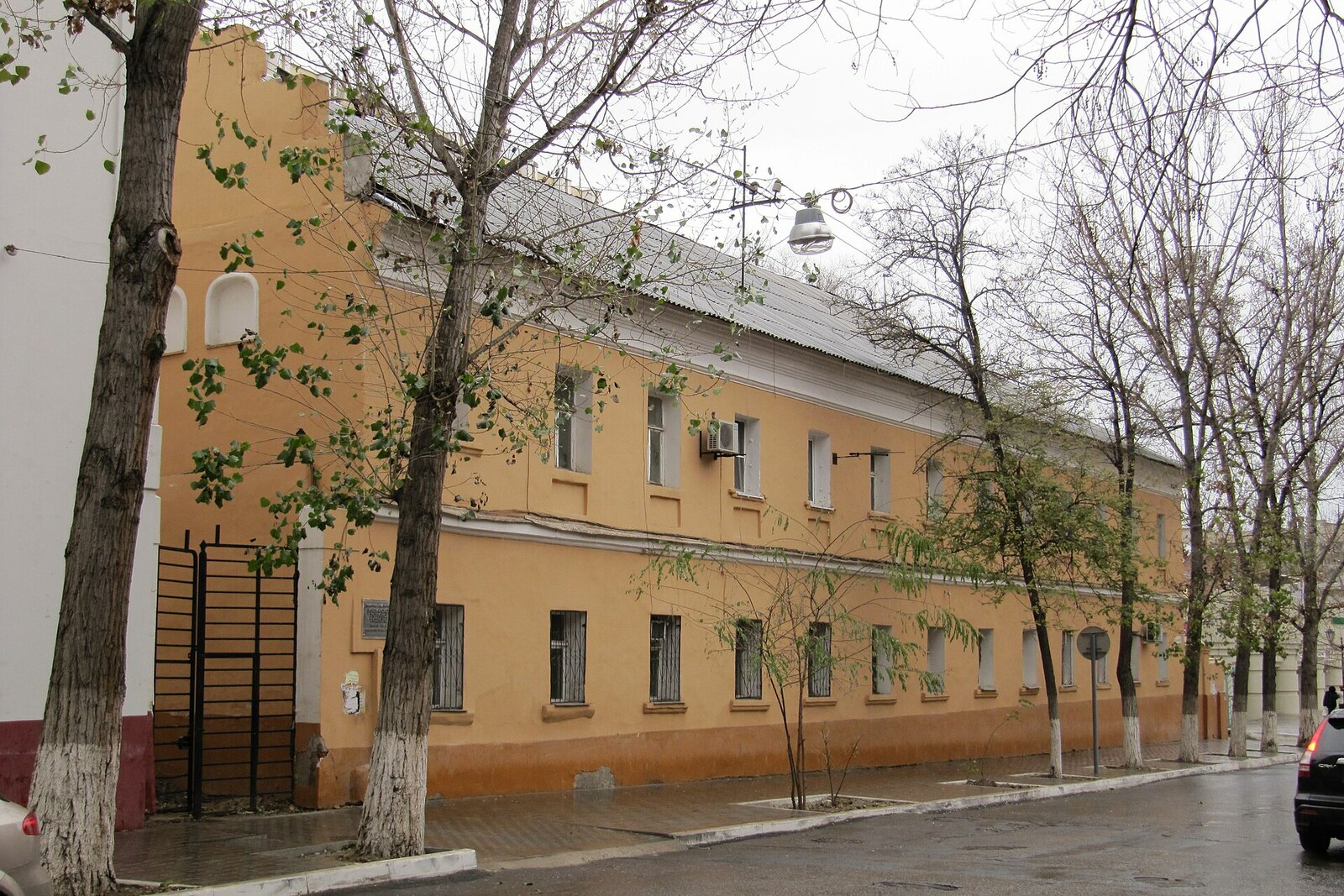
Look around first
What to notice
- Two-story stone block
- Glassed-in arches
- Courtyard gallery
The story of the place
The route from Multan through Persia and the Caspian Sea stretched over months, so merchants sometimes stayed in Astrakhan for two decades. Behind the gates of the Indian Trading Compound, they needed shops and storerooms, housing and a bathhouse, a weighing room and a room for prayer. In the two-story building, the lower rooms served trade, while the upper ones were residential; an arched passage ran along the courtyard by the doors. Its arches were later enclosed with glass, and the rooms themselves are now divided into apartments.
On August eighteenth, eighteen oh three, Astrakhan's Indian merchants faced a choice. The state agreed to transfer the old merchant court to them free of charge, but on one condition: within three years, they had to build a new one in its place according to an approved design. A merchant court was an enclosed trading complex where a visiting merchant could live, keep goods, and make deals. The Indians accepted the condition and invested their own money in the construction.
They had already occupied this site for a century and a half. Most came from Multan—then an Indian trading city, now in Pakistan. The journey through Persia and the Caspian Sea took months, so merchants stayed in Astrakhan for ten, twenty, or more years. They needed not rooms for a few nights, but a permanent arrangement: shops, warehouses, a place to weigh goods, housing, a bathhouse, and a room for prayer. All of this fit within a single compound, reached from the street through guarded gates.
By the end of the eighteenth century, the old blocks had fallen into disrepair. The treasury did not want to pay for their restoration, and the merchants were offered ownership in exchange for a new building. They risked capital earned from textiles, precious stones, credit transactions, and Caspian Sea trade: failing to meet the condition meant not receiving the compound.
They met the deadline. By eighteen oh six, a two-story stone block had appeared along what was then Indian Street. Shops and rooms for goods occupied the first floor, with living rooms above. On the courtyard side, the doors were connected by a long arched gallery. The merchants occupied only part of the building; they rented out the remaining rooms to local traders and other arrivals from the East. Having received the compound free of charge, the community turned it into its own income-producing trading house.
But the number of people for whom it had been built kept dwindling. Trade routes changed, many prosperous Indians took Russian citizenship and moved into separate houses, and by the middle of the nineteenth century the community had disappeared. In eighteen sixty, the city shelter for the poor and elderly occupied the former merchants' rooms.
There are apartments here now. The northern part of the complex was dismantled in nineteen seventy-seven, so only one block remains of the Indian merchants' compound. The glassed-in arches on the courtyard side are the former gallery along which the compound's residents moved between rooms, shops, and warehouses.
Useful on site
You can view it from the street at any time; no interior access is expected.
Checked: date not specified. Check the official source before visiting.Most of the historic functions cannot be guessed from the street, so do not look for literal traces of the prayer room, weighing room, or old warehouses. Do not enter private premises or the courtyard without permission.