 Guide On Map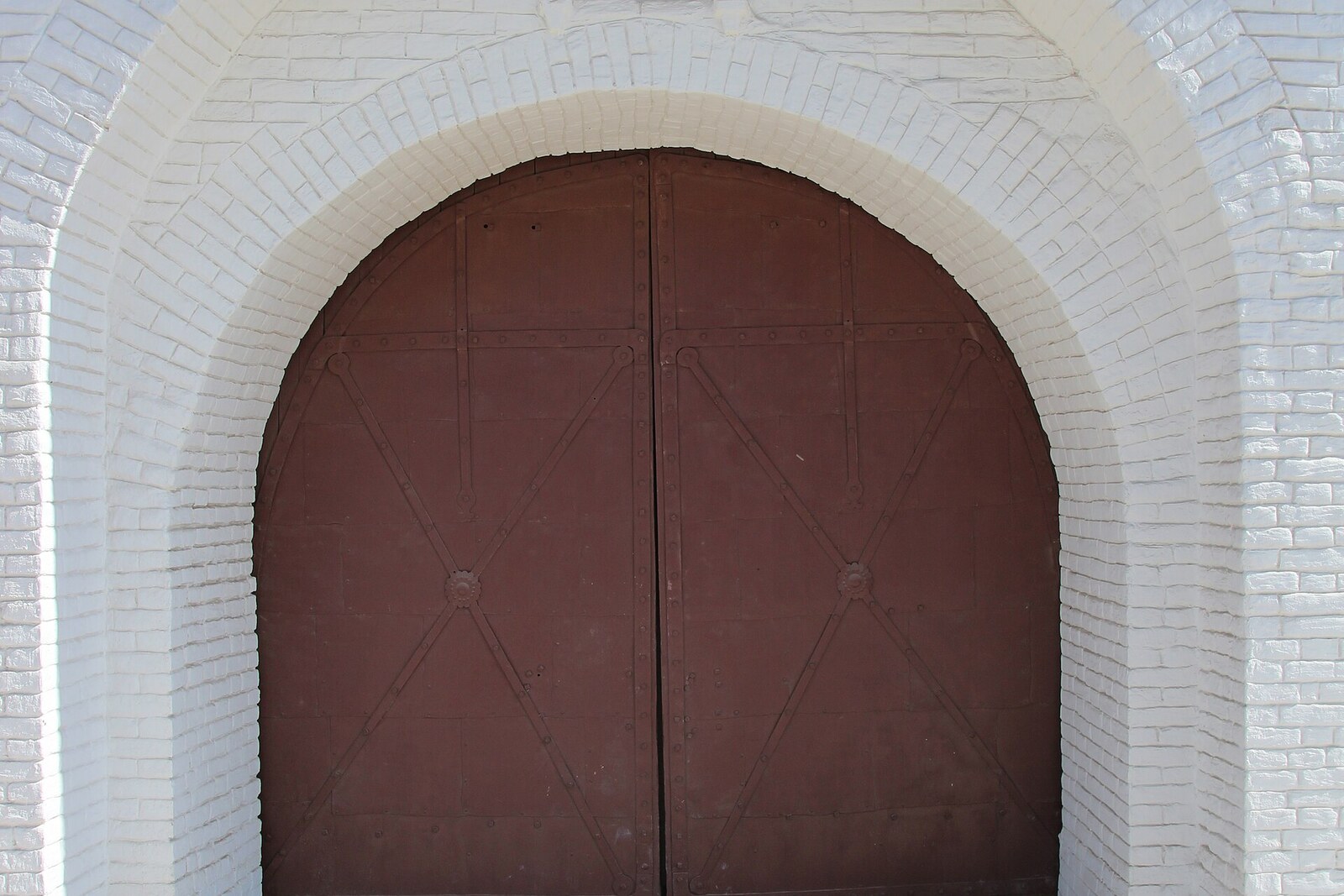
Look around first
What to notice
- Passage arch
- Church over the gates
- Descent from the gates
- Roadway of Admiralteyskaya Street
The story of the place
The through arch in the Kremlin wall served as the city's exit to the Volga River: the descent led to Astrakhan's main wharf. Above the passage rose the Church of Nicholas of Myra, whom merchants and those setting out by water especially revered. Vessels from different government departments and monasteries stopped at the wharf, while cargoes were carried through the passage into the city for customs settlement; salt was kept nearby. The descent now leads to Admiralteyskaya Street, whose roadway lies on the former strip of shore.
On April fifteenth, seventeen twenty-nine, the Astrakhan merchant Afanasy Krasheninnikov submitted a petition to Bishop Ilarion. He spoke on behalf of the city's merchant community and sought permission to erect a church over these gates again. A year earlier, Governor Ivan von Mengden had ordered the former church dismantled because it was dilapidated. Its iconostasis and liturgical furnishings had already been moved to Dormition Cathedral.
The merchants' intervention was explained by the layout of this part of the city. At that time, the Volga River came right up to the Kremlin wall. Beneath the gates began a descent to a narrow strip of shore and the city's main wharf. State, military, monastic, diplomatic, and merchant vessels moored here. Goods were carried through the arch, while the customs yard and salt warehouses stood nearby. Merchants depended on the long route along the Volga River and the Caspian Sea: their entire fortune could lie in the hold of a single vessel.
Above this entrance stood the Church of Nicholas of Myra—a saint whom merchants and travelers revered as a protector on the road. Astrakhan residents called the church “St Nicholas Church over the Gates.” The gates and the wharf took their names from it. The name precisely indicated the purpose of the place: here a voyage ended, unloading began, and accounts were settled with customs.
The old church was maintained by the treasury. In seventeen oh one, Tsar Peter the Great cut spending on such churches for military needs. The priest at Nikolsky Gates was entitled to eight rubles a year, the deacon to two, and each of the two watchmen to two rubles; for services, they were issued half a pood of wax, a pound of incense, and half a bucket of wine. Services were held less and less often, and there was no money for major repairs. A quarter century later, the governor ordered the deteriorated building dismantled.
Krasheninnikov asked for the church to be restored to the place where merchants entered the city with their cargoes and from where they again set out on the water. Permission was obtained, and by the end of the seventeen thirties a new St Nicholas Church over the Gates was consecrated above the arch. Later owners and restorers altered it, but the main structure over the gates appeared as a result of that merchants' petition.
The former church lived to see the most famous arrival at Nikolsky Wharf. In the summer of seventeen twenty-two, Emperor Peter the Great stepped ashore here from a sloop. He was heading for the Persian Campaign and seeking to secure Russia's position on the western shore of the Caspian Sea. He was met by Governor Artemy Volynsky, who was responsible for preparing vessels, people, and supplies. From the wharf, Peter passed through these gates into the Kremlin. He used the same river entrance through which envoys, goods, and state cargoes passed every day.
In the second half of the eighteenth century, the Volga River began to move away from the Kremlin. A sandbank grew by the wall, the course of the Kutum River changed, and it became impossible to moor here. Provincial officials allocated the site of the former wharf for a street, and residents began putting up wooden houses, warehouses, and shops on the newly formed land. This is how the district called Kosa arose.
The descent from Nikolsky Gates now ends at Admiralteyskaya Street. Its roadway occupies the strip where merchants unloaded vessels and Volynsky met Peter's sloop.
Useful on site
The exterior is accessible according to the Kremlin grounds' opening arrangements; interior access to the church over the gates is not included.
Checked: date not specified. Check the official source before visiting.It is best to listen to this account outside, where you can compare the gates with the city's present layout. Do not try to look for remains of the wharf: the point of this stop is precisely its disappearance.