 Guide On Map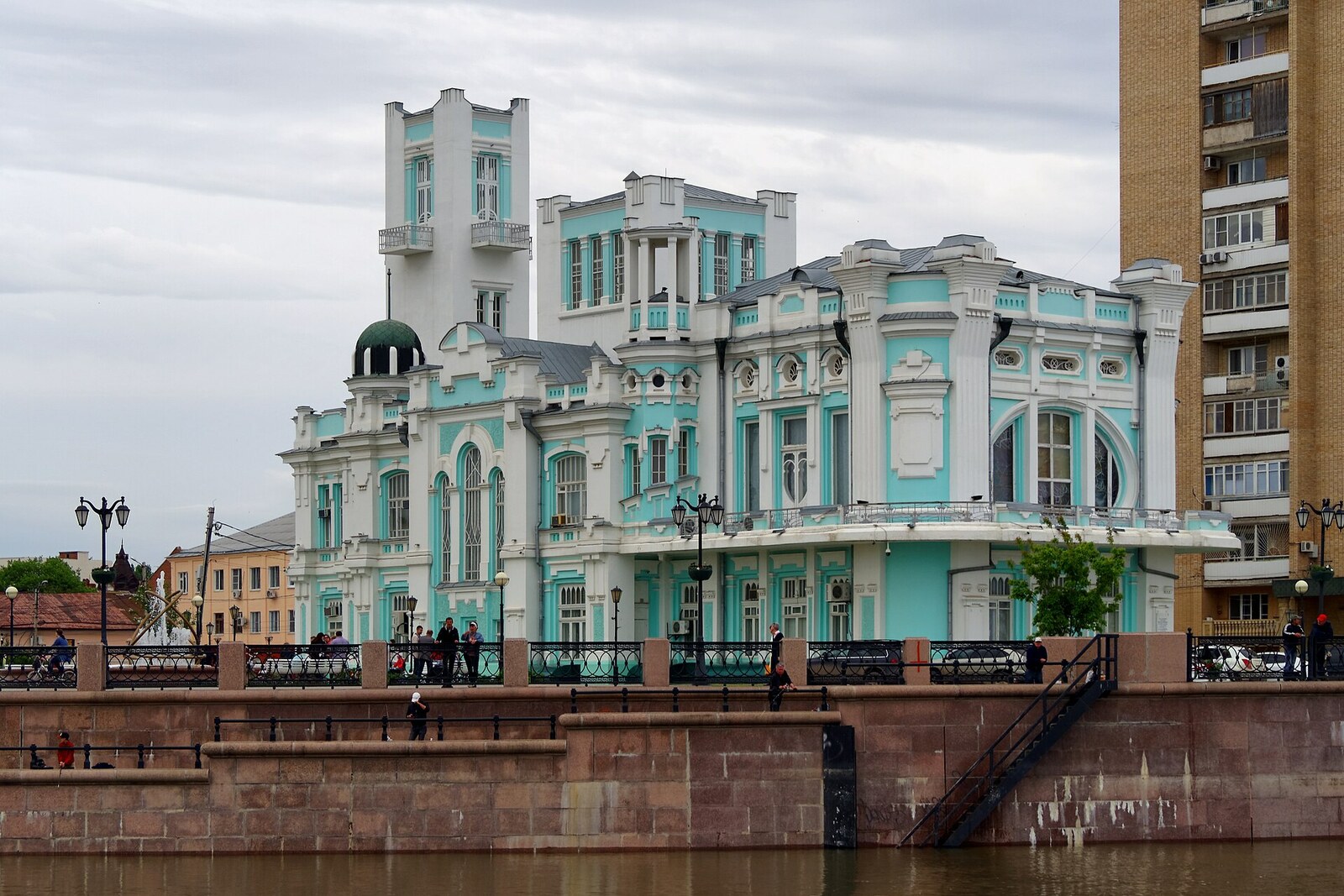
Look around first
What to notice
- Large triple window
- Upper floor
- Facade facing the Volga River
The story of the place
On the spit by the Volga River stands a stone building where the trading city once brought together news from the sea and commercial deals. Before it was built, merchants gathered here in the open air, among the piers, flour and salt warehouses, and the place where dockworkers were hired. The upper floor contained rooms for general meetings and for brokers' work, while offices and a restaurant occupied the floor below. The Volga River facade is recognizable by its wide window made up of three joined sections.
On November twenty-first, nineteen ten, the upper hall of this Exchange Building filled with representatives of major trading firms, shipping company managers, bank directors, and doctors. They had gathered because of losses on the Caspian Sea: a week earlier, a hurricane-force storm had sunk twenty-one vessels at the Twelve-Foot Roadstead. Two hundred eighty-one crew members and dockworkers died.
The Twelve-Foot Roadstead was the name of a sea anchorage far from Astrakhan. Deep-draft vessels remained there, while goods were transferred to shallow-draft Volga River vessels. For the shipowners in the exchange hall, these were steamships and cargoes on which their businesses depended. For the crews and dockworkers, the transshipment provided work. During the storm, the underwater telegraph cable broke. Even a working line would have helped little: a telegram first had to be delivered by boat to the Astrabad floating landing stage, where the apparatus was located. In such rough water, it was impossible to dock with it.
The Exchange Building was erected on the spit precisely because of this chain between the sea and the city. Even before the building appeared, merchants gathered here in the open air, beside the piers, flour and salt warehouses, and the place where dockworkers were hired. Here, before they read it in newspapers, they learned about navigation, catches, prices, accidents, and bankruptcies. In eighteen seventy, merchants founded the Exchange Society, and a year later they built the first building on this site, with offices, meeting halls, and a tavern. The present stone building opened in the spring of nineteen ten. The upper floor contained a common hall and rooms for brokers arranging deals; the floor below held offices and a restaurant.
After the Caspian disaster, the merchants first organized a collection here to aid those affected. Then the Exchange Committee addressed the reason the vessels had been unable to call rescuers in time. In December, shipowners and industrialists discussed deepening the sea canal, navigational beacons, and communication with the roadstead in this building. In the following spring, the committee proposed setting up eleven wireless telegraph stations, as radio communication was then called. Shipping companies, fishers, and other vessels were meant to use them.
The Postal and Telegraph Department agreed to begin with one station at the roadstead. Radio messages were to be sent through Petrovsk (now Makhachkala), then carried by regular telegraph from there to Astrakhan. The Exchange Committee demanded a direct connection and refused to provide premises on the Astrabad floating landing stage free of charge. Because of this dispute, the opening was delayed by a year. Officials had to negotiate separately with the Caucasus and Mercury Shipping Company, which owned the Astrabad, and pay for its conversion.
On March twelfth, nineteen thirteen, the radio station at the roadstead began operating. During its first navigation season, it transmitted and received two thousand seventy-seven radio messages; alongside private messages, weather information for navigators was sent. The apparatus was not in the Exchange Building, but far down the delta, on the Astrabad. The hall from which this correspondence with the departments began has survived here: on the Volga River side, it is marked by a large triple window stretched horizontally. Since nineteen sixty-four, marriages have been registered in the former Exchange Building.
Useful on site
Accessible from outside at any time; interior access is not expected and depends on the operating hours of the Palace of Marriage.
Checked: date not specified. Check the official source before visiting.An exterior inspection is enough to finish: the route does not provide for unrestricted entry to the building. It may be windy by the water, so choose a place where the account can be heard clearly and where you do not obstruct passersby.