 Guide On Map
Jewish Quarter and Plantage: Loss and Rescue
From Waterlooplein through old synagogues to ARTIS
Guide On Map on your phone
Open the walk like a regular app
It takes about 10 seconds to install. No app store needed.
The whole path
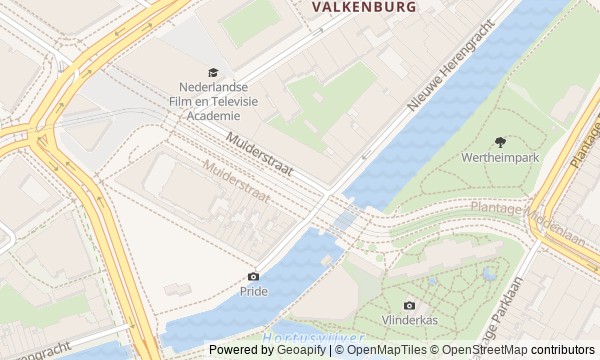
Route map
About the walk
You will walk from the market stalls of Waterlooplein, through the synagogues of the old Jewish Quarter, to green Plantage—a garden, two buildings facing each other, and the gates of ARTIS.
At first there will be stalls, squares, and brick prayer halls all around you. Then the route follows Nieuwe Herengracht to Hortus Botanicus and brings you onto Plantage Middenlaan. Here, several neighboring doors will prove more closely connected than their facades suggest.
You will encounter a sixteen-year-old firefighter's explanation, a silver Hanukkah lamp without its former base, a scientific experiment that made a mistaken conclusion famous, and a plank laid across the water. The story rests on documents and small decisions, without memorial rhetoric. Where testimony conflicts with the convenient version, you will hear that plainly.
After this walk, you will read this neighborhood through vanished stalls, preserved windows, a fence line, and the two sides of Plantage Middenlaan.
Why this order
Waterlooplein begins with a destroyed everyday world. The short walk from the market to the Portuguese Synagogue shows that beside the vanished community, its main building survived. Across the square, the route enters the former Ashkenazi synagogues: after the rescue of an entire building, the fate of a Hanukkah lamp narrows the scale to one object. Then Nieuwe Herengracht leads to Hortus Botanicus. A scientific error among the plants offers a pause and poses the route's larger question: what remains after the original account has collapsed. From the garden, Plantage Middenlaan leads to a museum in a former school, then across the street to a theater. First, the path children took between neighboring courtyards becomes clear; then, the workings of the assembly point they had to escape. The final turn toward ARTIS shifts the theme of rescue to an island where, during a raid, soldiers chose not to look for people.
Those who want to understand Jewish Amsterdam through specific places in the city Those who care about human decisions, documents, and the fates of objects Those ready to alternate between museums, memorials, and green spaces
Those looking for an easy walk without the subject of occupation Those who want to see places only from the outside Those who need a route through the historic center's headline sights
Before you go
Decide in advance which interiors are essential for you: the synagogue, Jewish Museum, National Holocaust Museum, Hortus Botanicus, and ARTIS each require separate time, and access arrangements and visiting rules may differ. Check current information on the official websites and book any required visits separately. Do not expect to explore both major green sites properly in what remains of a short museum day. Bring headphones, charge your phone, and save some energy for Plantage Middenlaan: the museum and memorial are best experienced without rushing. In religious and memorial spaces, speak quietly and follow local photography rules.
When to go
Allow most of the day. Start while Waterlooplein still has city life, do not linger too long at the first 3 stops, and leave a calm stretch for the museum and theater. After the memorial section, a pause helps; then choose either an unhurried visit to Hortus Botanicus or ARTIS, or a brief introduction to both without trying to see everything.
Backup plan
If you cannot get inside the synagogue or museums, keep the route's thread outdoors: take in the open space of Waterlooplein, walk between the facades of the community buildings, pause at Jonas Daniël Meijerplein, and compare the former school with the theater across the street. The audio stories will give those distances meaning even without the exhibitions. Then head to Hortus Botanicus or ARTIS after checking access; if both are unavailable or time is short, walk the streets of Plantage and end in a quiet green place in the neighborhood. If the memorial section becomes emotionally exhausting, do not force it: take a break and continue only when you can listen attentively.
Route conditions
Surface. Paved — 1 km; unpaved — 114 m (data covers 93% of the route)
Access. Wheelchair — limited; stroller — limited
Facilities. Toilets — 4; drinking water — 5
Elevation. Ascent — 6 m; descent — 11 m
OpenStreetMap extract of August 12, 2026: database data, not a check on the ground. Data © OpenStreetMap contributors, ODbL licence
Walk plan
Open in maps ↗- 1
Waterlooplein
The fate of the market stalls will reveal the disappearance of an entire urban community through the number of stalls that remained. - 2
Portuguese Synagogue
A wartime inspection will show how ordinary features of the building changed the occupiers’ decision. - 3
Jewish Museum
The fate of the Hanukkah lamp will bring the history of the looted complex down to one surviving object and one loss. - 4
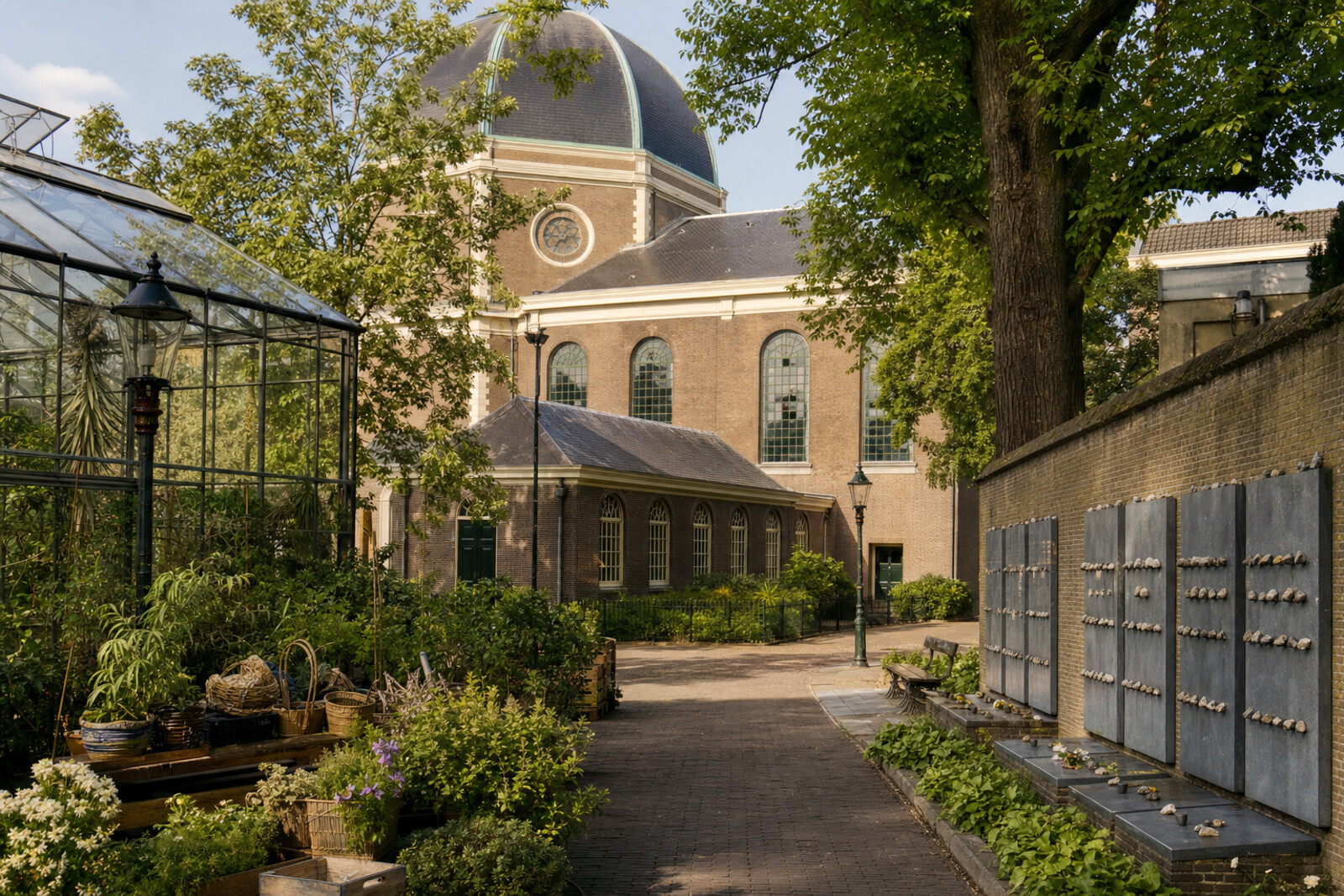
Hortus Botanicus
A long experiment will show how scientific fame can outlive a refuted conclusion through a single word. - 5
National Holocaust Museum
The proximity of the school, nursery, and theater explains why rescue depended on a few meters and on adults' silence. - 6
Hollandsche Schouwburg — Memorial
Five weeks in one girl's life inside a collection point show how lists and queues could be turned against the system. - 7
ARTIS
The story of a hiding place on an island will complete the route at the spot where soldiers chose not to cross the water.
Route features
Everything you need stays in the browser
Progress, saves and your trip plan are stored on this device.
Add Guide On Map to your home screen so the walk opens outside the browser.
How we handle sources, maps and corrections: our editorial standards