 Guide On Map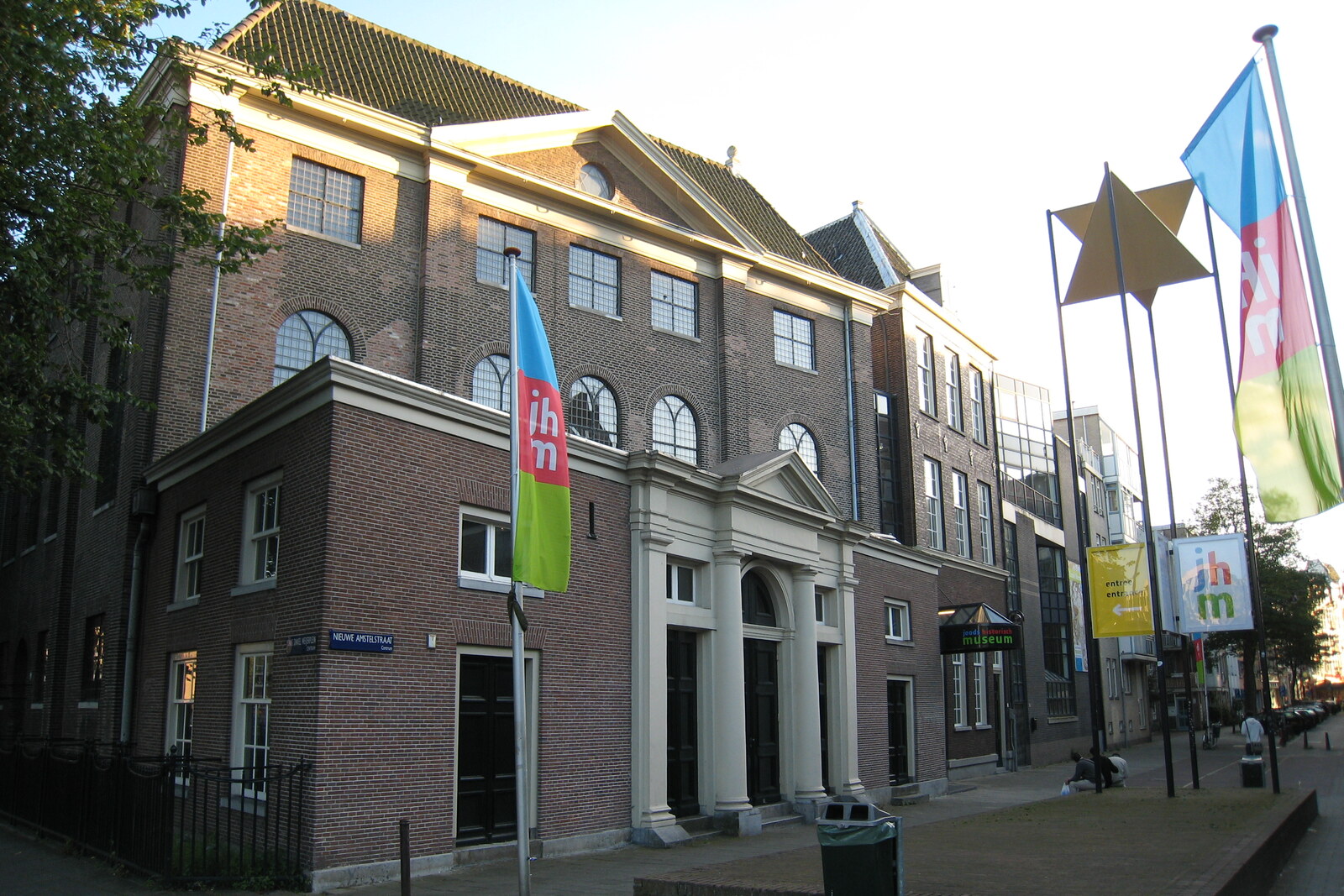
Look around first
What to notice
- Silver Hanukkah lamp
- Black wooden tripod
- Modern passages between the synagogues
- Roof over the former alley
The story of the place
Under one roof, four former Ashkenazi synagogues are joined here. When the community of migrants from Central and Eastern Europe grew quickly, one Great Synagogue was no longer enough, and three more houses of prayer appeared beside it. The former alley between them was covered by a roof, and the old halls were linked by modern passages. The history of Jews in the Netherlands from the seventeenth century to the present day is now gathered in these spaces.
On the first day of Hanukkah in seventeen fifty-three, the wealthy widow Sara Rintel gave the local community a silver lamp more than a meter wide. She commissioned it from the Amsterdam silversmith Pieter Robol. On an oval plaque, he engraved the names of Sara and her late husband, Chaim Levi.
Sara was the daughter and widow of parnasim—members of the Jewish community's governing board. Her family owned plantations in Suriname; she could afford a commission beyond the reach of most local congregants. The Ashkenazim—Jews who moved from Central and Eastern Europe—initially came to Amsterdam mostly as poor people fleeing wars. They built the Great Synagogue here in sixteen seventy-one. The community grew so quickly that three more synagogues had to be built beside it. All four are now occupied by the Jewish Museum.
Sara gave the lamp on the condition that it be used specifically in the Great Synagogue. This is a Hanukkah lamp: eight lights are lit, one on each evening of Hanukkah, and the ninth is used to light the others. Sara undertook to supply candles every year and separately stipulated in the contract that unfinished pieces of wax were to be returned to her. The silver commission was generous, but the widow did not abandon her practical calculation.
The condition was observed for almost two centuries. Every Hanukkah, the lamp was placed in this hall. After the last service in nineteen forty-three, the occupiers looted the complex. During the Hunger Winter of nineteen forty-four to nineteen forty-five, Amsterdam residents dismantled the vacant buildings for fuel; almost all of the wooden interior was removed from the synagogues. The Hanukkah lamp was hidden in time, but its carved wooden pedestal disappeared.
After the war, the surviving community did not return here. The four buildings stood empty and fell into disrepair until Judith Belinfante, director of the Jewish Museum, began preparing a move. She needed to join four separate synagogues into one museum while keeping the change in their purpose visible. The old halls were restored to their eighteenth-century appearance, the new passages were made emphatically modern, and the former alley between the synagogues was roofed over and turned into the main entrance. In May nineteen eighty-seven, the museum opened here, and the Hanukkah lamp was returned to the hall of the Great Synagogue.
Today, personal belongings, documents, works of art, and religious objects tell the story here of Jewish life in the Netherlands from the seventeenth century to the present day. The museum acquired ownership of the Hanukkah lamp in two thousand seventeen. Two years later, a black wooden tripod was made for it. Sara Rintel's silver remains original; the carved base on which it was lit before the war no longer exists.
Useful on site
Usually open daily 11:00–17:00; there may be closures or reduced hours on Jewish holidays and on certain dates in December.
Checked: June 28, 2026. Check the official source before visiting.Do not try to take in the entire exhibition before continuing the route: find the objects from the story and leave time for the square outside. Ask on site whether individual objects may be photographed.