 Guide On Map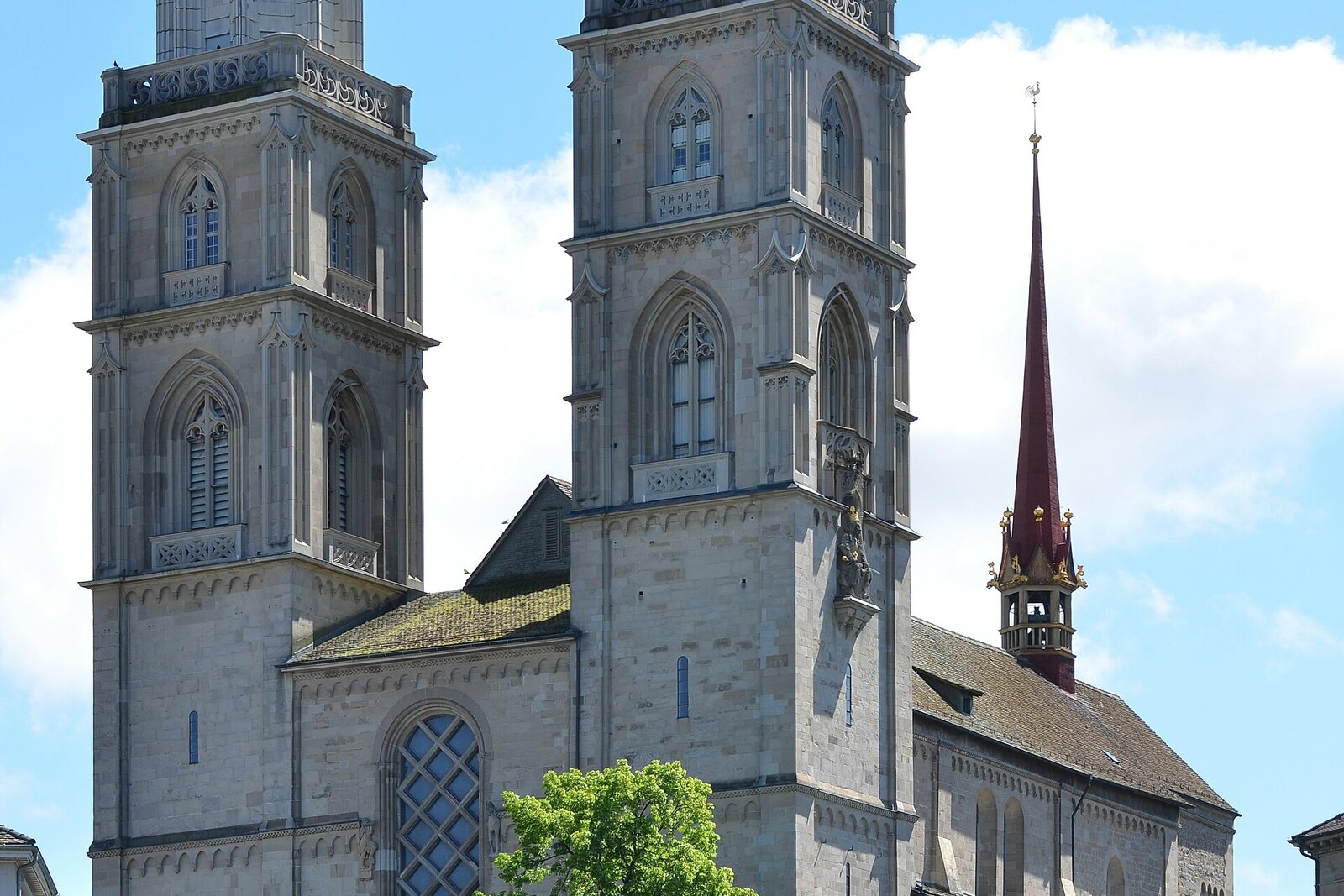
Look around first
What to notice
- Main entrance
- Inscription above the main entrance
- Simple wooden table
- Organ
The story of the place
On January first, fifteen nineteen, the new parish priest Ulrich Zwingli climbed into the Grossmünster pulpit and began reading the first chapter of the Gospel of Matthew. The college of canons had chosen him for the vacant post of “people’s priest”—the name for a cleric who preached to laypeople and cared for the parish. Zwingli received a church salary and lived in an official house nearby. His income, housing, and right to address one of Zurich’s largest audiences depended on this post.
The name “Grossmünster” has been established since the fourteenth century and means “Great Minster,” a large collegiate church. Canons served here—priests who formed a distinct corporation and lived on income from land, tithes, and other payments. The church kept the relics of the city’s saints Felix and Regula; images stood at the altars, and worship followed a set calendar: each day had its appointed passage of Scripture.
Zwingli chose a different order. He explained the Gospel in sequence, section by section, without jumping among the prescribed readings. At first, he did not intend to break with the Catholic Church. Yet this consecutive reading raised ever more questions: where did the text itself speak of the veneration of relics, compulsory fasting, clerical celibacy, and payments to the church college?
The last question struck at the people who had hired him. Subjects of the Grossmünster Chapter began to doubt whether they were still obliged to pay the canons. The canons persuaded and threatened them, then obtained a papal order defending their rights. Zwingli continued to preach from their pulpit and on their salary.
The open dispute reached Zurich City Council. In fifteen twenty-three, the council convened a theological disputation at the town hall: a representative of the Bishop of Constance demanded that the priest who was curtailing customary rites and church furnishings be stopped. His opponents could not refute his arguments with references to the Gospel. The council kept Zwingli as parish priest and instructed Zurich’s preachers to base their teaching on Scripture.
After the second disputation, the council decided to change worship itself. In June fifteen twenty-four, images began to be removed from the city’s churches. This was done by an appointed commission of priests and guild representatives: the council ordered that no iconoclasm be allowed, while people who had donated an image to a church were permitted to take it home. At Grossmünster, the altars and relics were removed, the remains of Felix and Regula were buried, and singing ceased. Three years later, the old organ was dismantled.
In fifteen twenty-five, Zwingli abolished the Mass here and conducted Communion according to a new rite. Previously, the priest had performed the sacrament in the separated choir. Now bread and wine were placed on a simple wooden table among the parishioners. The sermon took center stage, and Zurich City Council transformed the former college of canons into a school for training pastors and working on a Bible translation.
Zwingli’s pulpit has not survived to the present day. Above the main entrance, an inscription is carved: “Ulrich Zwingli’s Protestant Reformation began here on January first, fifteen nineteen.” The organ returned only three hundred forty-nine years after the previous one was dismantled. The current instrument appeared in nineteen sixty, and services with sermons and Communion are again held in the active Evangelical Reformed church.
Useful on site
Church: summer 10:00–18:00, winter 10:00–17:00; on Sundays, usually open to visitors from 12:00. Karlsturm Tower, the crypt, and individual areas depend on renovations, services, and weather; on the date checked, the tower was listed as closed until 30.06.2026.
Checked: June 30, 2026. Check the official source before visiting.Compare the church with the river before entering—it makes the route from the legend easier to understand. View the interior only when admission is free; check the possibility of climbing the tower separately.