 Guide On Map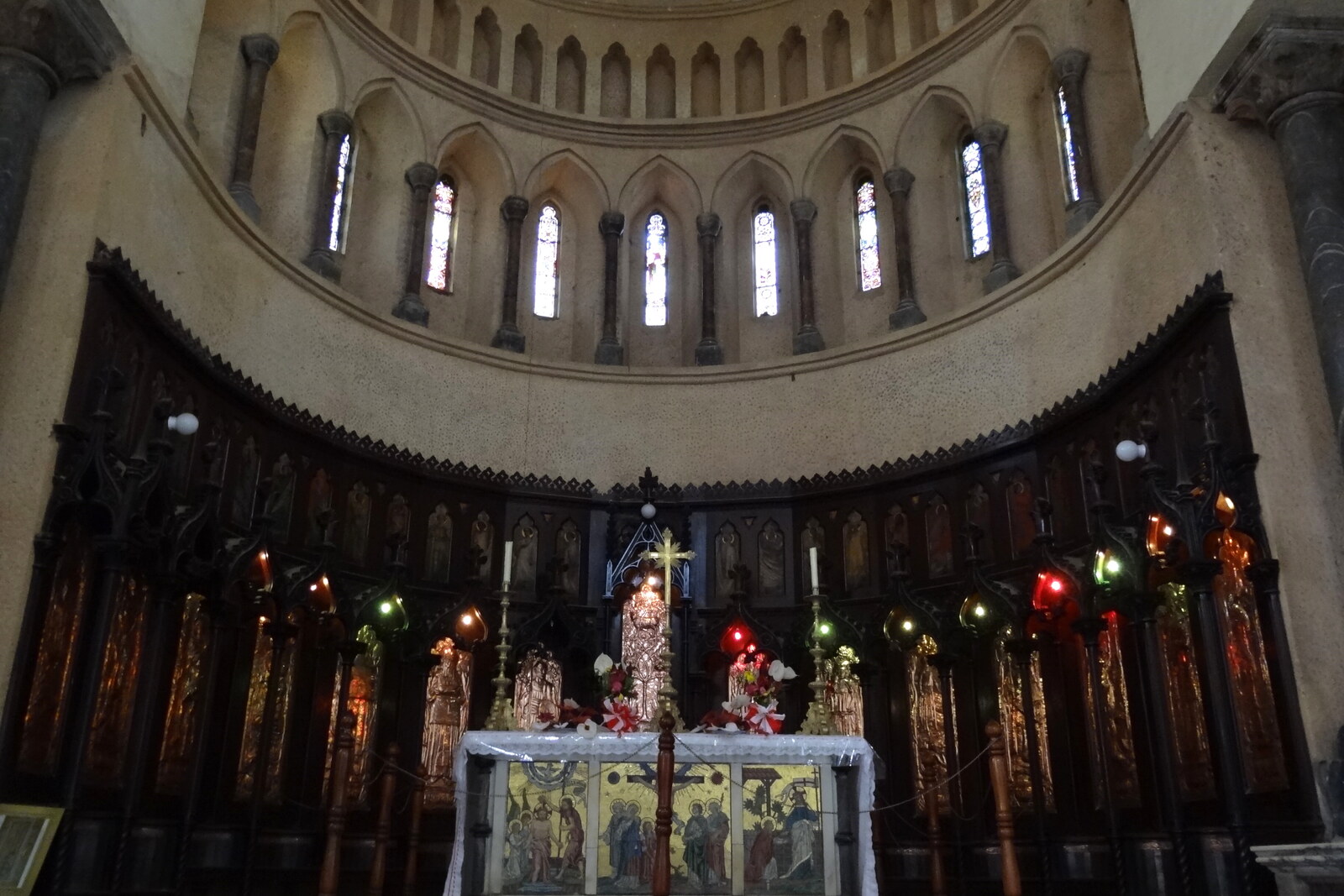
Look around first
What to notice
- Main altar
- Slab behind the altar
- Bishop's chair
- Inscription in Swahili
The story of the place
Christ Church was built for an Anglican mission; its dedication came from Canterbury, where the principal cathedral of this tradition bears the same name. The church received cathedral status later, when the bishop's seat was established here. Now, in the active church, Edward Steere rests behind the altar area, and beside the bishop's chair lies a stone slab with a Swahili inscription about the third bishop.
Before the cathedral, this was the open Mkunazini market. In the middle of a square surrounded by small houses, traders displayed people brought from the mainland. According to church tradition, there was a post where captives were whipped to test how much pain they could endure before being sold.
In June eighteen seventy-three, the British consul threatened Zanzibar with a naval blockade. Sultan Barghash bin Said, the island's ruler, agreed to a treaty that prohibited the transport of enslaved people by sea and required public markets to close. He avoided the blockade, and trading at Mkunazini ceased. The treaty did not yet abolish existing slavery: people remained their owners' property; they were merely prohibited from being brought here and sold openly.
As early as September, the English priest Arthur Nugent West bought part of the newly vacant plot for the Universities' Mission to Central Africa—an Anglican society opposed to the slave trade. The Hindu merchant Jairam Sewji gave the rest of the land to the church. Edward Steere, a missionary and future bishop, took charge of the construction, seeking to turn the former market into a Christian church and a memorial to freedom. Work began on Christmas Day that same year.
Steere called the church Christ Church. The dedication came from Canterbury: the principal cathedral of the Anglican tradition also bears the name Christ Church. At first, Steere even corrected those who called the building a cathedral. He hoped one day to build a cathedral church closer to Lake Nyasa, deep in Africa. The Zanzibar church became a cathedral later, when the episcopal see was established here.
The mission especially emphasized that the building was being constructed by freed people who had received work and pay. Surviving records provide a more troubling answer. Alongside them, Steere hired enslaved builders from their owners. The labor was paid for, but the owners allowed the workers to keep only part of the money. In eighteen eighty-three, after Steere's death, one of his fellow missionaries accused the bishop of having a memorial to freedom built in part by people who were not free.
By Christmas eighteen seventy-nine, the church was nearly complete. In a report on the holiday service, the missionaries proudly listed Arabs and former slaves in one congregation. The same report records how the seating was arranged: benches and chairs were brought for European guests, while everyone else sat on the floor.
Today, this is Zanzibar's active Anglican cathedral. According to church tradition, the main altar stands where the whipping post once stood; the exact layout of the old market has not survived. Edward Steere is buried behind this altar. On the slab lying beside the bishop's chair, an inscription in Swahili calls him the third bishop and reports that he died in August eighteen eighty-two.
Useful on site
Daily 08:00–17:00. Masses are held in the morning; admission is free for worshippers, and at other times a ticket costs about 4–5 USD. Opening hours may change because of church events.
Checked: date not specified. Check the official source before visiting.This is an active church: keep quiet and do not disturb the service. If the entrance is closed, look at the tower and the exterior of the building.