 Guide On Map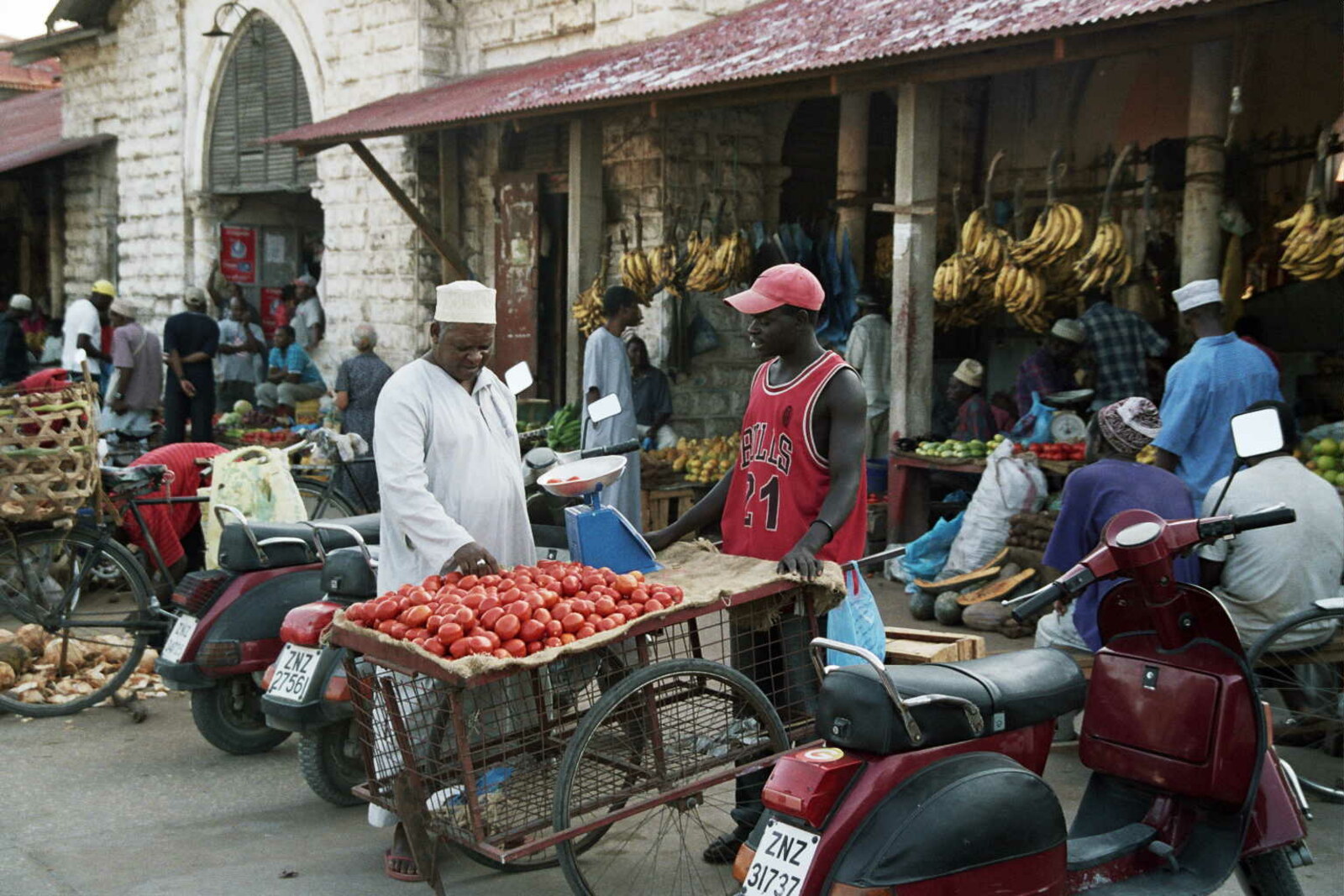
Look around first
What to notice
- The whitewashed structure with arched openings
- The corrugated-iron roof
- The fish and meat rows
The story of the place
In Swahili, the name “Darajani” means “at the bridge”: the bridge itself is gone, but the name remains. The whitewashed, single-story structure with arched openings and a corrugated-iron roof was built beside the only crossing over the tidal channel between Stone Town and Ng'ambo, the “Other Shore.” Ng'ambo was home to craftspeople, small traders, and people who had come to the city to earn a living; from that side, cassava, eggs, fruit, and fish were carried into the city. Meat, fish, vegetables, and fruit are still sold inside the old structure, while rows selling grain, clothing, household goods, and electronics have grown up around it.
Ten years after Darajani opened, traders discovered an unpleasant detail for the administration: no one was required to trade at a government market. Arab and Indian merchants began setting up their own marketplaces. They made their living selling food and could choose the location themselves, while the fees from official markets fell sharply.
This loophole had been left by Darajani's creators. In nineteen oh four, Sultan Ali bin Hamud commissioned Bomanjee Manekjee to build a covered market. The whitewashed, single-story structure, with arched openings and a corrugated-iron roof, was intended for food trading. It was built beside the only bridge across the tidal channel separating old Stone Town from Ng'ambo—the “Other Shore,” where craftspeople, small traders, and people who came to the city to earn a living lived. In Swahili, “Darajani” means “at the bridge.” Anyone carrying cassava, eggs, fruit, or fish into the city passed through here.
It was assumed that a convenient location would itself draw sellers under one roof. When that calculation stopped working, the British resident Francis Barrow Pearce—the head of the colonial administration under the sultan—demanded that the monopoly of government markets be made law. In a letter to London, he named two reasons: declining fees and the danger that unregulated trade posed to the health of city residents.
The director of agriculture, Frank McClellan, objected. He was responsible for producers outside the city and understood that the new order would affect people selling their crops near their own settlements. To justify the law as a matter of health, inspectors would have to be sent across the whole island. McClellan wrote explicitly that there was no need to inspect every egg and every cassava root at the market, and that supervision would cost more than the money collected. In his view, the sanitary explanation concealed a desire to recover the fees.
His arguments were rejected. In June nineteen fifteen, the decree was published, and the administration gained the right to require trade at official markets. It could not be fully enforced outside the city: there were too few inspectors, and sales continued in villages and along roads. Here, the result proved more lasting. Darajani retained its role as the city's main food market.
Trade has long since spread beyond the building: rows selling grain, clothing, household goods, and electronics appeared around it. Meat, fish, vegetables, and fruit are still sold in the old section. The bridge is no longer nearby, but the market is still called the place at the bridge.
Useful on site
Open market area; exact official hours have not been confirmed. Morning is more practical for the fish and meat rows; daylight is enough for looking at the architecture.
Checked: June 28, 2026. Check the official source before visiting.In the narrow rows, keep to the side, do not block trading, and photograph people only with their consent.