 Guide On Map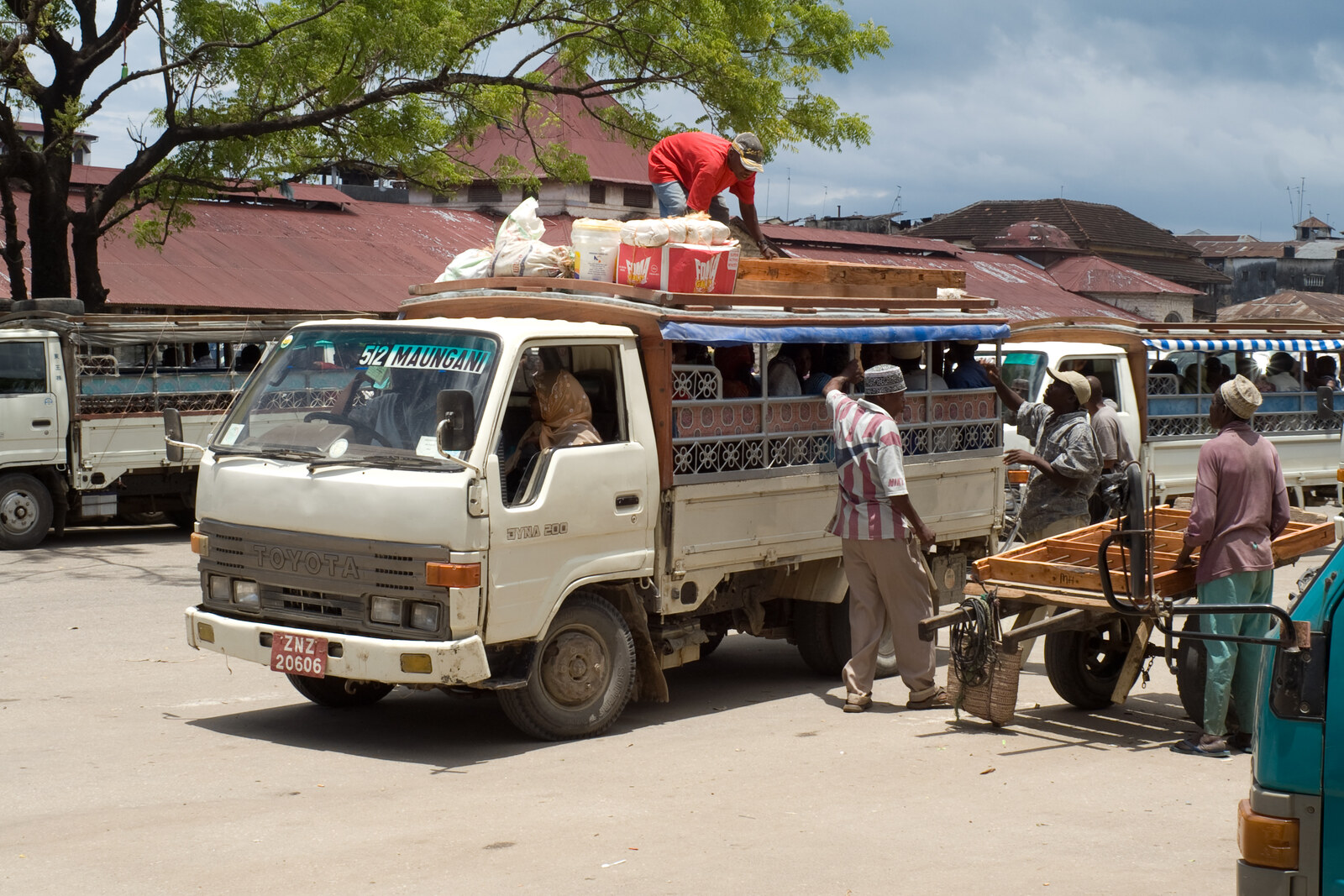
Look around first
What to notice
- Terminal grounds
- Dala-dala minibuses
- Creek Road roadway
The story of the place
In nineteen thirty-five, Zanzibar's new director of medical services, Dr. Leslie Webb, supported filling in the creek that ran through what is now the terminal site. He considered it a source of disease and wanted to remove the threat to city residents.
At the time, the creek separated the stone quarters from Ng'ambo—the “other side” of the city. At high water, boatmen carried passengers across; at low tide, people crossed the exposed muddy bottom on foot. For the boatmen, this was work: their income depended on the tide and on the number of people who needed to get across the creek.
Doctors reached Webb's decision after a long dispute. Trash and untreated wastewater were discharged into the water, but malaria mosquitoes needed shallow freshwater pools; the brackish tidal creek did not suit them. As early as nineteen fourteen, the chief sanitary officer, Dr. Kerwen, spoke out against filling it in. He explained that the tide carried away some of the filth every day and kept rainwater from stagnating. The project was deferred then.
Under Webb, the work nevertheless began. Employees under the Public Works Department filled the creek bed with city refuse and debris from demolished houses. In nineteen thirty-eight, staff at Mkunazini Mission complained that the dump kept them from sleeping and gave them sore throats. Webb inspected the creek several times. He confirmed that the smell from the fill could be nauseating, but found neither fly breeding there nor a threat to drinking-water sources. Three years after supporting the project, the director himself acknowledged in a letter that it was difficult to prove the medical justification for destroying the creek.
Rustam Sidhwa, the Indian National Association's representative on the city council, submitted a petition against the work to the sanitary board. The filling was not stopped. By the end of the nineteen fifties, the section near Darajani Market had disappeared, and by the beginning of the nineteen sixties, almost the entire creek had gone. Crossing between the two parts of the city became easier and safer; the boatmen lost the crossing that had supported them.
A road was laid along the former channel. It is now home to the dala-dala terminal, for local route minibuses. They take on passengers on the land whose appearance meant the boatmen no longer needed boats.
Useful on site
Open street and transport area. The dala-dalas have no reliable fixed schedule: vehicles usually leave when full.
Checked: June 28, 2026. Check the official source before visiting.Listen from a safe edge: here it is more important to watch the vehicles and passengers than to look for a spot in the middle of the interchange.