 Guide On Map
Market, Creek, and Port of Stone Town
From Darajani Market through Malindi to the ferry terminal
Guide On Map on your phone
Open the walk like a regular app
It takes about 10 seconds to install. No app store needed.
The whole path
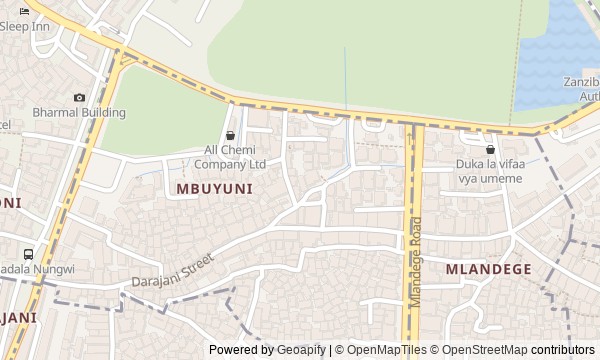
Route map
About the walk
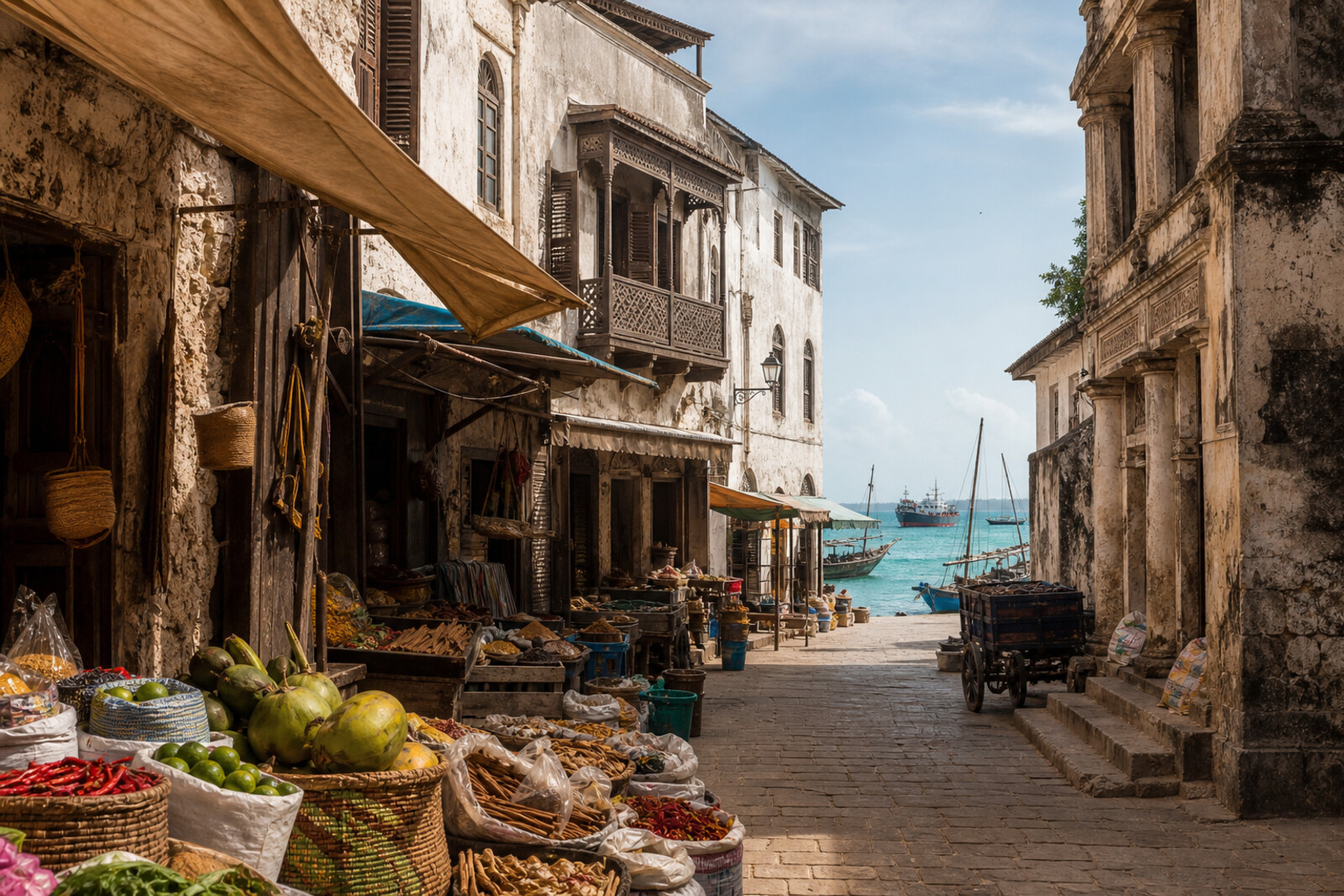
You will begin at Darajani Market, on the edge of the old stone town. From there, you will cross land that was once a tidal creek, enter the Malindi quarter, and emerge among seafront facades, ferries, and port gates.
You will not be making the rounds of Stone Town's grand palaces. Instead, you will come across food stalls, a dala-dala stand, a working mosque, a former family home, and a charitable hospital that never opened at all.
This story is not about legends of a wealthy trading city, but about arguments over money and usefulness. Why did officials turn their attention to eggs and cassava? What did people lose when the creek disappeared? Why was a road used to carry stone for the harbor's construction torn up for the harbor itself?
By the end, you will see a vanished bridge in the name Darajani Market, and the trace of a railway that is no longer there in the Malindi piers.
Why this order
Darajani Market introduces the theme of administrative control over city trade. Just beyond the market, the former channel shows how officials changed not only the rules but the city's very ground. Following the line of the vanished creek, the route enters Malindi: its merchants' mosque introduces the people whose money built the quarter. The neighboring house by the sea links it first to sultanic power, then to customs. The next facade continues the merchant story with a charitable project that stalled somewhere between plans for a hospital and three rooms of a dispensary. Across from it, the port completes the chain: here an administrative project reshaped the shore and cut off the railway.
Those who want to understand Stone Town's everyday history People drawn to urban transformations and contested decisions Those interested in trade, transport, and life in a port quarter
Those expecting a walk devoted only to palaces and museums Those looking for a route about Zanzibar's beaches and resorts Those who prefer an architectural overview without social conflicts
Before you go
Choose light, covered clothing: the route passes a working mosque and busy working neighborhoods. Do not block the way in the market, take care on wet patches, and ask permission before photographing vendors or shoppers. At the terminal, watch for traffic and stay out of working and restricted areas. Expect that the mosque, Old Customs House, and Old Dispensary may be open for exterior viewing only; the route does not require going inside.
When to go
1,5–2 hours. The lower estimate works for exterior viewing without shopping; allow extra time for the market stalls, facade details, and an unhurried listen by the waterfront.
Backup plan
If the market is too crowded, noisy, or stuffy inside, take in its main building and the nearest stalls from outside, then finish listening beside the flow of people. In intense heat, shorten the stop in the open former creek area and look for shade by the next buildings. Closed doors do not require changing the walk: the mosque, Old Customs House, and Old Dispensary can all be read from their exteriors. At the port, do not try to reach the piers through service areas—end the route where the terminal and vessel traffic are visible from public space.
Route conditions
Surface. Paved — 571 m; unpaved — 67 m (data covers 61% of the route)
Access. Wheelchair — limited; stroller — limited
Facilities. Toilets — 3
Elevation. Ascent — 10 m; descent — 9 m
OpenStreetMap extract of July 9, 2026: database data, not a check on the ground. Data © OpenStreetMap contributors, ODbL licence
Walk plan
Open in maps ↗- 1
Darajani Market
This is where the story begins of how a convenient place for trade was meant to be made compulsory. - 2
Former Darajani Creek and the dala-dala terminal
This stop will show who benefited and who lost work after land appeared between the two parts of the city. - 3
Malindi Mosque
Here, a merchant fortune became a permanent place for the urban community. - 4
Old Customs House
The family house will link the route to the sultan's forcible change of power and the subsequent British control. - 5
Old Dispensary
This stop will explain why a large charitable plan had to be replaced by three medical rooms. - 6
Malindi Port and the Ferry Terminal
The final stop will explain why the harbor remained while Zanzibar's first railway disappeared.
Route features
Everything you need stays in the browser
Progress, saves and your trip plan are stored on this device.
Add Guide On Map to your home screen so the walk opens outside the browser.
How we handle sources, maps and corrections: our editorial standards