 Guide On Map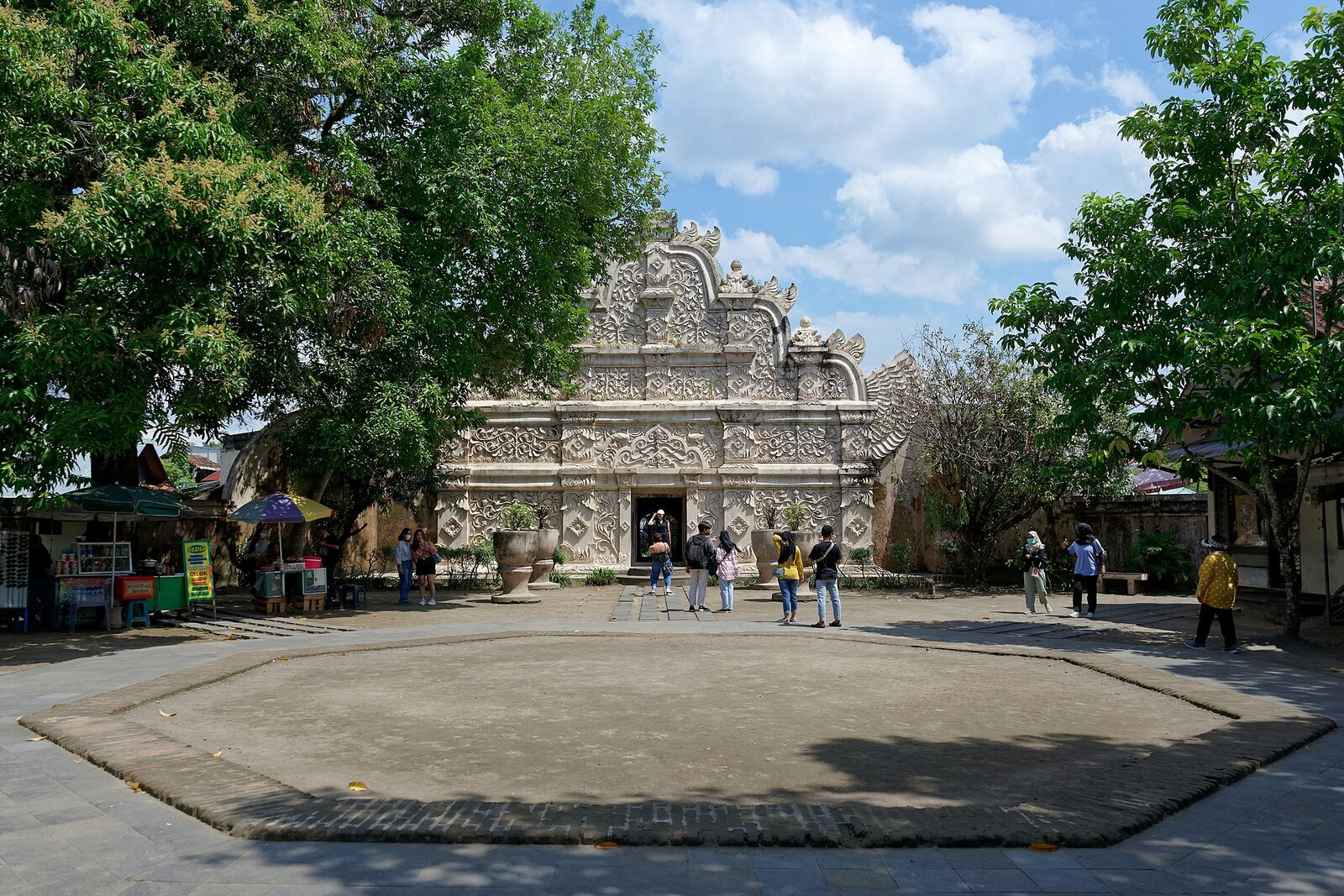
Look around first
What to notice
- Three pools
- Two-story pavilion
- Tall wall
- Fountains shaped like stone mushrooms
The story of the place
The bathing area is divided into three pools, one after another; the passageways between them lead to a two-story pavilion. Water for them was once drawn from Pacethokan Spring, then sent through canals and into two artificial lakes in the extensive garden. Separate sections were intended for different palace residents, so the walls and changing rooms protected their privacy. The lakes and many structures disappeared over time; now the surviving part of the garden consists of three restored pools and fountains resembling stone mushrooms.
Raden Rangga Prawirasentika governed the Madiun region and was required to transfer part of its revenue to the Kraton treasury twice a year. After the Yogyakarta Sultanate was established, he offered Hamengkubuwono I a deal: free Madiun from those payments and, in return, carry out special commissions for the new court. The sultan agreed.
First, Prawirasentika made a ceremonial gamelan and a palanquin for him. In seventeen fifty-eight, another commission followed: to prepare bricks and everything needed for a country garden. The first sultan of Yogyakarta had just ended a long war and wanted to create a secluded place near the palace where his family could relax.
The site was chosen because of Pacethokan Spring. In Javanese, umbul means water that springs from the ground. From here, it was directed into the bathing pools, canals, and two artificial lakes. The name Taman Sari means “beautiful garden,” but this was a complex covering more than ten hectares: fifty-seven buildings, islands, bridges, a mosque, and underground passages.
Here, the agreement with Prawirasentika began to unravel. According to a version preserved in the palace history, the ruler of Madiun calculated the costs and admitted that the new garden was costing him more than the previous taxes. He asked to be released from the commission itself. The sultan allowed him to withdraw from the agreement and continued construction at his own expense. The main work was completed by seventeen sixty-five.
Umbul Binangun occupied only one part of the garden: an enclosed bathing area for the sultan, his spouses, concubines, and children. Three pools were arranged in sequence and divided by passageways and a two-story pavilion; different members of the family bathed separately. A popular story claims that the sultan watched the concubines from above and chose one of them. This is a legend, not a reliably established practice. The walls, separate changing rooms, and several pools more reliably suggest something else: the privacy of a large palace household was protected here.
Only part of the commission, which turned out to cost more than two annual taxes, has survived. The artificial lakes disappeared, and most of the structures have been lost. Passageways in the tall wall still lead into the sunken courtyard, while fountains resembling stone mushrooms release water into the three restored pools.
Useful on site
Daily 09:00–15:00.
Checked: June 24, 2026. Check the official source before visiting.Check the complex’s visiting conditions before you come. Inside, there are steep stairs, narrow passageways, and slippery sections; do not go beyond the barriers for a photograph.