 Guide On Map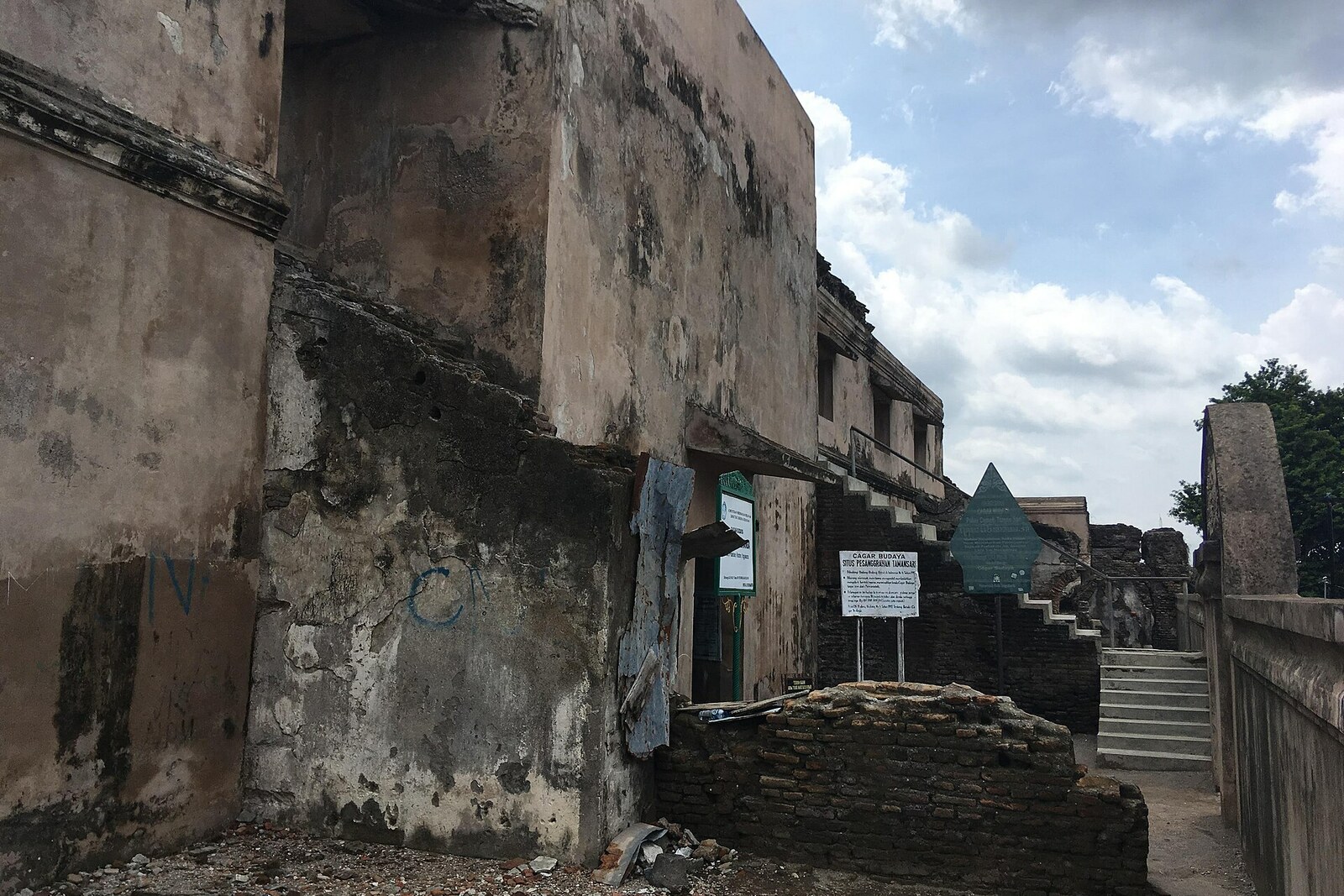
Look around first
What to notice
- The tall walls of Pulo Cemeti
- The roofs of Kampung Taman
- Narrow lanes
The story of the place
The tall walls of Pulo Cemeti now rise among the roofs of Kampung Taman. In the eighteenth century, there were neither lanes nor residential houses around them. This was Segaran—the artificial lake of Taman Sari. The word “pulo” means “island”: the sultan’s family reached the two-story pavilion in the middle of the water by boat or through an underground passage.
On June tenth, eighteen sixty-seven, an earthquake damaged three hundred seventy-two houses in Yogyakarta and killed five people. The structures of Taman Sari also collapsed, and the water drained from Segaran. Among those left homeless were the abdi dalem—palace servants. They continued to perform their duties at Kraton Yogyakarta, but after work many had nowhere to return to.
Sultan Hamengkubuwono VI allowed them to settle temporarily on vacant land by the fortress walls and among the ruins of the water garden. Instead of restoring the lake and pavilions, people were given space for houses. The land was not sold to them: it remained the sultan’s property, and the families used it with his permission.
The temporary settlement did not disappear. The children and grandchildren of the first residents remained here; new houses, workshops, and narrow passageways appeared among the ruins. Thus this former closed-off part of the sultan’s garden became Kampung Taman—literally, “garden village.”
Pulo Cemeti’s upper floor and roof collapsed. There is no water around it anymore: where boats once approached the island, there are now houses belonging to the families whom Hamengkubuwono VI allowed to settle here after the earthquake.
Useful on site
Public lanes are accessible at all times; Pulo Cemeti can be viewed from outside. Sumur Gumuling has been closed to visitors since 2020.
Checked: June 24, 2026. Check the official source before visiting.This is primarily a residential area. Stay on public passageways, do not look into houses, and ask permission for portraits; visit workshops only at their owners’ invitation.