 Guide On Map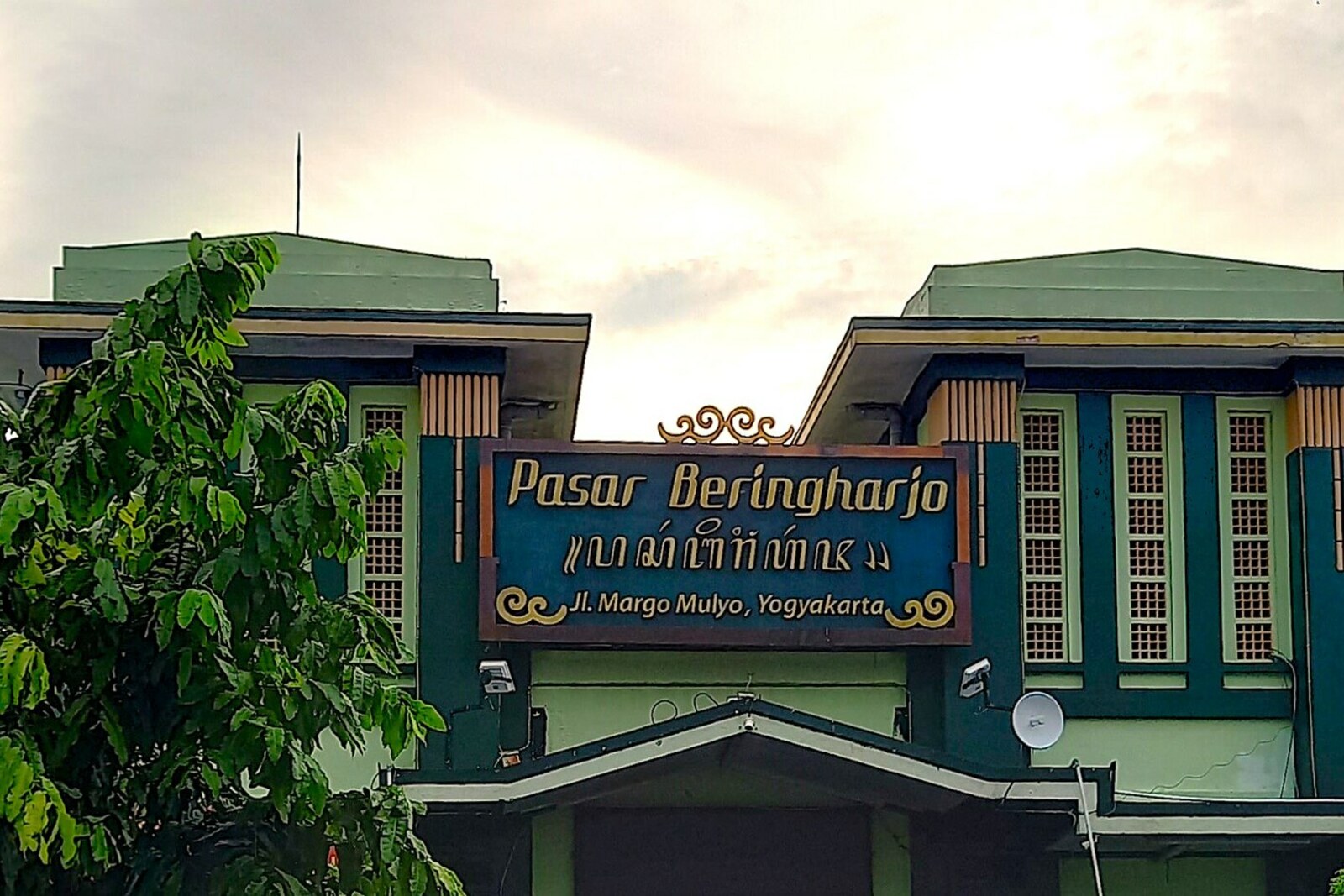
Look around first
What to notice
- Concrete western entrance
- Batik trading rows
- Vegetable stalls
- Porters' baskets
The story of the place
The trading area grew together with the new capital: at first, deals were made directly under the open sky, and later wooden shelters were erected over an earthen floor. Concrete pavilions replaced the old temporary structure, and the current name became established with them; its first half preserves the memory of a banyan grove that once grew on this site. The name of Pabringan Street to the south also remains from it. The western concrete entrance still leads toward stalls selling batik, while produce from the surrounding area is unloaded in another part of the building.
Every day, women traders from Kulon Progo, Bantul, and Gunungkidul came here. They carried baskets of vegetables and other goods on their backs: the proceeds fed their families. During the Japanese occupation, this familiar route to the market took on another purpose.
Underground groups in the city needed communication with units in Godean, Imogiri, and Wiyoro. A man carrying a note or a sack of provisions might have aroused a patrol's suspicion. A woman walking to Beringharjo to sell vegetables looked just as she had the day before, and like hundreds of other women traders.
They entered the market with messages from the suburbs. Here, the notes were passed to couriers of the city underground, and the women took replies for the return journey. Clothes, sugar, tea, and money were packed together with the goods. The basket remained their livelihood and at the same time concealed work that would have brought severe punishment if discovered.
This was how messages passed between the city and the units, while provisions reached people beyond its limits. After the Japanese left, the women continued this work during the war for independence, when the young Republic of Indonesia resisted the return of the Netherlands. The trading route proved to be a ready-made line of communication: it did not have to be created, because the market already brought together people from the city and surrounding settlements every day.
Its daily schedule set Beringharjo apart from many Javanese markets, which operated only on a particular day of the local five-day cycle. It arose under the first Sultan Hamengkubuwono, when the newly founded capital of Yogyakarta needed a main market. Its former name was Pasar Gedhe, the Great Market. At first, trading took place in an open space; later, wooden shelters with earthen floors appeared.
Under Sultan Hamengkubuwono VIII, the old shelters were replaced by permanent concrete pavilions. The market then received its current Javanese name. “Bering” recalls the banyan grove that once occupied this site, while “harjo” means prosperity and tranquility. Even Pabringan Street along the market's southern side preserves in its name the memory of banyans that are no longer here.
Beyond the concrete western entrance, fabrics and batik are still sold, while vegetables and other produce from the surrounding area are received in the eastern section. Most of the traders here are women. Nearby work embok gendong, women porters who carry purchases and bundles on their backs; many come from Kulon Progo. The ordinariness of this work once allowed notes, money, sugar, and tea to pass through Beringharjo unnoticed.
Useful on site
Daily, approximately 08:00–17:00; individual sections and vendors keep their own schedules.
Checked: June 24, 2026. Check the official source before visiting.This is a working market, not an exhibition hall: do not block the passageways, and ask vendors before photographing them. For the route, it is enough to walk through several different rows without trying to see the entire complex.