 Guide On Map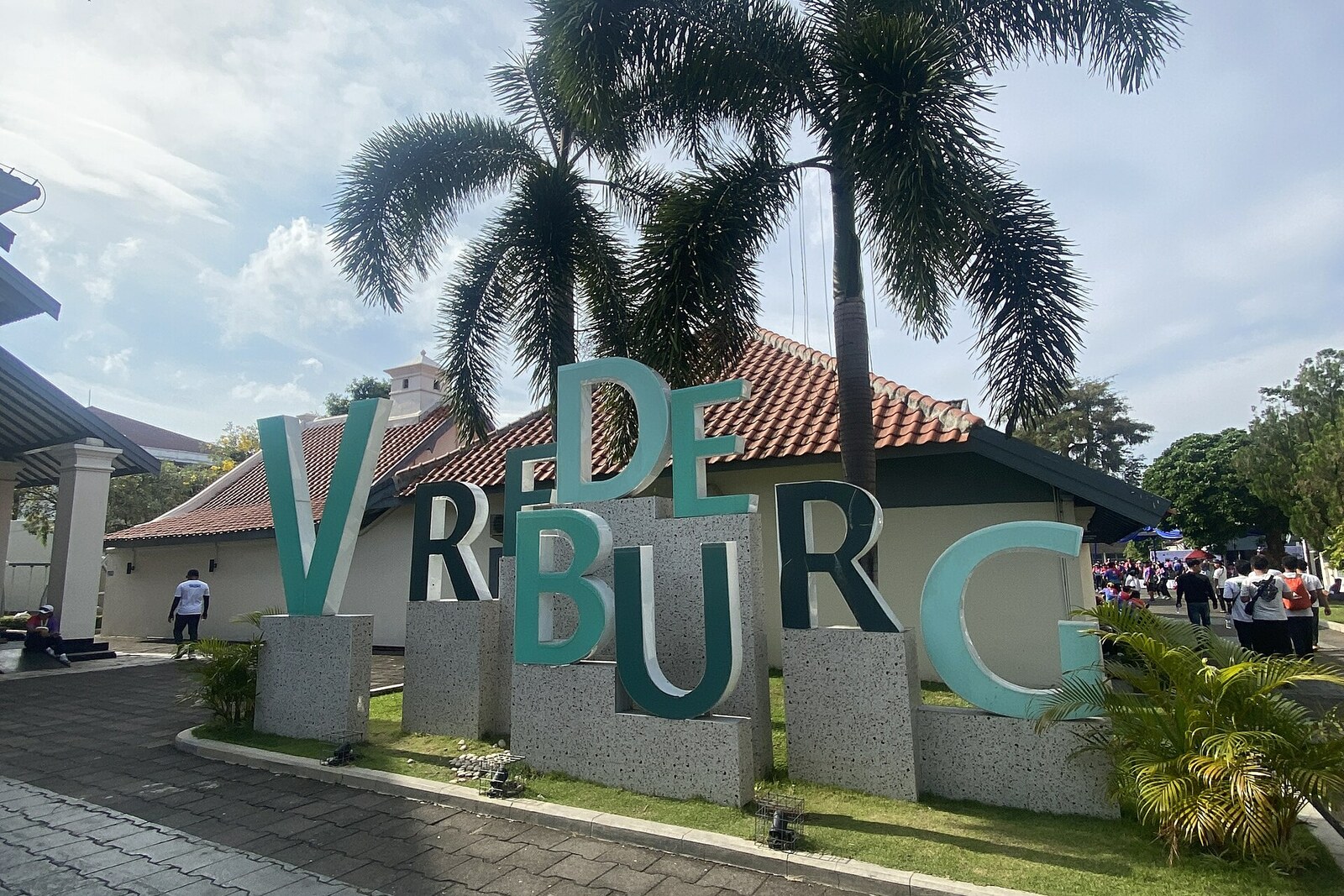
Look around first
What to notice
- Square perimeter
- Four corner bastions
- Moat
- Southern wall
The story of the place
Fort Vredeburg was placed on the sultan’s land, paid for from his treasury, and built by the people he was required to provide. Its garrison, however, answered to the Dutch East India Company.
Sultan Hamengkubuwono I, the founder of Yogyakarta, had only just secured a state of his own. Before ascending the throne, he had fought the company, and in seventeen fifty-five he signed the Treaty of Giyanti: the former Javanese kingdom of Mataram was divided, and he was recognized as ruler of one of its parts. The same treaty obliged the new sultan to allow a foreign fort in his capital.
Cornelis Donkel, the first Dutch resident at the court—that is, the company’s representative in Yogyakarta—pressed for a site beside the palace. The sultan was told that the soldiers would protect him and Kraton Yogyakarta. They were stationed several hundred meters from the sultan’s residence: from here, they could watch the road to the palace and, if necessary, open fire on it.
Hamengkubuwono I could not refuse the treaty: recognition of his title and borders came from the same company. So the sultan and his heir apparent stretched out the construction. Workers and materials were directed first to Kraton Yogyakarta, the city walls, and Taman Sari. The first fort remained an earthen square with supports made of palm trunks, bamboo buildings, and grass roofs. Dutch officials demanded faster progress and lent the sultan money for stone and brick, but the permanent fortifications were completed only around seventeen ninety—three decades after work began.
The son who took part in this delay later became Sultan Hamengkubuwono II. By eighteen twelve, Java was already ruled by the British. The sultan resisted the new rules for administering land and revenues, and openly gathered troops. The British governor Thomas Stamford Raffles demanded submission and regarded the sultan’s preparations as a threat. The negotiations ended without an agreement.
Raffles assembled European soldiers in this fort, sepoys—Indian soldiers in British service—and an allied Javanese legion. At dawn on June twentieth, English artillery fired from here across North Alun-alun at the main gates of Kraton Yogyakarta. Then the infantry advanced on the walls. The palace powder magazine exploded, and by about eight in the morning the defense had been broken.
Hamengkubuwono II surrendered. He was brought to the very fort that father and son had spent so many years trying to complete as slowly as possible. From here, the captive sultan was sent first to Batavia, present-day Jakarta, then into exile on the island of Penang. The British reduced the sultan’s army, took away part of his lands, and seized control of the market and road tolls that supported the court.
“Vredeburg” means “fortress of peace” in Dutch: this was the name the colonial administration gave to its relations with Kraton Yogyakarta. Today, a museum of the history of the national struggle operates in the former barracks. The square perimeter, four corner bastions, and moat have survived, and beyond the southern wall lies the same short route across North Alun-alun that English guns blocked on the morning of June twentieth, eighteen twelve.
Useful on site
Tuesday–Thursday 08:00–20:00; Friday–Sunday 08:00–21:00; closed Monday.
Checked: June 24, 2026. Check the official source before visiting.The site’s main conflict can be understood from outside as well. Plan a visit to the museum exhibition as a separate part of the walk, and check the current admission conditions in advance.