 Guide On Map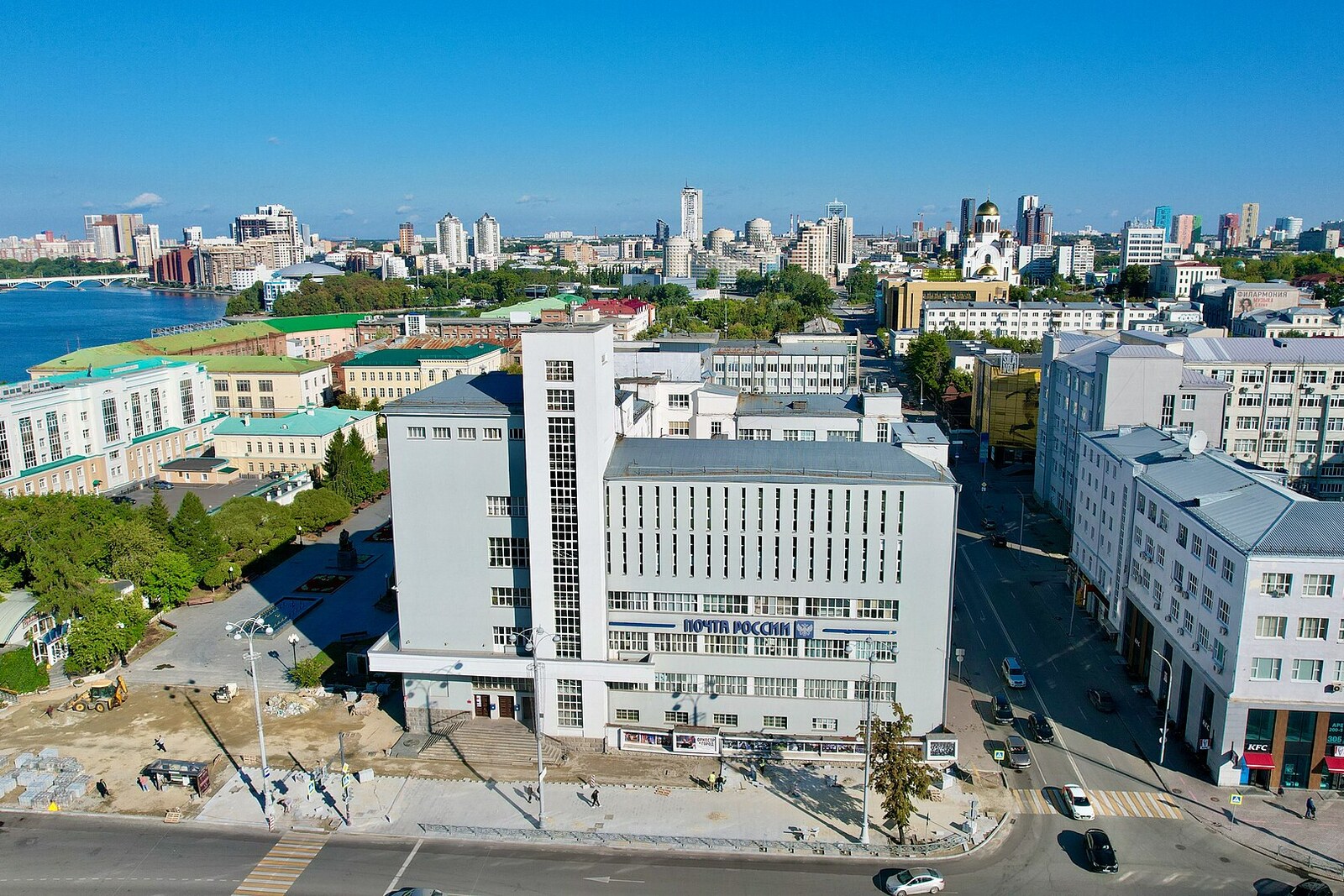
Look around first
What to notice
- Right wing
- Narrow vertical windows
- Top floor
The story of the place
The narrow vertical windows of the right wing reveal the House of Communications’ former specialization: telephone equipment was housed behind them. Under one roof, the city post office, telegraph, long-distance telephone service, and an automatic exchange for ten thousand numbers came together. Radio studios operated upstairs, while inside the flows were divided by function: correspondence was accepted in some rooms, calls were connected in others, and telegrams were sent in a third.
In the early nineteen thirties, Yekaterinburg was already called Sverdlovsk. The population was growing rapidly, postal premises were overwhelmed with letters, newspapers, and parcels, and by nineteen thirty-four this building had been constructed for communications workers.
The name “House of Communications” was literal. The city post office, telegraph, long-distance telephone exchange, and an automatic exchange for ten thousand numbers were brought together here. Telephone equipment stood behind the narrow vertical windows of the right wing, while radio studios were on the top floor. Letters were accepted in one part of the building, calls were connected in another, and telegrams were transmitted in a third.
During the war, this entire system depended on women and teenagers. The number of employees was shrinking, and in nineteen forty-three the residents of Sverdlovsk sent eighteen million six hundred thousand letters to the front. Fourteen- and fifteen-year-old girls were recruited for the post office. They worked in shifts: the morning shift began at six, and the evening shift ended at eleven. They carried the sacks between floors themselves. An employee could be put on trial for being late or failing to show up—the postal service was both a livelihood and an obligation that could not be refused.
The vehicles were handed over to the front, so two postal horses were kept in the courtyard. Then the post office was allocated a converted passenger tram. In the evenings, it turned off Tolmachev Street and drove directly into the courtyard of the House of Communications. Workers loaded sacks beyond their regular shift; the tram car took them to the railway station and collected the arriving mail. At intermediate stops, consignments were transferred to sleds in winter and handcarts in summer.
Letters for evacuees were especially difficult. People moved, enterprises changed addresses, and the writing on frontline triangles faded: soldiers often wrote in pencil on scraps of newspapers and pages from textbooks. Postal workers searched for recipients through address offices and factory offices. According to reports from the Sverdlovsk post office, not a single letter with an unclear address was sent back.
One letter nevertheless remained in the House of Communications itself. In two thousand eight, while the floor was being replaced in the first customer hall, a triangle written in nineteen forty-three was found. It bore no military-censorship stamp. The letter was probably set aside for mandatory inspection, after which it slipped under the floor, and its addressee never received it. The tram tracks have long been removed from the courtyard, while postal employees preserved the original of the found triangle.
Useful on site
Architectural viewing and the zero-kilometer marker are accessible from the public sidewalk; postal-service operations are not part of the route.
Checked: June 24, 2026. Check the official source before visiting.View the working building from publicly accessible space. The story of the postal tram concerns the arrangement of the courtyard, but there is no need to try to enter the service area for it.